

For freelancers, the best budgeting software needs to separate business cash flow from personal spending and make irregular income easier to plan around. Xero Made Simple is my best overall pick for readers who want a path into cloud bookkeeping, while Quicken Classic Deluxe stands out for personal finance tracking and Express Accounts for business-focused accounting tasks. These options differ in how much setup they require, whether they focus on bookkeeping or household budgeting, and how much control they leave in your hands. A spreadsheet can offer flexibility, but it also requires more ongoing maintenance. Read on for the full breakdown and help choosing the right fit.

Get smart everyday buys delivered free with Prime
- Fast, free delivery on millions of items
- Prime Video, Amazon Music and more included
- Member-only deals all year
Key Takeaways
- Xero Made Simple is a guide, not the Xero software itself. It can help beginners learn cloud bookkeeping, but it does not replace an active bookkeeping platform.
- Quicken Classic Deluxe is the clearest personal-finance choice in this group; freelancers who need business accounting workflows may find Express Accounts a closer fit.
- Express Accounts prioritizes accounting tasks over household budgeting. That distinction matters if you need business records more than a single view of personal and business spending.
- The spreadsheet template offers direct control without a dedicated finance app, but calculations, categorization, and maintenance depend on your own habits.
- SavePoint and Dave Ramsey’s software are desktop-oriented personal finance options, so check current operating-system support and workflow fit before choosing either.
| Xero Made Simple: A Beginner’s Guide to Cloud Bookkeeping |  | Best for Learning Freelancer Bookkeeping | Format: Beginner’s guide | Software covered: Xero | Bookkeeping topics: Cloud bookkeeping and financial management | VIEW LATEST PRICE | See Our Full Breakdown |
| Dave Ramsey’s Personal Finance Software, Version 5.3 |  | Best for a Personal-Finance-First Approach | Version: 5.3 | Product identification: Financial Peace Personal Finance Software | Product type: Personal finance software | VIEW LATEST PRICE | See Our Full Breakdown |
| Quicken Classic Deluxe Personal Finance Software for New Subscribers, 1-Year Subscription (PC/Mac Online Code) | 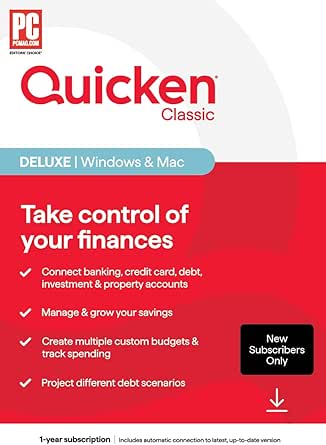 | Best for Freelancers Managing Household Finances Too | Subscription: 1 year | Compatibility: PC and Mac | Delivery: Online code | VIEW LATEST PRICE | See Our Full Breakdown |
| Express Accounts Accounting Software for PC |  | Best for Freelance Business Cash Flow | Platform: PC | Operating system: Windows (all versions) | Reports: More than 20 financial reports | VIEW LATEST PRICE | See Our Full Breakdown |
| SavePoint Personal Finance Software with 8GB USB Drive for PC and Mac |  | Best for Offline Budgeting and FIRE Planning | Storage: Local-only and offline | License: Lifetime; no subscription | Device limit: Up to 2 devices | VIEW LATEST PRICE | See Our Full Breakdown |
| Personal Budget Spreadsheet Template for Google Sheets and Microsoft Excel |  | Best for Spreadsheet-Based Budgeting | Format: Digital spreadsheet template | Compatible with: Google Sheets and Microsoft Excel | Budgeting focus: Personal budgeting | VIEW LATEST PRICE | See Our Full Breakdown |
| budgeting software for freelancer | Compatibility |
|---|---|
| Xero Made Simple: A Beginner’s | — |
| Dave Ramsey’s Personal Finance | Not specified |
| Quicken Classic Deluxe Persona | PC and Mac |
| Express Accounts Accounting So | — |
| SavePoint Personal Finance Sof | PC and Mac stated in title; Windows PC compatibility stated in description |
| Personal Budget Spreadsheet Te | — |
More Details on Our Top Picks
Xero Made Simple: A Beginner’s Guide to Cloud Bookkeeping
Xero Made Simple is a guide, not budgeting software itself, so its value lies in helping a freelancer learn bookkeeping tasks such as invoicing and bank reconciliation. That makes it a useful starting point for someone who wants to understand how business money moves before choosing a software workflow. Compared with Express Accounts, which is an accounting program with transaction tracking and reports, this book teaches a path through Xero rather than providing tools to record transactions directly. The focus on beginners and self-employed readers fits freelancers who need business-oriented basics, but the supplied details do not establish how current the instructions are or whether the guide covers budgeting methods in depth. Skip it if you need software to manage accounts today; choose it if learning cloud bookkeeping is the immediate goal.
Pros:- Written for beginners rather than experienced bookkeepers
- Covers invoicing, a core task for independent earners
- Explains bank reconciliation for organizing business transactions
- Targets small businesses, freelancers, and self-employed users
Cons:- A guide rather than software, so it does not itself track budgets or transactions
- The provided product details do not confirm the edition’s currency or update status
- The description does not specify coverage of freelancer tax planning or irregular-income budgeting
Best for: Freelancers new to bookkeeping who want guidance on Xero invoicing and bank reconciliation before setting up a cloud accounting workflow.
Not ideal for: Freelancers who need working budgeting software, automatic transaction tracking, or confirmed current instructions rather than a beginner’s guide.
- Format:Beginner’s guide
- Software covered:Xero
- Bookkeeping topics:Cloud bookkeeping and financial management
- Tasks covered:Invoicing and bank reconciliation
- Intended users:Small business owners, freelancers, and self-employed people
- Product type:Educational guide; not budgeting software
Our verdict“Choose this guide to learn Xero bookkeeping basics, but pick Express Accounts or another software option if you need to manage finances inside a program.”
Dave Ramsey’s Personal Finance Software, Version 5.3
Dave Ramsey’s Personal Finance Software, Version 5.3, identified as Financial Peace Personal Finance Software, is positioned around managing personal money rather than running freelance books. That distinction matters if you want to organize household finances separately from invoices, client payments, and business expenses. Compared with Quicken Classic Deluxe, whose listed tools include custom budgets, spending tracking, and debt projections, the available details here are much less specific about features and supported accounts. Its personal-finance focus may suit a freelancer who wants a dedicated money-management approach, but the product information does not confirm income tracking for variable freelance work, business reports, platform compatibility, or current support. I would treat it as a narrowly documented choice: the version is identified, but buyers who need clear business budgeting capabilities may prefer Express Accounts or Quicken.
Pros:- Designed to help users manage their money
- Identified as Financial Peace personal finance software
- Product version is specified as 5.3
Cons:- Provided details do not describe specific budgeting or transaction-tracking features
- Compatibility and operating system support are not specified
- The product information does not establish freelance business accounting capabilities
Best for: Freelancers seeking personal-money management software and who are comfortable verifying compatibility and feature details before purchase.
Not ideal for: Self-employed users who need documented tools for invoicing, separating business transactions, or planning around irregular freelance income.
- Version:5.3
- Product identification:Financial Peace Personal Finance Software
- Product type:Personal finance software
- Stated purpose:Managing personal money
- Freelancer business features:Not specified in the provided product details
- Compatibility:Not specified
Our verdict“Consider it for personal money management only if its compatibility and features meet your needs; Quicken Deluxe provides more clearly documented budgeting tools.”
Quicken Classic Deluxe Personal Finance Software for New Subscribers, 1-Year Subscription (PC/Mac Online Code)
Quicken Classic Deluxe earns this spot for freelancers who want a broad view of personal finances alongside a custom budget. It can connect banking and credit-card accounts and track spending, savings, debt, investments, and property, which helps a self-employed person see whether business income is supporting wider household goals. Compared with Express Accounts, Quicken is more personal-finance-oriented: it offers debt scenario projections and investment tracking, while Express Accounts focuses on business transactions, invoices, and reports. That breadth is also its limitation for freelance work; the supplied description does not list invoicing or dedicated business bookkeeping. The product is a one-year subscription delivered by online code for PC or Mac, and a 30-day trial is listed, but ongoing subscription terms are not specified here.
Pros:- Connects and manages several types of financial accounts
- Custom budgets and spending tracking support day-to-day planning
- Savings tools and debt scenario projections help with financial goals
- PC and Mac compatibility is specified
Cons:- The listed feature set focuses on personal finances rather than freelance invoicing
- Requires a one-year subscription
- Ongoing subscription terms are not specified in the provided details
Best for: Freelancers who want custom household budgets and a consolidated view of banking, debt, savings, investments, and property on PC or Mac.
Not ideal for: Freelancers who need invoicing, sales-order management, or business-focused accounting reports; Express Accounts is better aligned with those tasks.
- Subscription:1 year
- Compatibility:PC and Mac
- Delivery:Online code
- Trial:30 days
- Budgeting:Custom budgets and spending tracking
- Accounts and assets:Banking, credit cards, debt, investments, and property
- Planning tools:Savings management and debt scenario projections
Our verdict“Pick Quicken Deluxe if you want freelancer income to fit into a wider personal budget, but choose Express Accounts for business transaction and invoice management.”
Express Accounts Accounting Software for PC
Express Accounts is the most business-accounting-focused pick here for freelancers who need to track money coming into and leaving a small operation. Its support for invoices, receipts, payments, purchases, and accounts receivable makes it a closer fit for client work than Quicken Classic Deluxe, which centers on personal budgets, debts, investments, and property. More than 20 financial reports can help turn recorded transactions into a clearer business picture, while automatic backups reduce the risk of losing accounting records. The tradeoff is a narrower platform and purpose: this is Windows PC software, not a general household budgeting tool, and the provided details do not specify minimum system requirements beyond Windows. I would favor it for tracking business cash flow, but pair it with a separate personal budget if household planning matters too.
Pros:- Handles quotes, sales orders, and invoices
- Tracks incoming and outgoing business transactions
- Includes more than 20 financial reports
- Automatic backups support record preservation
Cons:- Windows PC platform limits use for Mac-only workflows
- Designed for business accounting rather than general personal budgeting
- Minimum system requirements beyond Windows are not provided
Best for: Windows-based freelancers and small-business owners who need to track invoices, customer payments, purchases, and business cash flow.
Not ideal for: Mac users or freelancers looking for one tool to handle both household budgeting and business finances; Quicken Deluxe is broader for personal money management.
- Platform:PC
- Operating system:Windows (all versions)
- Reports:More than 20 financial reports
- Sales tools:Quotes, sales orders, and invoices
- Transaction tracking:Accounts receivable, payment tracking, and purchasing transactions
- Backup:Automatic backups
- Access:Secure web access
Our verdict“Choose Express Accounts for Windows-based freelance bookkeeping and cash flow, but use Quicken Deluxe if personal budgeting is your main priority.”
SavePoint Personal Finance Software with 8GB USB Drive for PC and Mac
SavePoint stands apart from Quicken Classic Deluxe by keeping financial data local and offline, a useful distinction for freelancers who prefer not to store personal budgeting information in a connected service. It combines budgeting and cash-flow views with balance sheets and FIRE planning, including Monte Carlo projections; those tools suit people modeling long-term savings paths, not just tracking this month’s spending. The lifetime license, use on up to two devices, and support for many currencies and languages add flexibility. The tradeoffs are important: its investment in FIRE planning may be unnecessary for someone who only wants simple cash-flow categories, and the description confirms Windows compatibility while Mac support appears only in the title. Updates are stated for the purchased version, with broader future-version coverage unspecified.
Pros:- Stores financial data locally and works offline
- Combines budgeting, cash flow, balance sheets, and FIRE planning
- Includes Monte Carlo projections and several FIRE strategies
- Supports eight languages, more than 150 currencies, and up to two devices
Cons:- Description confirms Windows PC compatibility, while Mac support is stated only in the title
- Updates are included for the current version; broader future-version updates are unspecified
- FIRE projections may be more than needed for freelancers seeking basic expense budgeting
Best for: Privacy-conscious freelancers who want offline budgeting and cash-flow tracking, especially those modeling FIRE plans or working across currencies.
Not ideal for: Freelancers who need confirmed Mac support, cloud account connections, or straightforward client invoicing; Express Accounts is more business-accounting-focused.
- Storage:Local-only and offline
- License:Lifetime; no subscription
- Device limit:Up to 2 devices
- FIRE strategies:Lean, Traditional, Fat, and Coast FIRE
- Reports:More than 10 types
- Languages:8
- Currencies:More than 150
- Included accessory:8GB USB drive
- Compatibility:PC and Mac stated in title; Windows PC compatibility stated in description
Our verdict“Choose SavePoint for offline, locally stored budgeting and FIRE modeling, but verify Mac compatibility and look elsewhere for invoicing or connected-account workflows.”
Personal Budget Spreadsheet Template for Google Sheets and Microsoft Excel
This template is the most hands-on choice in the lineup: it gives freelancers a spreadsheet for personal budgeting rather than a dedicated bookkeeping or finance application. Compatibility with Google Sheets and Microsoft Excel lets buyers work in a familiar tool, which may suit someone who wants to organize household spending without adopting software like Quicken Classic Deluxe. Compared with Xero Made Simple, which is a guide to cloud bookkeeping, this is a ready-to-use digital template, but its scope is personal budgeting rather than business accounting. That distinction matters if you need help tracking invoices, tax obligations, or business transactions. The tradeoff is flexibility without much product detail: the listing does not specify built-in automation, reporting, or freelancer-specific features. Choose it for a simple spreadsheet starting point, not a complete freelance finance system.
Pros:- Works with both Google Sheets and Microsoft Excel.
- Provides a digital template rather than requiring buyers to start a budget sheet from scratch.
- Personal-budgeting focus can help separate household spending from freelance business records.
- Spreadsheet format offers a familiar workspace for users comfortable with Sheets or Excel.
Cons:- No listed freelancer-specific tools for invoices, taxes, or business expense tracking.
- Product details do not identify automation, reporting, or other built-in budgeting functions.
- Requires spreadsheet software and a willingness to manage the budget in a spreadsheet.
Best for: Freelancers who already use Google Sheets or Excel and want a straightforward template for organizing personal spending alongside their work finances.
Not ideal for: Freelancers seeking automated bank feeds, invoicing, tax tracking, or business bookkeeping; the available product details describe a personal budget spreadsheet, not those tools.
- Format:Digital spreadsheet template
- Compatible with:Google Sheets and Microsoft Excel
- Budgeting focus:Personal budgeting
- Software type:Spreadsheet template
- Delivery format:Digital
- Google Sheets compatibility:Yes
- Microsoft Excel compatibility:Yes
Our verdict“Choose this template if you want a familiar spreadsheet for personal budgeting, but pick dedicated bookkeeping software if your freelance finances need business-focused tools.”

How We Picked
I ranked these six options by how directly they can help a freelancer plan variable income, track spending, and keep useful financial records. I also weighed setup demands, the distinction between business accounting and personal budgeting, platform fit, and how much manual upkeep each choice requires. A tool aimed at household finances does not automatically meet business bookkeeping needs, and a book about software is not the same as the software itself.
That distinction shapes the order. Xero Made Simple leads as an educational starting point for freelancers ready to learn bookkeeping, while Quicken Classic Deluxe and Express Accounts serve different practical needs: personal finance organization versus accounting work. The remaining options are more dependent on a particular desktop workflow, personal-finance approach, or willingness to maintain a spreadsheet. None should be treated as a substitute for confirming tax, reporting, or compliance requirements with a qualified professional.
| budgeting software for freelancer | Compatibility |
|---|---|
| Xero Made Simple: A Beginner’s | — |
| Dave Ramsey’s Personal Finance | Not specified |
| Quicken Classic Deluxe Persona | PC and Mac |
| Express Accounts Accounting So | — |
| SavePoint Personal Finance Sof | PC and Mac stated in title; Windows PC compatibility stated in description |
| Personal Budget Spreadsheet Te | — |
Factors to Consider When Choosing Budgeting Software For Freelancers
Freelance budgeting is partly a software choice and partly a workflow choice. Before picking an option, decide which financial problem you want it to solve: planning spending, recording business activity, or learning bookkeeping principles. These checks can help prevent paying for features you will not use—or expecting a budgeting tool to handle accounting work it was not built for.
Separate Budgeting From Bookkeeping
A budget helps you decide where money should go; bookkeeping records what actually happened. Freelancers often need both, but a personal finance program may not offer the business records needed for invoices, expenses, or tax preparation. Write down the tasks you need to complete each month before comparing feature lists. If your main goal is deciding how much to set aside for taxes and slower months, budgeting controls may matter more than formal accounting reports. If you need organized business transactions, prioritize accounting functions and confirm what records the software can produce. Avoid assuming that a tool labeled personal finance or accounting covers both jobs equally well.
Plan for Uneven Income, Not Just Monthly Bills
A standard monthly budget can mislead when client payments arrive irregularly. Think about how you will set a baseline for essential expenses and allocate income above that level. A useful workflow may involve separate buckets for taxes, operating costs, personal pay, and reserves, even if the software does not create them automatically. Test how the tool handles transfers and savings so money set aside is not mistaken for available spending cash. A common mistake is building a plan around a strong month and then treating that income as typical. Choose a system you can update when invoices are late or work changes, rather than one that only works with fixed pay.
Check Account Connections and Data Entry
Automatic bank imports can reduce routine entry, but they are useful only if your accounts and institutions are supported. Confirm compatibility before relying on a connection, and consider how you will handle cash, payment platforms, and business cards that do not import cleanly. Manual entry gives you more control but takes consistent effort, particularly when transactions are frequent. Decide who will review imported transactions and correct duplicate or miscategorized entries. If you share finances with a partner or bookkeeper, check whether the workflow supports safe, clear collaboration. Choose based on the process you will actually maintain, not on automation claims alone.
Match the Platform to Your Work Habits
Desktop software, cloud services, books, and spreadsheets involve different routines and levels of portability. A desktop program may suit someone who prefers local access, while a cloud workflow can be easier to reach across devices. A guide can teach concepts but cannot record transactions, and a spreadsheet can be adapted but may need formula checks and backups. Before committing, verify current operating-system compatibility, subscription or activation terms, and whether your files can be exported. Consider what happens if you change computers or stop using the product. The best fit is the one you can access and maintain reliably throughout a busy freelance year.
Know When to Pay for More Capability
More features are useful only when they save time or improve the quality of your records. A new freelancer with a small number of transactions may be well served by a simple budget or spreadsheet, while growing transaction volume can make automated imports and accounting reports more valuable. Compare the cost of software with the time you spend on manual reconciliation, corrections, and preparing records for tax work. Do not pay for business functions you will not use, but do not choose a basic budget if it leaves essential business tracking scattered across files. A short trial of your intended monthly routine can reveal where a more capable tool would help. For tax decisions, check requirements with a qualified tax professional.
Frequently Asked Questions
Can one of these options manage both my freelance business and household budget?
Possibly, but the lineup serves different purposes, so one product may not cover both sides well. Quicken Classic Deluxe is oriented toward personal finance, while Express Accounts is more focused on accounting work. A budgeting tool may help plan household spending without producing the business records you need, and accounting software may not give you the personal cash-flow view you want. List the reports and monthly tasks you need from each side before choosing. If no single option handles both clearly, keeping business and personal workflows separate can make records easier to review.
Is Xero Made Simple software I can use to track transactions?
No: the listed product is a beginner’s guide to cloud bookkeeping, not the Xero accounting service itself. It may help you learn concepts and understand a software workflow, but it will not import transactions or maintain your books. If you need active transaction tracking, look for a bookkeeping or accounting application and confirm its current features and terms directly. The guide makes more sense as a learning resource for someone building bookkeeping knowledge. Do not select it as your only budgeting or accounting tool.
Should I choose a spreadsheet or dedicated software as a new freelancer?
A spreadsheet can be a sensible start if your transactions are limited and you are comfortable checking formulas and updating entries. Dedicated software may save time as activity grows, particularly when you need imports, recurring reports, or a consistent record of business transactions. The tradeoff is that software brings setup, compatibility, and possibly ongoing fees, while a spreadsheet puts more responsibility on you. Consider how many transactions you handle and how often you will realistically reconcile them. If you choose a spreadsheet, keep a backup and test calculations before relying on totals.
What should I verify before buying desktop budgeting or finance software?
Check the current operating-system requirements, activation process, update policy, and whether the software requires an internet connection for key tasks. This matters especially when comparing desktop-oriented options such as Quicken Classic Deluxe, Express Accounts, and SavePoint. Confirm whether your files can be exported or backed up in a format you can use later. Also check support for your bank accounts and payment services rather than assuming every institution connects. These checks can prevent a mismatch between the product and your computer or existing financial workflow.
Can budgeting software tell me how much to set aside for taxes?
Budgeting software can help you track income and reserve money, but it may not calculate your tax obligations accurately for your situation. Tax rules depend on factors such as location, business structure, deductions, and other income. You can use a budget to create a tax reserve category and monitor deposits into it, then confirm the appropriate amount with a qualified tax professional. Keep business transactions organized so that any calculation has reliable records behind it. Do not treat a budgeting estimate as tax advice.
Conclusion
My best overall pick is Xero Made Simple for freelancers who want to learn cloud bookkeeping, with the clear caveat that it is a guide rather than active accounting software. For best personal-finance fit, choose Quicken Classic Deluxe if organizing household money is your priority; for business accounting tasks, Express Accounts is the more direct match. Beginners who need concepts explained can start with the Xero guide, while spreadsheet-comfortable freelancers may prefer the template as a flexible, hands-on option. Dave Ramsey’s software and SavePoint suit buyers seeking desktop personal-finance workflows, provided current compatibility and feature fit check out. Choose according to the task you need done most—planning personal spending, learning bookkeeping, or recording business activity—and do not expect one tool to replace the others automatically.