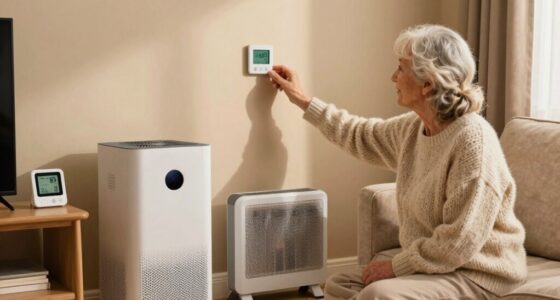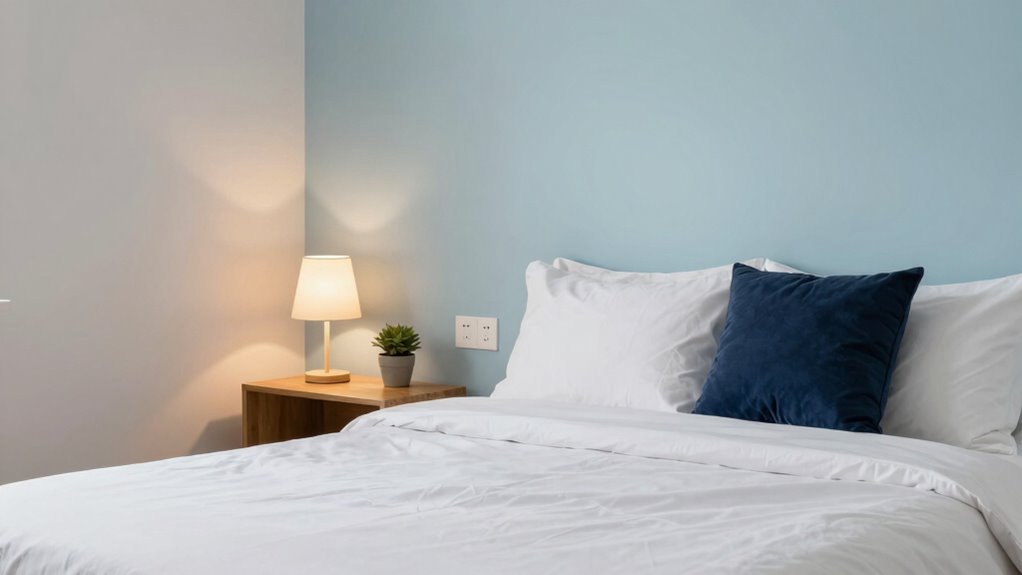

To create a safer bedroom layout, guarantee your main light brightly illuminates the entire space, with softer options like bedside lamps for comfort. Keep pathways clear of clutter and avoid placing furniture in front of exits or windows. Secure tall furniture to prevent tipping and keep cords out of walkways. Proper air circulation and removing hazards make your space safer. For more tips on organizing your bedroom safely, explore additional ideas to improve your night’s safety.

Get smart everyday buys delivered free with Prime
- Fast, free delivery on millions of items
- Prime Video, Amazon Music and more included
- Member-only deals all year
Key Takeaways
- Ensure main lighting covers the entire room for clear visibility at night.
- Keep pathways clear of clutter and furniture to prevent tripping hazards.
- Secure tall furniture to walls and avoid placing items in walkways.
- Position bed for easy access from both sides, with nightlights nearby for safe navigation.
- Keep electrical cords organized and outlets not overloaded for safety.
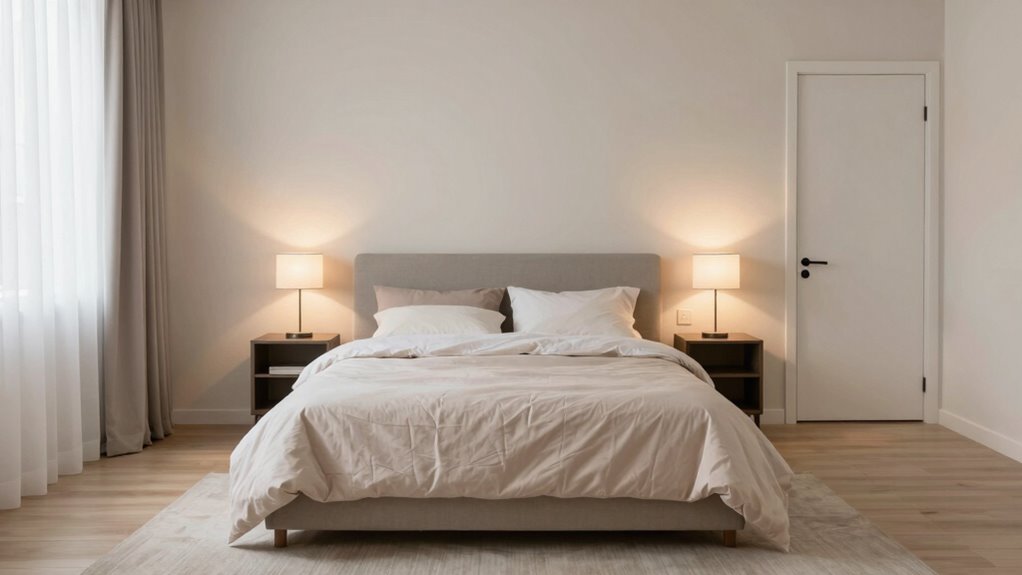
Creating a safe bedroom layout is essential for preventing accidents and ensuring restful nights. When you think about safety, the first things that come to mind are lighting safety and furniture placement. These elements work together to create an environment where you can relax without worry and wake up feeling refreshed. Proper lighting not only helps you see clearly, but it also reduces the risk of tripping or bumping into furniture in the dark. Make sure your main light source is bright enough to illuminate the entire room, and consider adding bedside lamps or wall-mounted fixtures for softer lighting options. Nightlights can be especially helpful if you tend to get up during the night, as they provide enough light to see your surroundings without disturbing your sleep.
Creating a safe bedroom involves proper lighting and thoughtful furniture placement for restful, worry-free nights.
Furniture placement plays a crucial role in keeping your bedroom both functional and safe. When you set up your furniture, keep pathways clear and avoid cluttering the space with too many pieces. Your bed should be positioned to allow easy access from both sides, especially if you share your bedroom. Avoid placing furniture in front of windows or doors, as this can block exits or create obstacles in case of an emergency. Keep heavy or sharp-edged furniture away from areas where you might trip or fall, such as near your bed or walking paths. Secure any furniture that could tip over, like tall dressers or shelves, to prevent accidents, especially if you have children or pets around. Additionally, ensuring that your electrical outlets are easily accessible and not overloaded can help prevent fire hazards and electrical accidents. Electrical safety is just as important as physical layout to maintain a secure environment. Incorporating proper furniture arrangement can also improve airflow and reduce clutter, further enhancing safety.
You should also pay attention to the placement of electrical outlets and cords. Keep cords out of walkways to prevent tripping hazards, and avoid overloading outlets, which can be a fire risk. Consider using surge protectors and hiding cords behind furniture to keep your space tidy and safe. Additionally, think about the height of your bed and furniture, making sure they’re easy to get in and out of, especially if you or someone else has mobility issues. Incorporating air quality considerations, such as proper ventilation or air purifiers, can further enhance your environment by reducing indoor pollutants and allergens. All these small adjustments add up to a safer, more comfortable bedroom environment. Proper lighting safety and thoughtful furniture organization are key to creating a space where safety and comfort go hand in hand, helping you sleep better and wake up ready for the day.
Frequently Asked Questions
How Can I Improve Bedroom Ventilation for Safety?
To improve bedroom ventilation for safety, start by enhancing airflow with strategic placement of vents or windows. Use natural airflow by opening windows regularly, especially when weather allows. Consider installing ventilation systems like exhaust fans or air purifiers to boost air quality. Keep furniture away from vents to prevent blockages, and use ceiling fans to circulate air effectively. These steps help maintain fresh air, reducing risks associated with poor ventilation.
Are There Specific Lighting Tips for Safer Sleep Environments?
To create a safer sleep environment, you should use lighting that minimizes nighttime glare. Opt for soft, warm lights that don’t strain your eyes or disturb your sleep cycle. Installing light dimming switches allows you to adjust brightness easily, reducing harshness before bed. Keep bedside lamps low or use indirect lighting to prevent disruptions, helping you fall asleep faster and stay asleep more peacefully.
What Safety Measures Should I Take for Children’s Bedroom Layouts?
You should implement child proofing strategies like securing furniture to walls and covering outlets to prevent accidents. Arrange furniture away from windows and cords, reducing hazards and ensuring safe play areas. Also, plan and clearly mark emergency escape routes, so your child knows how to exit safely if needed. Regularly check for hazards, keep small objects out of reach, and create a safe, organized environment for peaceful, secure nights.
How Often Should I Check for Potential Hazards in My Bedroom?
You should check for potential hazards in your bedroom weekly to guarantee safety. During these inspections, verify that alarm systems are functioning properly and test emergency exits to confirm they’re accessible and unobstructed. Regular checks help identify hazards like loose cords or clutter, reducing risks. Staying proactive ensures your bedroom remains a safe environment, especially if you have children or elderly family members, giving everyone peace of mind during the night.
Can Furniture Placement Prevent Accidents During the Night?
Yes, proper furniture arrangement can prevent accidents during the night. By keeping walkways clear and avoiding sharp corners near your bed, you reduce nighttime hazards and minimize tripping risks. Moving bulky furniture away from pathways guarantees you won’t stumble in the dark. While it might seem minor, thoughtful furniture placement creates a safer environment, helping you avoid injuries and sleep peacefully without worrying about potential hazards lurking in your bedroom.
Conclusion
By following these simple bedroom layout tips, you create a safer, more peaceful sanctuary where danger takes a backseat. Imagine your room as a fortress, impenetrable by hazards, ensuring restful nights every time you lay down. With just a few mindful adjustments, you’ll transform your space into the ultimate haven of safety. Don’t wait for disaster to strike—take control now and turn your bedroom into an unbeatable fortress of comfort and security!
Evergreen bestsellers Picks
bestsellers
As an affiliate, we earn on qualifying purchases.