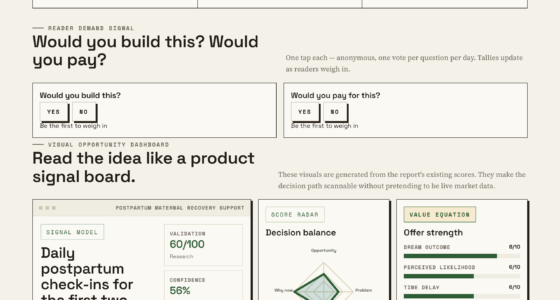
📊 Full opportunity report: Vertigo relief app on IdeaNavigator AI — validation score, market gap, and execution plan.
Listen free for 30 days with Audible
Thousands of audiobooks and originals — cancel anytime.
Start your free trialAs an affiliate, we earn on qualifying purchases.
TL;DR
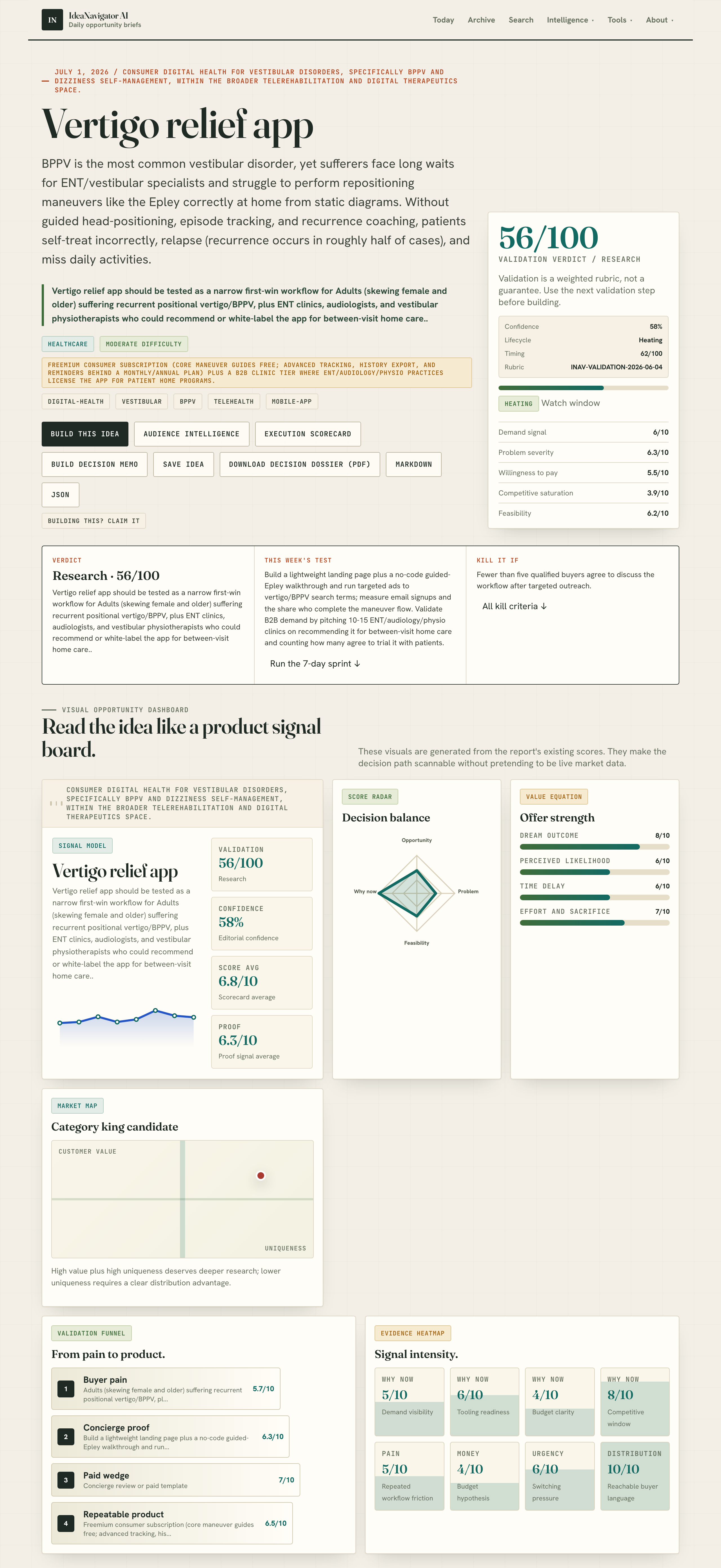
A vertigo relief app is being developed to guide adults with BPPV through repositioning maneuvers at home, with potential for clinic integration. Its goal is to improve self-treatment accuracy and reduce relapse. Validation and market interest are ongoing.
Developers are working on a new vertigo relief app designed to guide adults with recurrent BPPV through repositioning maneuvers at home, aiming to improve self-treatment and reduce relapse rates. The app is also targeted at ENT clinics, audiologists, and vestibular physiotherapists who could recommend or white-label it for patient use between visits. This development comes amid increased interest in digital therapeutics for vestibular disorders and the shift toward telehealth solutions.
The proposed app will include screening tools to identify BPPV candidates, guided step-by-step instructions for maneuvers like the Epley and Brandt-Daroff, and real-time gyroscope-based feedback to ensure correct head positioning. Learn more about vestibular disorders at this resource. It will also log dizziness episodes, triggers, and symptom severity over time. The product aims to be a freemium platform with basic maneuver guidance free of charge, while advanced features such as detailed tracking, history export, and reminders will be offered via subscription. Additionally, clinics could license the app for patient home programs, integrating it into existing vestibular care workflows.Market analysts estimate the digital vestibular rehabilitation space was valued near USD 498 million in 2024, with a projected compound annual growth rate of approximately 13.5% through 2033, reflecting rising adoption among consumers and healthcare providers. For more on digital health market trends, see market insights. The app’s development team plans to validate demand through targeted advertising and pilot programs with ENT and audiology clinics, measuring user engagement, maneuver completion rates, and clinical interest.
Potential Impact on BPPV Self-Management and Clinical Care
This app could significantly improve how adults manage recurrent vertigo, especially for those facing long waits for specialist care. By providing guided, real-time feedback, it aims to reduce incorrect self-treatment and recurrence, which affects roughly half of BPPV cases. The integration of digital tools into vestibular care may also streamline clinical workflows, enhance patient engagement, and expand access to effective therapy outside traditional settings. The success of this platform could accelerate the adoption of digital therapeutics in vestibular health and influence future telehealth strategies.
vestibular rehabilitation head positioning device
As an affiliate, we earn on qualifying purchases.
As an affiliate, we earn on qualifying purchases.
Rise of Digital Therapeutics in Vestibular Disorders
Benign paroxysmal positional vertigo (BPPV) is the most common vestibular disorder, often requiring repositioning maneuvers like the Epley. Traditionally, patients rely on in-person visits to ENT specialists or physiotherapists, but long wait times and difficulty performing maneuvers correctly at home limit effective self-management. The COVID-19 pandemic accelerated the shift toward telehealth and digital health solutions, with smartphones now equipped with accurate motion sensors capable of guiding and monitoring head movements in real time. The digital therapeutics market for vestibular disorders has grown substantially, with estimates reaching USD 498 million in 2024, driven by increasing acceptance among payers and providers. Developing an app that combines guided therapy, episode tracking, and clinician integration aligns with this evolving landscape and addresses unmet needs in patient self-care.
“The integration of gyroscope-based feedback in a mobile app could dramatically improve the accuracy of self-administered repositioning maneuvers.”
— an anonymous researcher
As an affiliate, we earn on qualifying purchases.
Unconfirmed Aspects of App Validation and Adoption
It is not yet clear how effectively the app will perform in real-world settings, including user adherence, maneuver accuracy, and clinical validation. The number of clinics willing to adopt and recommend the platform remains unknown, as does the pace of regulatory approval or reimbursement pathways for digital therapeutics in this space. Further pilot studies and user testing are needed to confirm its efficacy and integration into standard care.
As an affiliate, we earn on qualifying purchases.
Next Steps for Development and Clinical Trials
The development team plans to launch a lightweight landing page and run targeted ads to gauge interest among vertigo sufferers. They will also pilot the app with a select group of ENT and audiology clinics to assess clinical feasibility and gather user feedback. Results from these efforts will inform further refinements, validation studies, and potential regulatory pathways. A broader rollout could follow once initial validation demonstrates safety, usability, and efficacy.
vestibular disorder self-treatment kit
As an affiliate, we earn on qualifying purchases.
As an affiliate, we earn on qualifying purchases.
Key Questions
How does the app guide users through vertigo maneuvers?
The app provides animated step-by-step instructions, audio cues, and real-time gyroscope feedback to ensure correct head positioning during maneuvers like the Epley and Brandt-Daroff.
Can this app replace seeing a healthcare professional?
No, the app is intended as a supplemental tool and includes a disclaimer that it is not a substitute for medical advice. Users are advised to consult a healthcare provider for persistent or severe symptoms.
Will clinics be able to recommend or license the app for patients?
Yes, the developers plan to offer a licensing model for clinics, allowing them to incorporate the app into their patient care protocols for between-visit management.
When might the app be available to the public?
The app is currently in development and pilot testing phases. A broader release could occur within the next 12-18 months, depending on validation outcomes and regulatory considerations.
Source: IdeaNavigator AI
NFL season / tailgating Picks
team gear
As an affiliate, we earn on qualifying purchases.