
📊 Full opportunity report: Acoustic Dampening, Placement, and the “Rig in the Closet” Setup on ThorstenMeyerAI.com — validation score, market gap, and execution plan.
TL;DR
This article explains how to significantly reduce noise from high-power AI workstations by strategic placement, proper acoustic treatment, and using closet or cabinet setups with ventilation. Moving the rig away from the workspace is the most effective method, while sealed cabinets require careful airflow management.
Moving high-power AI workstations into separate rooms or closets, combined with proper ventilation, is the most effective way to reduce noise at the workspace, according to experts.
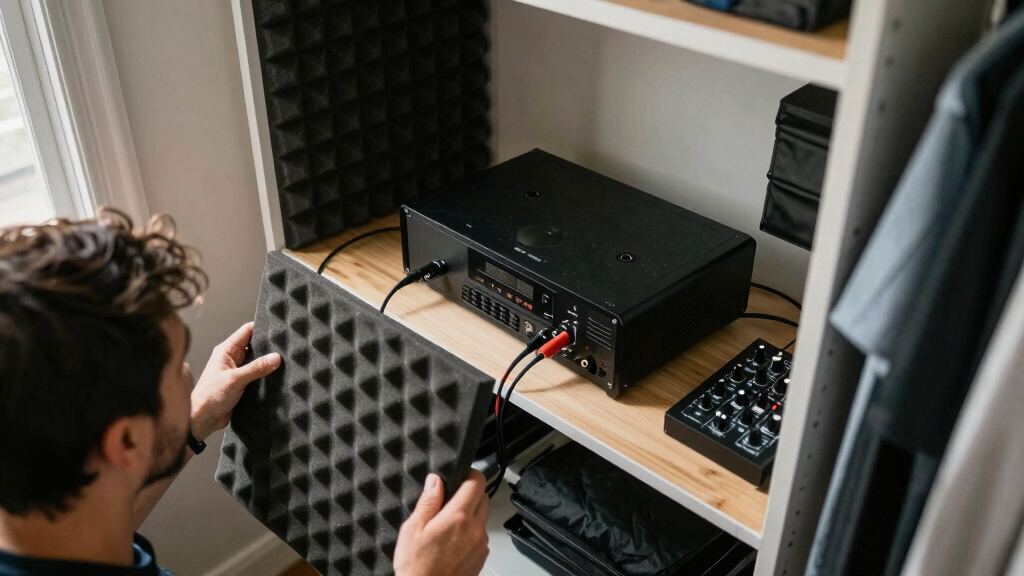
Most noise reduction comes from physically distancing the rig from the user, with placing the machine in another room or closet being the top strategy. This approach leverages network connectivity, allowing remote operation and eliminating the need for the machine to be near the workspace. Acoustic dampening with foam or barriers is less effective than physical separation, as it only reduces reflections and airborne noise within a room. For enclosed setups like closets or cabinets, active ventilation is essential to prevent heat buildup, which can cause throttling and increased fan noise. Purpose-built soundproof cabinets with temperature-controlled airflow are recommended for maintaining both silence and cooling efficiency. The ‘rig in the closet’ setup is effective but requires careful attention to airflow and heat dissipation to avoid damaging the hardware.Acoustic dampening
& the rig in the closet.
The most powerful noise fix isn’t a material — it’s a floor plan. A rig you can’t hear because it’s in another room beats any amount of foam. Tap the approaches in Part 1 to see what actually works.
(another room)
(levers 1–4)
(door / barrier)
(acoustic foam)
Contain the noise, not the heat
Why Placement and Ventilation Are Critical for Quiet AI Workstations
Proper placement and ventilation strategies dramatically improve workspace comfort and hardware longevity. Moving the rig away from the user minimizes noise without extensive acoustic treatment, while sealed enclosures require robust airflow solutions to prevent overheating. These methods are especially relevant as AI hardware becomes more powerful and generates more heat and noise, making effective noise management essential for professional and home setups alike.As an affiliate, we earn on qualifying purchases.
High-Power AI Hardware and Noise Management Techniques
Traditional noise mitigation relies heavily on acoustic foam and barriers, which only address airborne noise within a room. Experts emphasize that the most effective noise reduction is physical separation—placing the rig in another room or closet. This approach aligns with the increasing use of remote inference setups, where the user interacts over a network rather than directly near the hardware. The challenge with closet or cabinet setups is heat management; unventilated spaces trap heat, risking hardware damage. Proper airflow, passive vents, or active exhaust fans are necessary to prevent overheating. Purpose-built soundproof cabinets with integrated cooling solutions are emerging as a solution for quiet, cool operation of high-power AI hardware."The most effective way to reduce noise is to move the rig into another room or closet and operate it headless over the network."
— Thorsten Meyer, AI hardware expert
As an affiliate, we earn on qualifying purchases.
Remaining Challenges in Noise and Heat Management
It is not yet clear how different room sizes, hardware configurations, or ambient conditions affect the effectiveness of closet or cabinet setups. The optimal balance between noise reduction and cooling efficiency continues to evolve with new hardware and ventilation technologies.ventilated closet server enclosure
As an affiliate, we earn on qualifying purchases.
As an affiliate, we earn on qualifying purchases.
Next Steps in Optimizing AI Workstation Quietness
Developments are expected in advanced soundproof enclosures with integrated cooling and smarter airflow controls. Further research may refine guidelines for different hardware configurations and room environments. Users should monitor hardware temperature and noise levels closely when deploying closet or cabinet setups and consider custom solutions for optimal results.acoustic dampening foam panels for computers
As an affiliate, we earn on qualifying purchases.
As an affiliate, we earn on qualifying purchases.
Key Questions
Is placing my AI workstation in a closet safe?
Yes, if proper ventilation and airflow management are implemented, a closet can be a safe and effective way to reduce noise. Ensure there are active exhaust fans or vents to prevent heat buildup.
What is the most effective way to reduce noise from my AI rig?
The most effective method is to move the rig into another room or closet, minimizing the need for acoustic treatment and significantly reducing noise at the workspace.
Can I just use acoustic foam to quiet my AI workstation?
Acoustic foam alone is the least effective solution since it only reduces reflections and airborne noise within a room. It does not block sound transmission or address structure-borne noise; physical separation and proper ventilation are more effective.
What should I consider when building a 'rig in the closet' setup?
Ensure there is adequate airflow with passive vents or active exhaust fans, and monitor temperature levels to prevent overheating. Using purpose-built soundproof cabinets with integrated cooling can optimize both noise reduction and heat dissipation.
Source: ThorstenMeyerAI.com