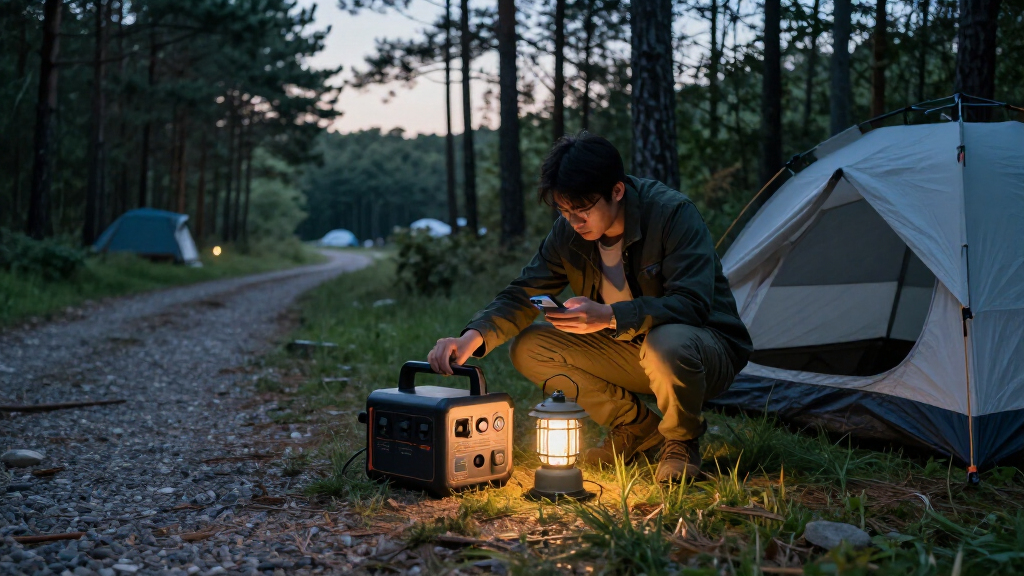

🔍 Read the full analysis: How To Compare 15 Portable Power Stations For Camping And Emergency Backup In 2027 on ThorstenMeyerAI.com

Get smart everyday buys delivered free with Prime
- Fast, free delivery on millions of items
- Prime Video, Amazon Music and more included
- Member-only deals all year
TL;DR
A ThorstenMeyerAI.com buyer’s guide evaluates 15 portable power stations for camping and emergency backup, with the Anker SOLIX S2000 named its overall pick and the Jackery Explorer 300 recommended for lighter trips. The source gives product specifications and selection criteria, but does not provide a complete list of all 15 models or independent test results in the supplied material.
ThorstenMeyerAI.com’s guide comparing 15 portable power stations names the Anker SOLIX S2000 its overall pick and the Jackery Explorer 300 its compact option for lighter use. The guide focuses on matching capacity and output to the devices a buyer needs to run, while weighing runtime against transportability, considerations also relevant to home backup power stations.
The guide describes the Anker SOLIX S2000 as having 2,010 watt-hours of capacity and 1,500 watts of output, and recommends it for heavier backup needs or off-grid use. It says the Jackery Explorer 300 is better suited to day trips and light electronics. The source also points to the Jackery HomePower 3600 Plus as a high-capacity option, while warning that larger units can be difficult for one person to move.
Its comparison framework considers battery chemistry, power-to-weight ratio, inverter efficiency, solar input and recharge time. The guide says it gives higher priority to versatility, including the ability to run both high-wattage appliances and smaller devices, and says it considered expandability and replacement parts. The supplied material does not include the names or complete specifications of all 15 products, so readers cannot verify the full ranking from these details alone.
The guide distinguishes watt-hours (Wh), which indicate stored energy and help estimate runtime, from watts (W), which describe how much power a station can supply at once. It gives the example that a 500Wh unit could run a 100W laptop for about five hours in ideal arithmetic, but says a station with a 200W output limit could not run a 1,200W coffee maker. Actual runtime can vary with conversion losses and device use.
The 15 picks
- 1
 Jackery HomePower 3600 Plus Power Station, 3584Wh, 3600W AC OutputView on Amazon →
- 2
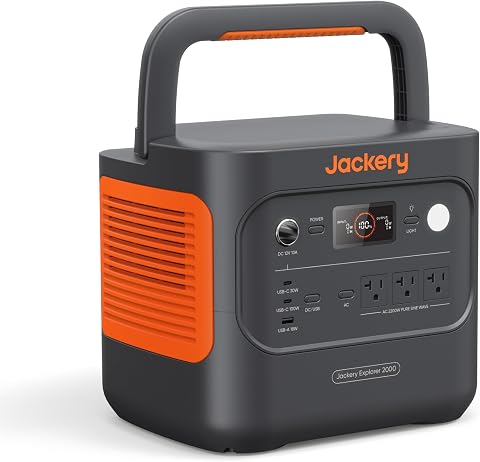 Jackery Explorer 2000 v2 Portable Power Station, 2042Wh, 2200W AC OutputView on Amazon →
- 3
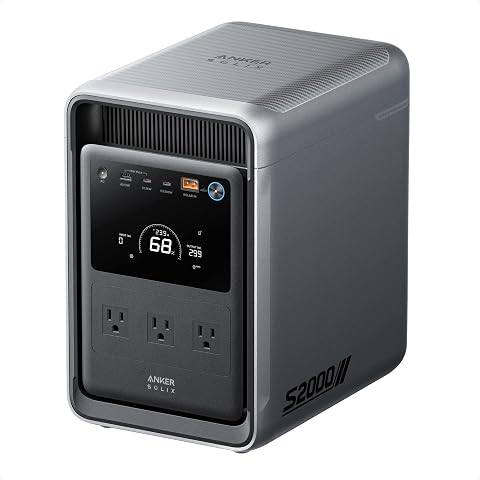 Anker SOLIX S2000 Portable Power Station, 2010Wh, 1500WView on Amazon →
- 4
 EcoFlow Delta 3 Portable Power Station, 1024Wh, 1800WView on Amazon →
- 5
 Jackery Explorer 1000 v2 Portable Power Station 1070Wh 1500WView on Amazon →
- 6
 BLUETTI Elite 100 V2 Portable Power Station for Camping 1024Wh 1800WView on Amazon →
- 7
 BLUETTI Portable Power Station AC180, 1152Wh LiFePO4 Battery Backup with 2 18…View on Amazon →
- 8
 BLUETTI Elite 30 V2 Portable Power Station 288Wh 600W LFP Solar GeneratorView on Amazon →
- 9
 Jackery Explorer 300 Portable Power Station, 293Wh Lithium Battery, Solar Gen…View on Amazon →
- 10
 Portable Power Station 500W, 519Wh Solar Generator BackupView on Amazon →
- 11
 Portable Solar Generator 300W with 60W Solar PanelView on Amazon →
- 12
 ALLWEI Portable Power Station 300W, 280Wh Solar Generator with Pure Sine Wave…View on Amazon →
- 13
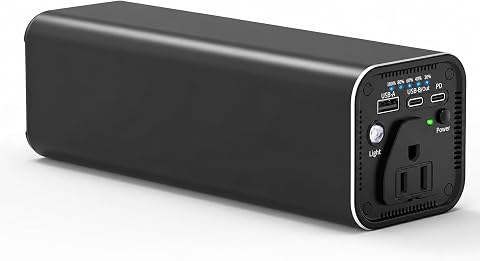 Zealott Portable Power Station 31200mAh 112.3Wh with 120W AC and 65W USB-C PDView on Amazon →
- 14
 MARBERO Portable Power Station 88Wh, 120W Surge, Solar Generator 24,000mAhView on Amazon →
- 15
 HOWEASY Portable Power Station, 120W (240W Peak) Solar GeneratorView on Amazon →
Matching Backup Power to Real Needs
The comparison addresses a practical buying problem: a high capacity does not guarantee a station can start or run a particular appliance. Shoppers preparing for outages need to check both the device’s operating demand and any startup surge, while campers may place more weight on carrying comfort and charging small electronics. Choosing by capacity alone can leave buyers with a unit that is either too weak for the intended appliance or heavier and more expensive than their use requires.
The source says LiFePO4 batteries generally offer more charge cycles than conventional Li-ion batteries, and that faster AC charging and larger solar inputs can reduce downtime. Those benefits matter most for frequent use or extended trips, but the guide does not provide controlled test data or model-by-model prices to quantify the tradeoffs. Its recommendations should be treated as the source’s assessment, not a guarantee of performance.
Popular right now

Hisense E7 Cinema Series 65-Inch Hi-QLED Mini-LED 4K UHD Smart Fire TV

Hisense 55E6QF 55-Inch E6 Cinema Series 4K QLED Smart Fire TV

De'Longhi Eletta Explore Fully Automatic Espresso Machine with Grinder and Milk Frother
As an affiliate, we earn on qualifying purchases.
The Guide’s Comparison Criteria
The source frames the market around a tradeoff between runtime, output and portability. Larger stations can store more energy and may support higher loads, but are often heavier. Smaller models can be easier to carry and adequate for phones or laptops, yet may lack the capacity or AC output needed for household appliances.
It also highlights pure sine wave inverters for sensitive electronics, and advises checking USB-C Power Delivery, AC outlets, surge ratings and solar input. The source states that some newer models accept 600W or more of solar input and that high-end models may accept 600W to 800W; these are broad claims in the guide, not specifications supplied here for every product. Its 15-model analysis is described as considering practical recharge times and thermal management, but the underlying test method and measurements are not included in the provided source text.
“The primary tradeoff in this category is weight versus runtime.”
— ThorstenMeyerAI.com guide
Missing Product-Level Test Details
The supplied source material does not name all 15 models, show a complete ranking, or provide prices, measured runtimes, weights and test conditions for every unit. It also does not identify a publication date or explain how the evaluation’s claims were independently verified. Statements about battery cycle life, solar charging speeds and suitability for particular appliances should therefore be read as the guide’s claims, not as independently confirmed findings.
Actual performance depends on the appliance’s draw, startup surge, ambient temperature, battery condition and inverter losses. The source does not specify which refrigerator, laptop or other devices were used for any real-world testing, nor does it provide results demonstrating that a particular station will run a given appliance for a fixed period.
What Buyers Should Check Before Purchase
Before choosing a model, buyers should compare its continuous and surge output with the appliances they plan to use, then estimate runtime from usable capacity rather than relying only on headline watt-hours. They should also confirm the battery chemistry, charging limits, port selection, weight, warranty and whether expansion batteries or replacement parts are available.
The source does not announce a follow-up test or provide a date for updated rankings. Readers considering a purchase should consult the manufacturers’ current specifications and warranty terms, and look for model-specific test results before relying on a station for essential backup. A fuller comparison would need to publish all 15 product names, standardized test conditions and comparable price and performance data.
Key Questions
Which power station does the guide name as its overall pick?
The guide names the Anker SOLIX S2000, citing 2,010Wh of capacity and 1,500W of output. That recommendation is the source’s assessment; the supplied material does not include independent test results.
What is the difference between watt-hours and watts?
Watt-hours measure stored energy and help estimate how long a device might run. Watts measure output power and indicate whether the station can operate a device at all. Startup surges can also matter for appliances with motors.
Is LiFePO4 better than Li-ion for a power station?
The guide says LiFePO4 batteries generally provide more charge cycles and greater temperature stability, while Li-ion units are lighter and less expensive. The best fit depends on usage frequency, weight priorities and the specific model’s documented specifications.
Does the supplied comparison list all 15 products?
No. The provided material names several models, including the Anker SOLIX S2000, Jackery Explorer 300, Jackery HomePower 3600 Plus, Jackery Explorer 2000 v2 and BLUETTI AC180, but does not give a complete 15-product list or full test results.
Source: ThorstenMeyerAI.com