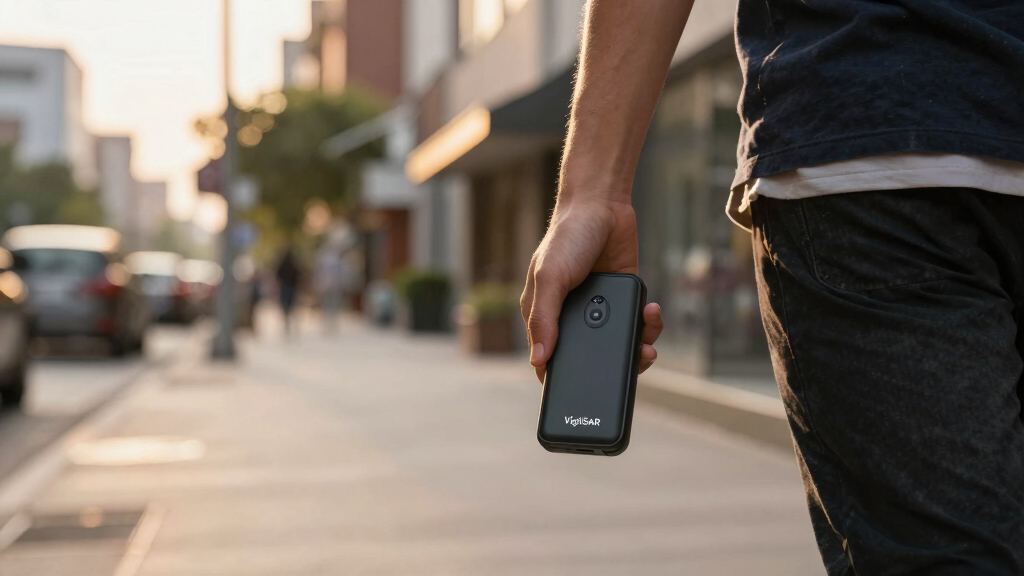

📊 Full opportunity report: VigilSAR: The Object That Isn’t Transmitting on ThorstenMeyerAI.com — validation score, market gap, and execution plan.

Get smart everyday buys delivered free with Prime
- Fast, free delivery on millions of items
- Prime Video, Amazon Music and more included
- Member-only deals all year
TL;DR
VigilSAR is a radar-based platform that identifies objects visible on SAR imagery without transponder signals. It fuses radar detections with AIS and other data to find vessels that are ‘dark,’ aiding maritime security and safety. Its core capability is demonstrated using European Space Agency data, with ongoing developments in commercial deployment.
VigilSAR has confirmed its core capability of detecting objects on SAR imagery that are not transmitting transponder signals, a key advancement for maritime domain awareness. The platform fuses radar detections with AIS, ADS-B, and open-source data to identify vessels that are intentionally or unintentionally ‘dark,’ which has significant implications for maritime security, safety, and law enforcement.
The foundational technology of VigilSAR leverages Sentinel-1 / Copernicus data, demonstrating its detection and classification capabilities using publicly available SAR imagery. The platform employs a standard detection pipeline to identify anomalous radar returns, then pairs these detections with transponder data to find unexplained objects.
Its primary innovation lies in fusion and integration: by subtracting explained detections (those with AIS or ADS-B signals), VigilSAR isolates objects that are potentially suspicious or require further investigation. This approach is particularly relevant for maritime scenarios, where vessels may turn off transponders to evade detection, such as in illegal fishing, sanctions evasion, or smuggling.
VigilSAR — the object that isn’t transmitting
Radar sees through cloud and darkness, when cameras can’t. Fuse it with transponder data and the signal is the one detection no transponder explains.
Independent commentary on public positioning, produced with AI assistance under human editorial oversight. The views are the author’s own and may change. This does not verify or endorse VigilSAR’s capabilities, contracts, or performance. Capabilities on Sentinel-1 / Copernicus reflect a free, public data foundation; commercial-constellation and air-gapped-deployment references reflect stated positioning, not independently demonstrated fact. ISR and related technologies may be subject to export controls and dual-use regulations — lawful, ethical use is solely the operator’s responsibility. Nothing here is an offer, pricing, or operational/safety/legal advice. AI detection and classification can err and require human verification. Product and company names are trademarks of their respective owners; mention does not imply endorsement.
Implications for Maritime Security and Safety
The ability to detect and identify vessels that are not transmitting transponder signals enhances maritime security and rule-of-law enforcement. It supports coast guards, fisheries regulators, and search-and-rescue operations by providing reliable, all-weather, day-and-night situational awareness. This capability addresses a critical gap in maritime surveillance, especially in regions prone to illegal activities or humanitarian emergencies.
As an affiliate, we earn on qualifying purchases.
Development of SAR-Based Maritime Monitoring
Traditional optical satellites are limited by weather and lighting conditions, making SAR a vital complement for continuous monitoring. VigilSAR’s approach builds on established detection and classification techniques, with its unique value in fusion and anomaly detection. The platform’s core capability is demonstrated through open-source Sentinel-1 data, with ongoing efforts to incorporate commercial satellite constellations and expand deployment scope.
While the detection pipeline is well-understood, the integration with other signals and the operational deployment of VigilSAR remain in development, with no public pricing or detailed contract information available at this stage.
“Our platform leverages publicly available SAR data to detect objects that are intentionally hiding from traditional surveillance methods.”
— VigilSAR spokesperson
As an affiliate, we earn on qualifying purchases.
Capabilities Beyond Demonstration Remain Unconfirmed
While VigilSAR’s core detection and fusion capabilities are demonstrated with Sentinel-1 data, the extent of commercial deployment, integration with other satellite constellations, and operational readiness are still in development. Specific details about pricing, contracting, and real-world performance in diverse environments are not yet publicly available.
As an affiliate, we earn on qualifying purchases.
Next Steps in Deployment and Validation
VigilSAR is expected to continue testing with additional commercial satellites and expand its operational footprint. The platform’s developers plan to demonstrate real-world case studies involving maritime law enforcement, search-and-rescue, and border security. Further validation and potential commercial offerings are anticipated in the coming months, alongside clarification on pricing and deployment models.
As an affiliate, we earn on qualifying purchases.
Key Questions
What is VigilSAR’s main innovation?
Its primary innovation is fusing radar detections from SAR imagery with transponder data to identify objects that are visible on radar but not transmitting signals, helping detect ‘dark’ vessels.
Can VigilSAR detect ships in all weather conditions?
Yes, because SAR imaging works through clouds, darkness, and smoke, VigilSAR can operate reliably in all-weather, day and night scenarios.
Is VigilSAR currently available commercially?
No, the platform is still in development, with demonstrations based on public Sentinel-1 data. Commercial deployment details and pricing are not yet publicly available.
Who benefits most from VigilSAR’s capabilities?
Maritime security agencies, coast guards, fisheries regulators, and search-and-rescue teams benefit from VigilSAR’s ability to find vessels that are ‘dark’ or hiding their transponder signals.
What are the limitations of VigilSAR?
While detection and fusion are demonstrated, operational deployment, integration with other satellite data, and real-world validation in diverse environments are still in progress.
Source: ThorstenMeyerAI.com
Fall Picks
fall essentials
As an affiliate, we earn on qualifying purchases.