
📊 Full opportunity report: Apple Is Reaching for Chinese Memory. Europe Doesn’t Even Have That Option. on ThorstenMeyerAI.com — validation score, market gap, and execution plan.
TL;DR
Apple is lobbying Washington to purchase memory chips from Chinese manufacturer CXMT, highlighting Europe’s absence of similar options. This move underscores Europe’s vulnerability in the global semiconductor supply chain and its limited leverage.
Apple is lobbying Washington for permission to buy memory chips from CXMT, a Chinese manufacturer on the Pentagon’s blacklist, a move confirmed by sources familiar with the matter. This development comes shortly after Apple raised prices on Macs and iPads, citing a global memory shortage. The effort underscores the company’s reliance on Chinese supply chains for critical components and highlights the limited options available to Europe in securing similar supplies.
According to reports from Thorsten Meyer AI and other sources, Apple’s lobbying effort aims to gain approval to purchase chips from CXMT, despite the company being on the US Pentagon’s blacklist. The move reflects Apple’s need to address the ongoing memory shortage, which has impacted its product pricing and supply chain management.
While Apple has alternative options—such as sourcing from US-based Micron or lobbying within Washington—these are not as flexible or immediate as reaching into China’s supply chain. This situation exposes a broader issue: Europe’s lack of domestic memory chip production and limited leverage in global chip markets. Europe produces less than 10% of the world’s semiconductors and has only a few major memory manufacturers, none of which are European, making it highly dependent on imports from East Asia and the US.
Apple is reaching for Chinese memory. Europe doesn’t even have that option.
The shortage exposes America’s dependence — and Europe’s far more brutally. Apple has a domestic supplier, political weight, and the China option. Europe has no memory of its own, no seat at the table, no leverage on what counts.
- EU makes < 10% of the world’s semiconductors
- Effectively no DRAM, no HBM from Europe
- 3–4 memory makers worldwide — none European
- Pure price-taker: memory ~4× in 3 quarters
- ASML: EUV monopoly — no leading-edge chip without it
- Zeiss: precision optics, unrivalled worldwide
- imec · CEA-Leti · Fraunhofer: world-class research
- Infineon, NXP, STMicro: automotive · power · SiC
The shortage is a sovereignty test — Europe fails on supply but still holds the leverage in its hand. If even Apple can’t buy its way out, Europe’s answer isn’t to buy its way in, but to run two tracks: press the unique chokepoints as real leverage — and cut dependence wherever it can without Brussels: local-first, open weights, quantization, right-sized hardware. Bury the 20% dream, defend what’s yours, need less.
Implications of Apple’s Chinese Chip Strategy for Europe
This development highlights Europe’s vulnerability in the global semiconductor supply chain, especially in memory chips, which are critical for AI, high-performance computing, and consumer electronics. Europe’s dependence on external suppliers limits its ability to respond to crises or supply disruptions, potentially impacting its tech industry and economic security.
It also underscores the strategic importance of building domestic or regional chip manufacturing capabilities. Without such infrastructure, Europe remains a price-taker and lacks the leverage to influence global chip prices, which have quadrupled over recent quarters. The reliance on external sources makes Europe susceptible to supply constraints and geopolitical tensions, especially as US-China tensions escalate.
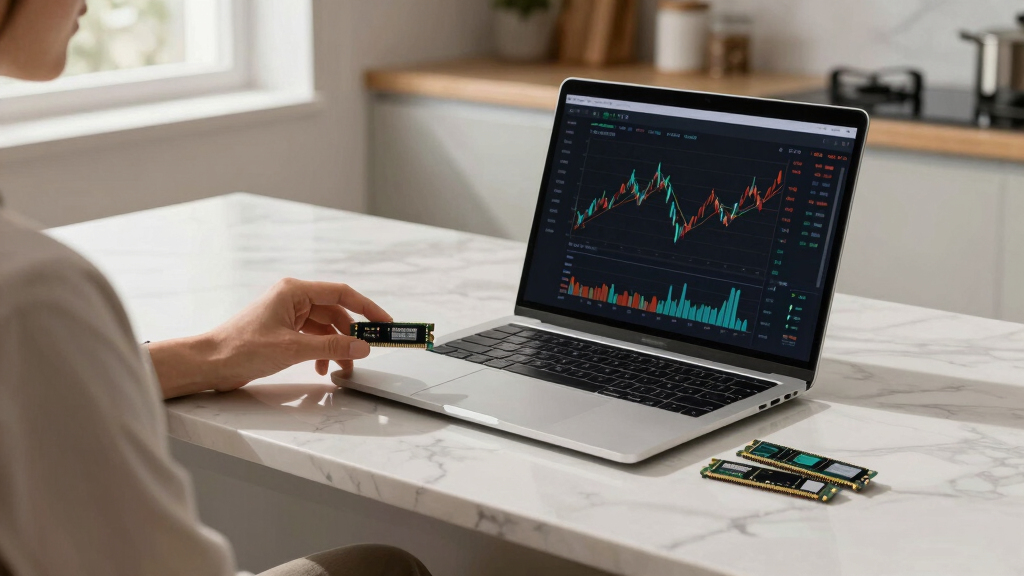
Chinese memory chips for computers
As an affiliate, we earn on qualifying purchases.
As an affiliate, we earn on qualifying purchases.
Europe’s Semiconductor Manufacturing and Strategic Gaps
Europe’s semiconductor industry is heavily reliant on imports, with less than 10% of global production by value. The continent’s few remaining memory manufacturers—Samsung, SK Hynix, and Micron—are based in Asia or the US, with no European firms in the memory segment. The EU’s efforts to bolster domestic production, such as the Chips Act 2.0, have faced delays and funding shortfalls, making it unlikely to meet its 2030 goal of capturing 20% of the global market.
While Europe controls critical upstream manufacturing chokepoints, such as ASML’s EUV lithography machines, it remains dependent on external fabrication capacity. The recent collapse or stalling of flagship projects, like Intel’s Magdeburg plant, further illustrate the challenges in establishing self-sufficient fabrication facilities. The result is a strategic gap that leaves Europe vulnerable to supply disruptions and price volatility.
“Without domestic memory manufacturing, Europe remains a price-taker and is increasingly vulnerable to external shocks and geopolitical tensions.”
— European industry expert
As an affiliate, we earn on qualifying purchases.
Unclear Impact of US-China Chip Policy on Apple
It remains uncertain how US authorities will respond to Apple’s lobbying efforts, and whether approval will be granted. The broader implications for US-China relations and global supply chains are still developing, with potential repercussions for Europe’s access to critical components.
As an affiliate, we earn on qualifying purchases.
Next Steps in US Policy and Europe’s Response
Expect further negotiations between Apple and US regulators, with possible approvals or restrictions announced in the coming months. Europe’s policymakers will likely reassess strategies to develop independent chip manufacturing capabilities, though significant progress remains years away. Monitoring US-China diplomatic developments will be crucial to understanding future supply chain stability.

The Semiconductor Supply Chain – Enterprise-Wide Planning Challenges
As an affiliate, we earn on qualifying purchases.
As an affiliate, we earn on qualifying purchases.
Key Questions
Why is Apple lobbying Washington for Chinese memory chips?
Apple seeks to address the global memory shortage impacting its products and sees Chinese suppliers like CXMT as a viable source, despite restrictions. The lobbying aims to secure supply and manage costs amid market pressures.
What does this mean for Europe’s chip industry?
Europe has limited options for memory chip sourcing, making it heavily dependent on imports from Asia and the US. This dependence exposes vulnerabilities in supply security and pricing, especially in times of geopolitical tension.
Can Europe develop its own memory chip manufacturing capacity?
While efforts are underway, such as the EU Chips Act, building domestic memory manufacturing at scale faces significant technical, financial, and supply chain challenges, making it unlikely to be realized by 2030.
How might US-China relations affect this situation?
The US’s restrictions on Chinese chip companies and China’s response could influence whether Apple and other US firms can access Chinese chips, impacting global supply chains and strategic decisions.
What are the implications if Apple succeeds in sourcing from CXMT?
If approved, it could set a precedent for other US companies to engage with Chinese suppliers, potentially reshaping supply chain dynamics and increasing reliance on China for critical tech components.
Source: ThorstenMeyerAI.com