
TL;DR

Get smart everyday buys delivered free with Prime
- Fast, free delivery on millions of items
- Prime Video, Amazon Music and more included
- Member-only deals all year
Memory prices are slowing their rise, but this is driven by consumer spending limits, not supply easing. Industry experts warn the shortage persists, affecting AI and hardware costs.
Memory prices are slowing their rapid increase in July, but this does not indicate a market recovery. Instead, industry analysts confirm that consumer spending constraints are limiting demand, which is causing the slowdown. This shift is significant for AI hardware costs and broader tech supply chains, as the underlying shortage persists.
According to TrendForce’s July 2026 survey, conventional DRAM contract prices increased by 13–18% quarter-over-quarter for Q3, a notable slowdown from the 60% jumps seen in Q2. Similarly, NAND prices rose 10–15%, but the underlying cause is not supply recovery; rather, it is demand destruction driven by consumers reaching their spending limits.
Industry sources attribute the moderation to electronics makers reaching the maximum they can pay—demand has plateaued at high prices, with no indication of supply easing. The market is in a plateau at high prices, not a recovery, with supply remaining tight. The industry has shifted capacity toward high-bandwidth memory (HBM) for AI accelerators, which has significantly reduced the availability of standard DDR5 memory, contributing to ongoing shortages.
Major manufacturers like Samsung, SK Hynix, and Micron have already booked all their 2026 HBM production, with Micron and SK Hynix fully committed since last October. The result has been record price surges: PC DRAM contracts rose over 105% in Q1 2026, and DDR5 chip prices quadrupled within a single quarter. NAND prices also surged 246% through 2025, with continued weekly spikes.
Impact of Demand-Driven Price Plateau on Tech Costs
This development indicates that the memory shortage persists despite slower price increases, as the slowdown is driven by consumer spending limits rather than supply improvements. For hardware builders, especially in AI and enterprise sectors, this means costs are unlikely to decrease soon, and supply constraints will continue to influence pricing and availability into 2027.
The industry’s focus on high-margin HBM for AI workloads has exacerbated shortages of standard memory, affecting a broad range of products from PCs to servers. The ongoing capacity reallocation and the industry’s history of price-fixing raise questions about the true supply status and future pricing trends.
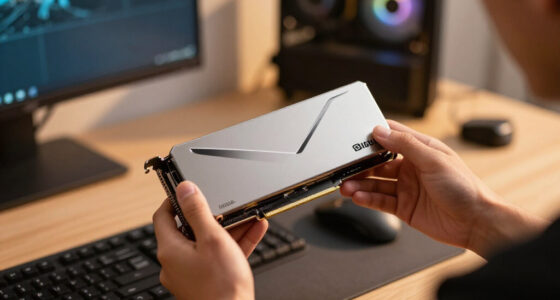
high bandwidth memory HBM for AI accelerators
As an affiliate, we earn on qualifying purchases.
As an affiliate, we earn on qualifying purchases.
Memory Market Dynamics and Industry Capacity Shifts
Over the past year, the industry has experienced unprecedented price surges driven by a reallocation of wafer capacity toward high-bandwidth memory (HBM) for AI accelerators. Leading manufacturers have prioritized HBM, which offers higher margins—three to five times those of conventional DRAM—resulting in a significant reduction of supply for standard memory modules.
By late 2025 and early 2026, the supply-demand imbalance became evident, with record price increases and shortages persisting despite high prices. Industry analysts describe this as a permanent reallocation rather than a temporary cycle, with relief not expected before late 2027, when new fabs begin production. However, skepticism remains due to past collusion and profit reports amid shortages.
“Memory capacity is being reallocated toward high-margin AI memory, which continues to tighten supplies for standard DRAM and NAND.”
— Supply-chain advisor
As an affiliate, we earn on qualifying purchases.
Unclear Timeline for Supply Relief and Price Stabilization
While industry projections suggest relief may come after 2027, skepticism persists regarding the accuracy of these timelines. Past industry behavior and ongoing capacity reallocation raise questions about whether supply shortages will truly ease or if prices will remain elevated due to strategic capacity shifts.
As an affiliate, we earn on qualifying purchases.
Monitoring Supply and Demand Trends Into 2027
Industry analysts will continue to track capacity utilization, fab schedules, and demand signals. Manufacturers may adjust their capacity allocations, but current data indicates that prices will likely stay high, and shortages persist into 2027. Buyers should plan for multi-year high costs and supply constraints, especially for AI hardware and enterprise applications.
As an affiliate, we earn on qualifying purchases.
Key Questions
Why are memory prices slowing their increase?
The slowdown is primarily due to consumer spending limits, which have capped demand after months of high prices, rather than an increase in supply.
Will memory shortages end soon?
Most industry sources expect relief no earlier than late 2027, when new manufacturing capacity begins. However, skepticism remains about whether supply will truly catch up.
How does this affect AI hardware costs?
The reallocation of wafer capacity toward high-margin HBM memory continues to tighten supplies of standard memory, keeping hardware costs high and impacting affordability.
Are prices expected to fall in the near future?
Current trends suggest prices will remain high or increase slightly until supply capacity improves, which is not expected before late 2027.
What should hardware buyers do now?
Buy only what is necessary within the next two quarters, prioritize contracted purchases, and plan for sustained high costs due to ongoing shortages.
Source: ThorstenMeyerAI.com
Halloween Picks
halloween
As an affiliate, we earn on qualifying purchases.