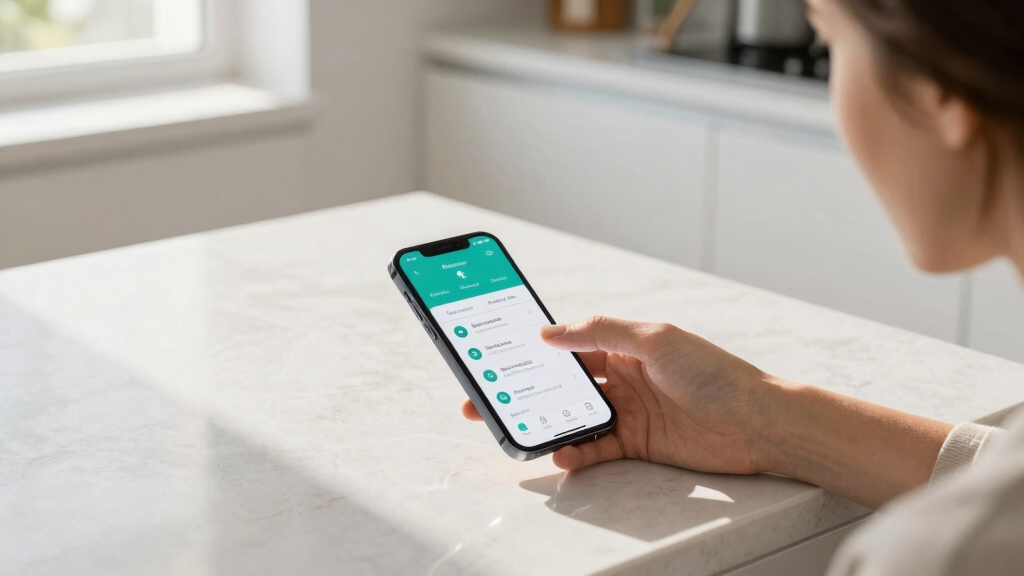

The unbundling of the budget app. Why a conversational finance surface absorbs what the personal-finance apps charge for, and what survives the absorption.

📊 Full opportunity report: The unbundling of the budget app. Why a conversational finance surface absorbs what the personal-finance apps charge for, and what survives the absorption. on ThorstenMeyerAI.com — validation score, market gap, and execution plan.

TL;DR

OpenAI launched a personal-finance feature inside ChatGPT on May 15, 2026, replacing traditional standalone budget apps for many users. This development highlights how conversational AI is transforming personal finance management by absorbing commodity functions, while high-friction, trust-based services remain separate.

OpenAI launched a personal-finance management feature within ChatGPT on May 15, 2026, allowing users to connect over 12,000 financial institutions and receive real-time insights without using traditional budget apps. This shift signals a fundamental change in the personal-finance category, as AI-powered surfaces begin to absorb the core functions of standalone apps.

The new feature enables users to link their bank accounts through Plaid, generating dashboards that display spending, subscriptions, portfolios, and upcoming payments, all within the ChatGPT interface. According to OpenAI, over 200 million users ask ChatGPT financial questions monthly, underscoring the platform’s broad reach and influence.

This move follows the absorption of Hiro Finance’s team into OpenAI earlier in April 2026, and the shutdown of Hiro’s standalone app. The core thesis is that conversational AI surfaces can take over the ‘commodity’ jobs of budget apps—aggregation, categorization, and insight—at near-zero marginal cost, while leaving behind the high-friction, trust-dependent functions such as behavior change, household collaboration, and privacy.

The Unbundling of the Budget App — Thorsten Meyer AI
UNBUNDLED
● DISPATCH / MAY 2026
THORSTEN MEYER AI · AGENTIC COMMERCE · § 02
AGENTIC COMMERCE · 02
PFM / UNBUNDLING
Essay · Consumer-Fintech Structural Reading · 2026-05-21

The unbundling
of the budget app.
Why a conversational finance
surface absorbs what the apps
charge for, and what
survives the absorption.

A budget app is a bundle of seven jobs. A conversational surface absorbs the four that are commodity — and leaves the three that are not.
Mint died in 2024 — 3.6M users — not because a competitor out-budgeted it, but because Intuit had a more valuable use for those users inside Credit Karma. Monarch rose from the vacuum: $75M at an $850M valuation, subscription-only, no ads. The category looked healthy. Then on May 15, 2026, OpenAI shipped a personal-finance surface inside ChatGPT — Plaid rails, 12,000+ institutions, 200M+ monthly finance questions — and one month earlier had acqui-hired the Hiro Finance team and watched its standalone app shut down. The unbundling made literal. The structural argument: a budget app bundles seven jobs, and the surface absorbs the four commodity ones — aggregation, categorization, net-worth, insight — as a free feature of a relationship monetized elsewhere. What survives is the behavior tier (YNAB), the relationship tier (Monarch), the trust tier — and the trust tier is strongest exactly where the surface is weakest. The category does not die. It splits. The middle hollows out.
7 → 3
Jobs a budget app bundles · only
three survive the absorption
200M+
Monthly ChatGPT finance questions
before the surface even launched
3.6M
Mint users orphaned in 2024 ·
the pattern’s first demonstration
$850M
Monarch valuation · priced for the
broad category, not the defensible one
THE UNBUNDLING OF THE BUDGET APP· MINT SHUT DOWN 2024 · 3.6M USERS· MONARCH $75M AT $850M· CHATGPT FINANCE · MAY 15 2026· PLAID · 12,000+ INSTITUTIONS· 200M+ MONTHLY FINANCE QUESTIONS· HIRO ACQUI-HIRE · APRIL 2026· STANDALONE APP SHUT DOWN APRIL 20· SEVEN JOBS · FOUR COMMODITY· AGGREGATION RENTED FROM PLAID· CATEGORIZATION AT THE AGGREGATOR· THE DASHBOARD YOU STOPPED OPENING· YNAB · BEHAVIOR CHANGE· MONARCH · COLLABORATION· TRUST TIER STRONGEST WHERE SURFACE WEAKEST· ROCKET MONEY · 10M+ MEMBERS· EMPOWER · WEALTH FUNNEL· READ-ONLY · INTUIT NEXT· THE MIDDLE HOLLOWS OUT· THE UNBUNDLING OF THE BUDGET APP· MINT SHUT DOWN 2024 · 3.6M USERS· MONARCH $75M AT $850M· CHATGPT FINANCE · MAY 15 2026· PLAID · 12,000+ INSTITUTIONS· 200M+ MONTHLY FINANCE QUESTIONS· HIRO ACQUI-HIRE · APRIL 2026· STANDALONE APP SHUT DOWN APRIL 20· SEVEN JOBS · FOUR COMMODITY· AGGREGATION RENTED FROM PLAID· CATEGORIZATION AT THE AGGREGATOR· THE DASHBOARD YOU STOPPED OPENING· YNAB · BEHAVIOR CHANGE· MONARCH · COLLABORATION· TRUST TIER STRONGEST WHERE SURFACE WEAKEST· ROCKET MONEY · 10M+ MEMBERS· EMPOWER · WEALTH FUNNEL· READ-ONLY · INTUIT NEXT· THE MIDDLE HOLLOWS OUT·
FIG. 01 — WHAT A BUDGET APP ACTUALLY BUNDLES
Seven jobs · one subscription · four commodity, three defensible
The app charges a single price for the bundle — the threat is not a better bundle but someone who unbundles it
1
Account aggregation · rented from Plaid / Yodlee / Finicity — the app does not do this itself
Commodity
2
Transaction categorization · increasingly done by the aggregator’s own transaction model
Commodity
3
Budgeting methodology · zero-based, flex, envelope — requires the user to participate
Defensible
4
Net-worth & investment tracking · display and calculation on aggregated data
Commodity
5
Goal setting & planning · data plus forward projection — partially defensible
Partial
6
Insight & explanation · “why am I always broke” — the most AI-native job in the bundle
Commodity
7
Collaboration · couples, households, advisors — a relationship product, not a data product
Defensible
Four of the seven jobs are commodity — the app rents aggregation, the aggregator increasingly does categorization, net-worth is calculation, and insight is the single most AI-native task in the bundle. Three are defensible — methodology (behavior change requires friction), goal-commitment (partially), and collaboration (a relationship product). The subscription price is justified by the bundle. The threat is someone who absorbs the four commodity jobs for free and leaves the app to justify its price on the three defensible ones alone.
FIG. 02 — THE ABSORPTION MAP · WHAT THE SURFACE TAKES AND WHAT IT LEAVES
The conversational surface absorbs the commodity jobs as a feature of a relationship monetized elsewhere
Same Plaid rails the apps rent · same aggregator-layer categorization · insight is the surface’s home turf
Absorbed by the surface
The four commodity jobs
  • Aggregation · same Plaid integration, 12,000+ institutions
  • Categorization · performed at the shared aggregator layer
  • Net-worth & dashboard · generated as a side effect of connection
  • Insight & explanation · the surface’s native strength, tuned to a finance benchmark
Left to the apps
The three defensible jobs
  • Behavior change · requires friction the surface is built to remove
  • Collaboration · multi-person workflow, not a single-user query
  • Trust / privacy · the surface’s structurally weakest flank
  • Action jobs · surface is read-only — for now
The surface is currently read-only (no money movement, trades, or bill payment; no full account numbers) and Pro-only ($100-$200/mo), with Plus next. This is the key qualification: the absorption is not yet a free-versus-paid contest — it is a premium feature of a premium subscription. The structural threat is directional: the absorption gets cheaper and broader from here, not narrower. The action jobs are the next frontier, foreshadowed by the planned Intuit integration.
FIG. 03 — THE HIRO TELL · THE UNBUNDLING MADE LITERAL
A standalone personal-finance app’s team absorbed into the surface, weeks before launch
The capability did not disappear — it relocated from a product you pay for into a feature of a relationship you already have
2024
Hiro Finance founded by Ethan Bloch (ex-Digit, acquired by Oportun 2021 for $200M+) · backed by Ribbit, General Catalyst, Restive · helped manage $1B+ assets
April 2026
OpenAI acqui-hires the Hiro team · ~10 employees join to build consumer-finance capability inside ChatGPT
April 20, 2026
Hiro shuts down its standalone app · the standalone product dies
May 15, 2026
ChatGPT personal-finance surface launches · the capability re-emerges as a feature of something larger
Hiro is the entire thesis enacted in a single sequence. A standalone AI personal-finance app could not sustain itself as a standalone product, and its team’s value was realized by being absorbed into the conversational surface. The capability migrated from a product you pay for into a feature of a relationship you already have — the unbundling, made literal, weeks before the launch it foreshadowed.
FIG. 04 — THE THREAT THAT PREDATED THE CHATBOT · ECOSYSTEM BUNDLING
The conversational surface is not a new threat · it is the largest instance of an old one
The category was already losing the structural argument to ecosystems that monetize the budgeting job elsewhere
Intuit / Credit Karma
Killed Mint, kept the users
Steered Mint’s 3.6M users into Credit Karma · integrated with TurboTax · monetizes lending, tax, product recommendations. The budgeting is a hook for a more valuable relationship.
Rocket Money
10M+ members, ecosystem-owned
Owned by Rocket Companies (public mortgage lender) · $2.5B+ saved via bill negotiation · distribution and bundling options a standalone subscription app cannot match.
Empower
Free dashboard, AUM funnel
Free aggregation and net-worth tracking as top-of-funnel for wealth management. The budgeting is subsidized by the assets-under-management relationship it produces.
The subscription-aligned app has to charge for the thing the ecosystem player gives away. Mint did not die because it was a bad budgeting product — it died because its owner had a more valuable use for its users. The conversational surface is that exact threat at maximum scale: OpenAI does not need the finance feature to be a profit center any more than Intuit needed Mint to be one. The finance surface is a feature of the ChatGPT relationship — the same relationship 200M people already bring financial questions to every month.
FIG. 05 — WHAT SURVIVES THE ABSORPTION
The category does not die · it retreats to the three jobs the surface cannot absorb
Smaller, higher-intent, higher-margin businesses — and the trust tier is strongest exactly where the surface is weakest
Survivor 1 · YNAB position
Behavior change
Requires friction, ritual, participation. A frictionless conversational answer actively undermines the mechanism of behavior change — the friction is the therapeutic agent. The surface is built to remove the exact friction the method requires.
Survivor 2 · Monarch position
Collaboration
Shared household finance is a relationship product — couples, families, advisors with equal access and shared goals. A multi-person workflow is not a natural fit for a single-user assistant answering one user’s questions about one user’s accounts.
Survivor 3 · subscription model
Trust & privacy
No ads, no data sale, “you are the customer.” This is the surface’s weakest flank — bank data through a general-purpose chatbot is a novel discomfort, and a company monetizing the broader relationship can least credibly make the clean promise.
The apps that understand which of their jobs survive — that stop selling commodity aggregation and start selling friction, relationship, and the privacy promise — survive as smaller, higher-intent, higher-margin businesses. The apps still selling “a nicer dashboard than your bank’s” do not. The $850M valuation that the post-Mint vacuum supported was priced for the broad category. The defensible category is narrower.
The category does not collapse into the chatbot. It splits into the part the surface absorbs and the part it cannot. The passive-dashboard middle hollows out. What survives is the behavior, the relationship, and the privacy promise a general-purpose surface can least credibly make.
Thorsten Meyer · The Unbundling of the Budget App · Agentic Commerce 02

Implications for Personal-Finance App Ecosystem

This development indicates a major shift in the personal-finance landscape, where the traditional standalone app model is being displaced by AI-driven surfaces. Consumers may increasingly rely on conversational interfaces for passive financial insights, reducing demand for traditional budgeting tools. However, high-trust, relationship-based services—like household management or privacy-focused apps—are less susceptible to this shift, potentially consolidating the market into a bifurcated ecosystem.

Amazon

bank account aggregation app

As an affiliate, we earn on qualifying purchases.

As an affiliate, we earn on qualifying purchases.

Evolution of the Personal-Finance Category Post-Mint

The category was fundamentally reshaped after Intuit shut down Mint in early 2024, redirecting users to Credit Karma. This created a vacuum filled by newer apps like Monarch Money, YNAB, and Rocket Money, which focused on behavior change, household collaboration, or mass-market aggregation. The emergence of ChatGPT’s finance feature in 2026 represents a new phase, where AI surfaces absorb the core, passive functions of these apps, challenging their relevance.

“A conversational AI surface with aggregator rails absorbs the commodity layers of personal finance—aggregation, categorization, and insight—essentially for free, as a feature of a broader relationship.”

— Thorsten Meyer

Amazon

personal finance dashboard device

As an affiliate, we earn on qualifying purchases.

As an affiliate, we earn on qualifying purchases.

Remaining Questions About Market Impact

It is still unclear how users will adapt to AI-based financial surfaces over the long term, especially regarding trust, privacy, and behavioral change. The durability of high-friction, relationship-driven services in the face of AI absorption remains uncertain, as does the potential for traditional apps to evolve or differentiate themselves.

Amazon

subscription management app

As an affiliate, we earn on qualifying purchases.

As an affiliate, we earn on qualifying purchases.

Future Developments in AI-Driven Financial Management

Expect further integration of financial functions into AI platforms, with more platforms adopting similar features. Traditional standalone apps may pivot toward high-trust, relationship-based services or focus on privacy to differentiate themselves. Regulatory and privacy considerations will likely shape how these AI surfaces evolve, as consumer trust becomes a critical factor.

Amazon

financial insights tool

As an affiliate, we earn on qualifying purchases.

As an affiliate, we earn on qualifying purchases.

Key Questions

Will standalone budget apps become obsolete?

Not necessarily. While basic aggregation and insight functions are being absorbed by AI surfaces, high-friction, trust-dependent services like household management or privacy-focused apps are likely to remain relevant.

How does this shift affect user privacy?

AI-driven financial features raise new privacy concerns, as they involve extensive data sharing with platforms like ChatGPT. Consumer trust and regulatory safeguards will be critical in shaping future adoption.

Can traditional apps compete with AI surfaces?

Traditional apps may need to pivot toward offering high-trust, relationship-based services or emphasize privacy and security to maintain relevance in the evolving landscape.

What are the risks for consumers?

Risks include privacy breaches, over-reliance on passive insights, and potential loss of control over financial data. Consumers should be cautious and evaluate privacy policies carefully.

Source: ThorstenMeyerAI.com

This content is for general information only and is not financial, tax or legal advice. Consult a qualified professional for decisions about your money.
You May Also Like

The Orchestration Layer Arrives: What Anthropic’s Finance Agents Mean for Bloomberg, FactSet, and Wall Street

Anthropic releases new AI agent templates and connectors, positioning Claude as an orchestration layer over top financial data providers, challenging Bloomberg’s UI moat.

The Channel Move: Anthropic, Wall Street, and the Acquisition of the Real Economy

Anthropic partners with major private equity firms in a $1.5 billion joint venture to embed AI across thousands of portfolio companies, transforming enterprise AI deployment.