📊 Full opportunity report: Data processing agreement tracker for micro SaaS teams on IdeaNavigator AI — validation score, market gap, and execution plan.

Get smart everyday buys delivered free with Prime
- Fast, free delivery on millions of items
- Prime Video, Amazon Music and more included
- Member-only deals all year
TL;DR
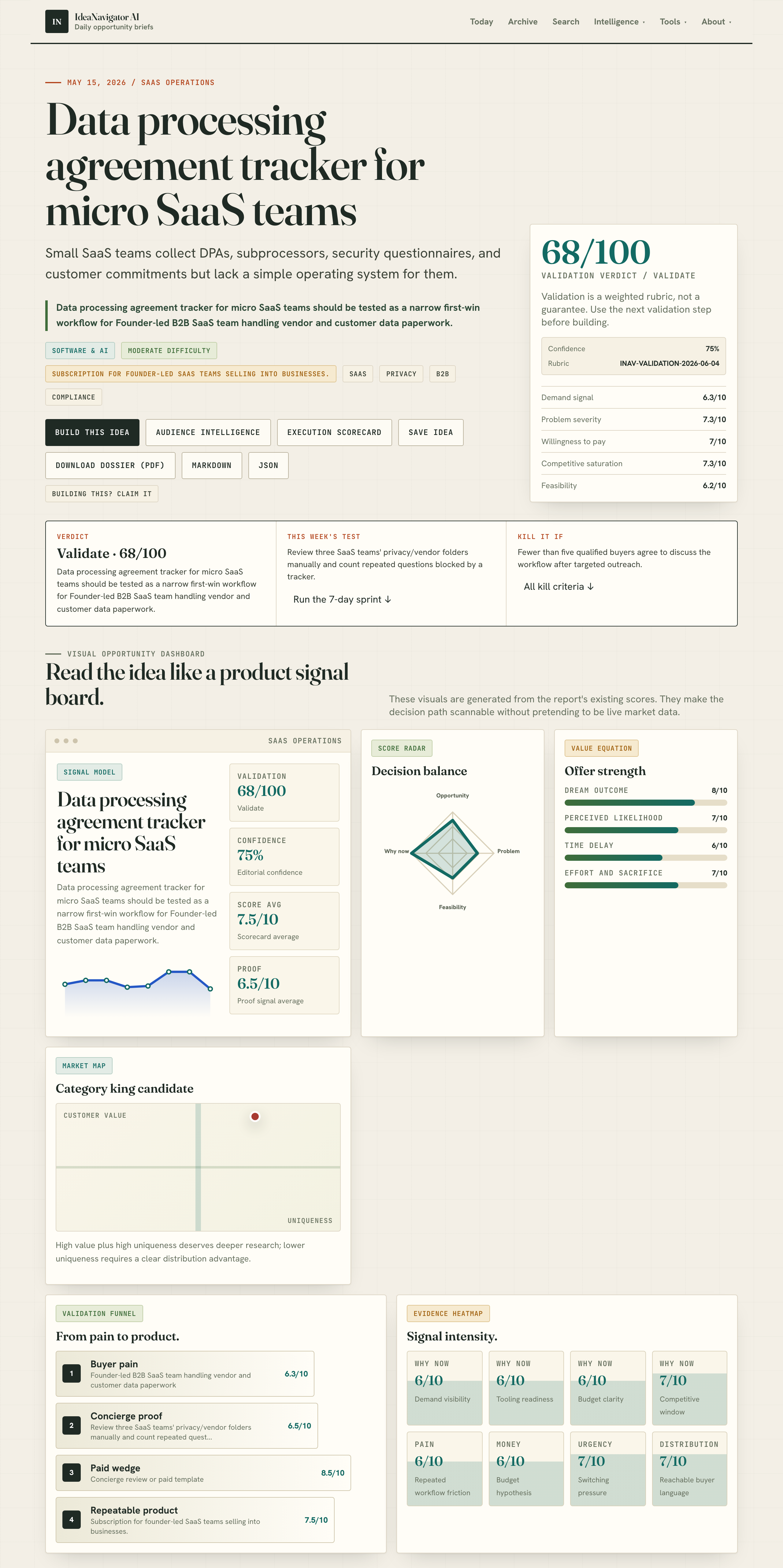
A prototype data processing agreement (DPA) tracker tailored for small SaaS teams is being tested as a workflow solution. It aims to simplify managing vendor, customer, and subprocessors’ data commitments, addressing a growing compliance need.
A new data processing agreement (DPA) tracker tailored for founder-led micro SaaS teams is entering a testing phase to improve management of vendor and customer data paperwork, addressing a common operational challenge for small SaaS companies.
The tracker is designed specifically for small SaaS teams handling multiple DPAs, subprocessors, security questionnaires, and customer commitments. It offers features such as tracking renewal dates, clause statuses, and linking to source documents, aiming to reduce repetitive questions and manual review efforts.
Developed as a minimum viable product (MVP), it targets SaaS operations teams that often lack a simple operating system for managing privacy and vendor documentation. The initiative is driven by the increasing privacy compliance expectations that now reach smaller SaaS companies earlier in sales processes.
According to sources familiar with the project, the tracker is being tested by reviewing three SaaS teams’ privacy and vendor folders manually to measure effectiveness, specifically by counting questions that the tracker can block or streamline.
Why a DPA Tracker Matters for Small SaaS Teams
This development addresses a significant operational gap for founder-led SaaS teams, which often lack dedicated compliance or legal resources. By simplifying the management of DPAs and related documentation, the tracker can reduce compliance risks, improve efficiency, and support smoother customer and vendor onboarding processes.
As privacy regulations tighten and customer expectations for data security increase, smaller SaaS companies face growing pressure to demonstrate compliance early in their sales cycles. The tracker could become a critical tool to meet these demands without adding substantial overhead.
Popular right now

Ninja CREAMi Scoop & Swirl 13-in-1 Ice Cream and Soft Serve Maker (NC701)

eufy E25 Robot Vacuum and Mop with HydroJet Roller Mop, 20,000 Pa Suction

Ninja Flip Toaster Oven and Air Fryer SP151
As an affiliate, we earn on qualifying purchases.
Growing Privacy Demands and Small SaaS Challenges
Small SaaS teams frequently handle multiple vendor and customer data agreements but lack dedicated systems to manage them efficiently. As privacy and security requirements become more rigorous, even startups and micro SaaS companies are expected to maintain organized documentation and demonstrate compliance, often with limited resources.
Existing solutions tend to target larger organizations, leaving a gap for lightweight, easy-to-use tools tailored for small teams. The recent push for early privacy compliance in sales processes has increased the urgency for such tools, prompting development efforts like this DPA tracker.
“The tracker aims to reduce repetitive questions and manual review efforts, saving time for small SaaS teams.”
— an anonymous researcher
Development Stage and Effectiveness Still Unclear
It is not yet confirmed how effectively the tracker will reduce manual review or questions in real-world use. The testing phase is ongoing, and results are not publicly available. It remains uncertain whether the tool will scale well across different SaaS operations or meet all compliance needs.
Next Steps for Validation and Adoption
The project team plans to complete initial testing with the three SaaS teams and gather feedback on usability and impact. If results are positive, further development and wider rollout are expected. Additional features, such as integrations with existing tools or automated updates, may be explored based on user feedback.
Key Questions
Will the tracker be available for free or as a paid service?
The current plan is to offer it as a subscription-based service targeting founder-led SaaS teams, with pricing likely depending on team size and features.
Can the tracker handle complex or customized DPAs?
As an MVP, the tracker focuses on core functionalities. Handling highly customized agreements may require additional features or manual adjustments in future versions.
Will this tool integrate with existing SaaS management platforms?
Integration plans are still under consideration; initial versions may be standalone, with potential future integrations based on demand.
When will the tracker be publicly available?
There is no confirmed release date yet; the project is currently in the testing phase, and wider availability will depend on test outcomes.
Source: IdeaNavigator AI