
When placing security cameras, make certain they connect seamlessly with your existing devices like voice assistants and security systems. Position cameras near entry points and at eye level for clear footage, avoiding blind spots. Keep privacy in mind by avoiding inside bedrooms or bathrooms and being transparent about footage use. Protect outdoor cameras from weather and tampering. Understanding these tips helps you balance safety with privacy, and if you keep exploring, you’ll discover even more secrets to smarter home security.

Get smart everyday buys delivered free with Prime
- Fast, free delivery on millions of items
- Prime Video, Amazon Music and more included
- Member-only deals all year
Key Takeaways
- Prioritize discreet, unobtrusive placements that respect privacy, especially avoiding bedrooms and bathrooms.
- Install cameras at eye level near entry points to maximize visibility and monitor visitors effectively.
- Ensure outdoor cameras are weatherproof and protected from elements for reliable, long-term use.
- Be aware of local laws and regulations to ensure legally compliant camera placement and footage handling.
- Use tamper detection and encrypted storage to safeguard cameras from vandalism and unauthorized access.

Ensuring your home is secure is essential, especially as you age and may want to keep a closer watch on your property. Installing security cameras is a practical step, but figuring out the right placement can be tricky. One key consideration is smart home integration. You want your cameras to connect seamlessly with your existing devices, like voice assistants or security systems, making monitoring simple and efficient. Proper placement ensures you get clear footage of important areas without creating blind spots or unnecessary overlaps. For example, positioning cameras near entry points like front and back doors allows you to see who’s coming and going, which is critical for your safety.
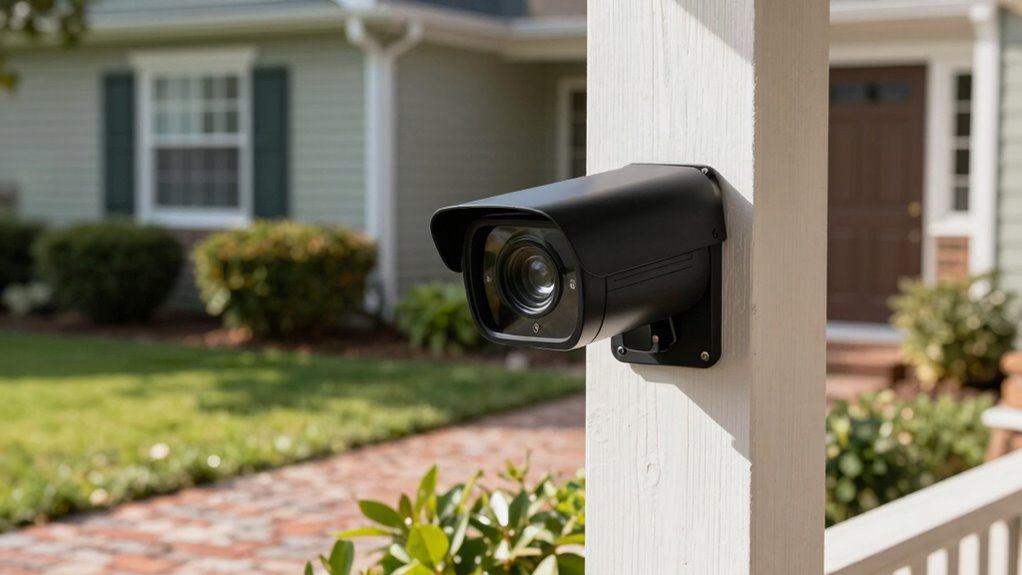
Position cameras near entry points to monitor visitors and enhance home security effectively.
However, as you set up your cameras, privacy concerns can come into play. It’s natural to worry about who might access your footage or how much of your property is being monitored. To address this, focus on discreet placement that captures necessary angles without invading your neighbors’ privacy or making you feel uncomfortable. Be transparent with family members or caregivers about where cameras are installed and how footage is stored. Many modern security systems offer encrypted storage and access controls, giving you peace of mind that your private moments stay private.
When choosing camera locations, consider common areas like driveways, walkways, and porches. These spots help you keep an eye on visitors, delivery personnel, or potential intruders. Avoid placing cameras inside bedrooms or bathrooms to respect personal privacy and adhere to privacy laws. Also, think about the camera’s field of view and whether it’s adjustable, so you can monitor the specific areas you care about most. Mount cameras at eye level for clear footage, and ensure they are protected from the elements if placed outdoors. Additionally, selecting cameras with tamper detection features can help prevent vandalism or unauthorized interference.
Another aspect often overlooked is the impact of camera placement on your daily routine. You want cameras that are easy to access and maintain, without requiring frequent adjustments. Wireless cameras are typically more flexible and easier to reposition if needed. Be mindful of lighting conditions—placing cameras where there’s ample light helps prevent grainy footage, especially at night. It’s also wise to consider camera security itself; install them in a way that prevents tampering or vandalism. Moreover, understanding the importance of biodiversity in your community can encourage you to choose camera placements that don’t disturb local wildlife or natural habitats. Being aware of local regulations regarding surveillance can also help you avoid potential legal issues related to your camera placement. Additionally, considering security camera guidelines can provide clarity on what’s appropriate and legal in your area. Incorporating these considerations ensures your security setup is both effective and respectful of your environment.
outdoor weatherproof security camera
As an affiliate, we earn on qualifying purchases.
As an affiliate, we earn on qualifying purchases.
Frequently Asked Questions
How Do I Choose the Best Camera Type for My Needs?
You should consider your specific needs when choosing a camera type, focusing on key camera features like night vision, motion detection, and remote access. Choose wireless cameras for easy installation, and check installation tips to guarantee ideal coverage and security. Think about whether you need indoor or outdoor cameras, and select models with user-friendly controls and reliable connectivity. This way, you’ll get the most effective security for your home.
What Are the Legal Privacy Considerations for Outdoor Cameras?
You can’t ignore privacy laws—failing to follow them could turn your security setup into a legal nightmare. Always respect consent requirements, especially when capturing areas beyond your property. Avoid pointing cameras at neighbors’ windows or private spaces; doing so can invite serious legal trouble. Keep recordings secure and transparent, and familiarize yourself with local regulations to protect your rights and privacy. Ignoring these considerations risks more than just a fine—it risks your peace of mind.
How Can I Ensure My Cameras Are Easy to Operate?
To guarantee your cameras are easy to operate, focus on strategic camera placement where you can access controls comfortably. Choose models with simple interfaces and clear instructions. Opt for wireless cameras with remote app access, so you can monitor and adjust settings easily from your phone. Regularly update firmware and keep instructions handy. Simplifying your camera setup guarantees quick adjustments, making security effortless and ensuring you’re always in control.
What Maintenance Is Required for Security Cameras?
Think of your security camera as a vigilant guardian; it needs regular checkups. You should perform camera cleaning to keep the lens clear and guarantee clear footage. Check the power supply to prevent interruptions, making sure cords and connections stay intact. Routinely inspect for dust or debris, and replace batteries if needed. By maintaining these simple tasks, your camera remains reliable, continuously protecting your home like a loyal sentinel.
How Do I Access Camera Footage Remotely Securely?
To access your camera footage remotely securely, use a trusted app linked to cloud storage, which encrypts your data. Enable motion detection alerts so you’re notified of activity and can review footage instantly. Always use strong, unique passwords and two-factor authentication for your account. Avoid public Wi-Fi when accessing sensitive footage, and make sure your camera firmware is up to date for the best security features.
wireless security camera with night vision
As an affiliate, we earn on qualifying purchases.
As an affiliate, we earn on qualifying purchases.
Conclusion
Think of your security cameras as guardians gently watching over your home, like silent sentinels standing tall. When placed thoughtfully, they become your home’s vigilant eyes, ready to catch any unwelcome visitors before they breach your sanctuary. With strategic positioning, you create an invisible shield of safety, giving you peace of mind like a warm blanket on a chilly night. Trust your instincts and these small details to turn your house into a fortress of comfort and security.
security camera with tamper detection
As an affiliate, we earn on qualifying purchases.
As an affiliate, we earn on qualifying purchases.
smart home security camera system
As an affiliate, we earn on qualifying purchases.
As an affiliate, we earn on qualifying purchases.
Halloween Picks
halloween
As an affiliate, we earn on qualifying purchases.