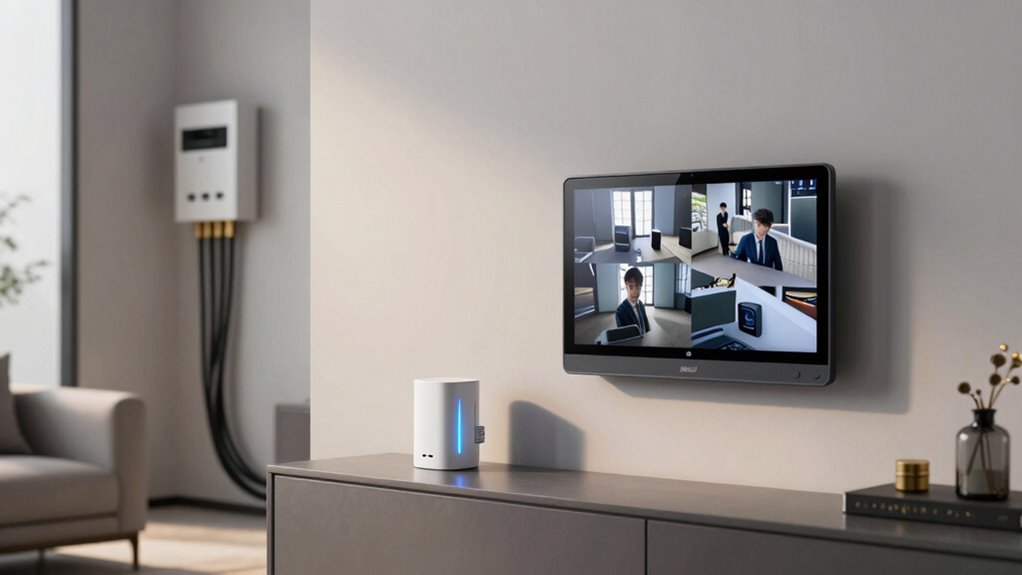

When choosing between wireless and installed home security systems, focus on features like reliability, flexibility, and security rather than just specs. Wireless systems are easy to install, expand, and control through smart devices, but they depend on Wi-Fi and batteries. Wired systems offer more reliability and security but are less flexible and require professional installation. Considering your home’s needs and future upgrades helps determine the best fit—continue to explore these important features to make a smarter choice.

Get smart everyday buys delivered free with Prime
- Fast, free delivery on millions of items
- Prime Video, Amazon Music and more included
- Member-only deals all year
Key Takeaways
- Consider installation ease and flexibility; wireless systems are simpler to set up and adapt, while wired systems are more invasive and less flexible.
- Prioritize reliability and backup features; wired systems are more dependable, but wireless systems need battery backup for outages.
- Evaluate security vulnerabilities; wired systems are less susceptible to hacking and interference compared to wireless options.
- Check smart home compatibility; wireless systems typically offer broader, easier integration with smart devices and voice assistants.
- Assess long-term performance; consider connectivity, maintenance, and security features that impact reliability over time.
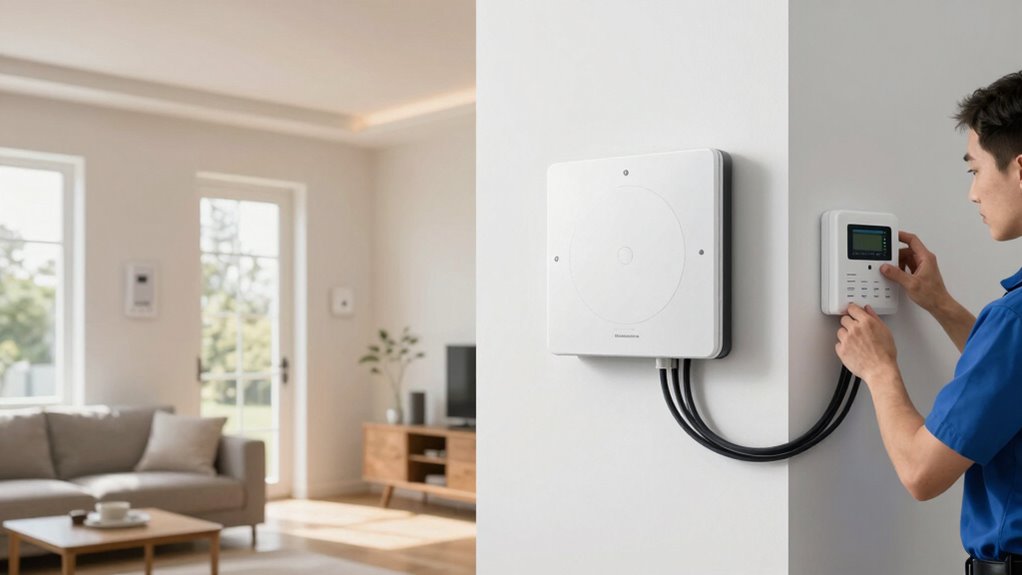
When choosing a home security system, understanding the differences between wireless and installed (wired) options is essential. You want a system that fits your lifestyle, offers reliable protection, and integrates seamlessly with your smart home devices. Wireless systems are popular because they’re easy to install and flexible, often connecting via Wi-Fi or cellular signals. With wireless setups, you can easily add or move sensors without drilling holes or rewiring your home. This flexibility is especially useful if you plan to upgrade or expand your security later. Many wireless systems also support smart home integration, allowing you to control cameras, locks, and alarms from your smartphone or voice assistants. This integration gives you a centralized way to monitor and manage your security, making it more convenient and efficient.
However, wireless systems can be vulnerable if your Wi-Fi connection drops or if there’s a power outage. That’s why battery backup is a key feature to look for. A good wireless system will have a robust battery backup that keeps your sensors and cameras operational during power outages or internet disruptions. This feature ensures your security isn’t compromised when you need it most. On the other hand, installed or wired systems are often considered more reliable because they’re wired directly into your home’s electrical system. Since they don’t rely solely on Wi-Fi, they’re less vulnerable to interference or disconnection issues. Wired systems tend to be more discreet once installed, with fewer visible components, but installation can be more invasive and complicated, requiring professional help. Additionally, wired systems are less susceptible to hacking, making them a more secure option.
In terms of smart home compatibility, wireless systems usually have an edge because they’re designed to connect with a variety of devices and platforms. If you want a cohesive smart home ecosystem, a wireless system might be more suitable. Still, some wired systems do offer smart integration, but it’s often more limited or requires additional equipment. When weighing your options, consider the importance of features like smart home integration and battery backup. These features can make a significant difference in how reliable and convenient your security system will be over time. A thorough assessment of your home security needs can help you make an informed decision. Additionally, evaluating the reliability of connection can ensure your system remains functional when you need it most. Properly understanding how system connectivity impacts performance is crucial for long-term security.
wireless home security system with battery backup
As an affiliate, we earn on qualifying purchases.
As an affiliate, we earn on qualifying purchases.
Frequently Asked Questions
How Do Security Systems Impact Home Insurance Rates?
Security systems can lower your home insurance rates by offering insurance discounts, as they demonstrate risk reduction to insurers. When you install a reliable security system, you actively reduce the risk of burglary or damage, which can lead to lower premiums. Insurers see your home as safer, so they’re more willing to reward your proactive efforts with discounts. Overall, investing in security helps you save money and enhances your home’s protection.
Can I Upgrade or Add Features Easily Later?
Did you know that 60% of homeowners upgrade their security systems within five years? You can definitely upgrade or add features later, especially with wireless systems designed for flexibility. They often offer easy upgrade options and feature expansion, allowing you to enhance your security without major disruptions. This flexibility means you can adapt your system as your needs change, ensuring your home stays protected with minimal hassle.
What Is the Typical Lifespan of System Components?
The typical lifespan of system components varies, but you can expect sensors and cameras to last around 5-7 years, while control panels may last up to 10 years. Component durability depends on quality and usage, so regular maintenance reduces wear and tear. Keep an eye on battery life and replace batteries as needed. Proper upkeep guarantees your system stays reliable, and investing in durable components extends the overall lifespan of your security setup.
Are There Hidden Costs Beyond Installation?
Yes, there can be hidden costs beyond installation. You might encounter hidden fees for monthly monitoring, activation, or upgrades. Maintenance costs can also add up over time, especially if sensors or cameras need repairs or replacements. Make certain to read the fine print and ask about any potential hidden fees or ongoing maintenance costs upfront to avoid surprises and ensure your security system remains effective and affordable.
How Do Security Systems Affect Home Resale Value?
Imagine your home as a treasure chest—you want it protected and appealing. Security systems with smart integrations boost your home’s resale value, like a shiny lock on a prized box. They appeal to buyers seeking modern, safe spaces. Aesthetic considerations matter, too; sleek, unobtrusive designs blend seamlessly. Overall, a good security system signals a well-maintained home, making it more attractive to prospective buyers and potentially increasing its market value.
wired home security alarm system
As an affiliate, we earn on qualifying purchases.
As an affiliate, we earn on qualifying purchases.
Conclusion
So, whether you opt for the sleek, wireless charm or the trusty, wired classic, remember: security isn’t about flashy specs—it’s about peace of mind. But hey, who needs peace when you can have the latest tech? Just don’t cry when your high-tech system goes down and your neighbor’s old-school alarm saves the day. After all, in the end, it’s not the gadgets that matter, but whether you sleep soundly at night—or nervously check your notifications.
smart home compatible security cameras
As an affiliate, we earn on qualifying purchases.
As an affiliate, we earn on qualifying purchases.
wireless security sensors for smart home
As an affiliate, we earn on qualifying purchases.
As an affiliate, we earn on qualifying purchases.
Halloween Picks
halloween
As an affiliate, we earn on qualifying purchases.