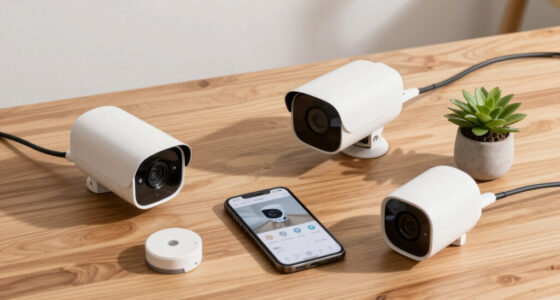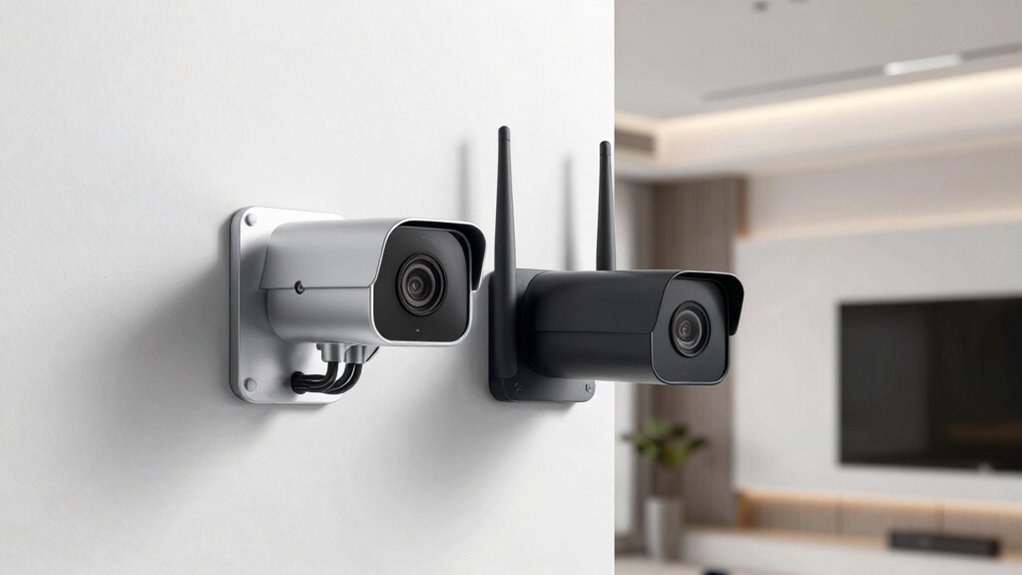

When choosing between wired and wireless security cameras, focus on what suits your environment and security needs. Wired cameras offer dependable, stable footage with less risk of interference, but require effort to install and run cables. Wireless cameras provide flexibility and easier setup but might face signal issues or require regular battery changes. Consider weather, tampering risks, and placement ease—you’ll find more guidance on these key features as you explore further options.

Get smart everyday buys delivered free with Prime
- Fast, free delivery on millions of items
- Prime Video, Amazon Music and more included
- Member-only deals all year
Key Takeaways
- Focus on installation ease and flexibility; wireless cameras are easier to install and relocate, while wired cameras offer more stability.
- Consider power sources; wired cameras need continuous power outlets, whereas wireless options rely on batteries or nearby power.
- Assess environmental durability; wired cameras are more tamper-proof and suitable for harsh conditions, while wireless are better for hard-to-reach areas.
- Reliability depends on connection stability; wired cameras provide consistent footage, while wireless cameras may face interference issues.
- Technological improvements and backup options enhance both types, but environmental factors and security needs should guide your choice.
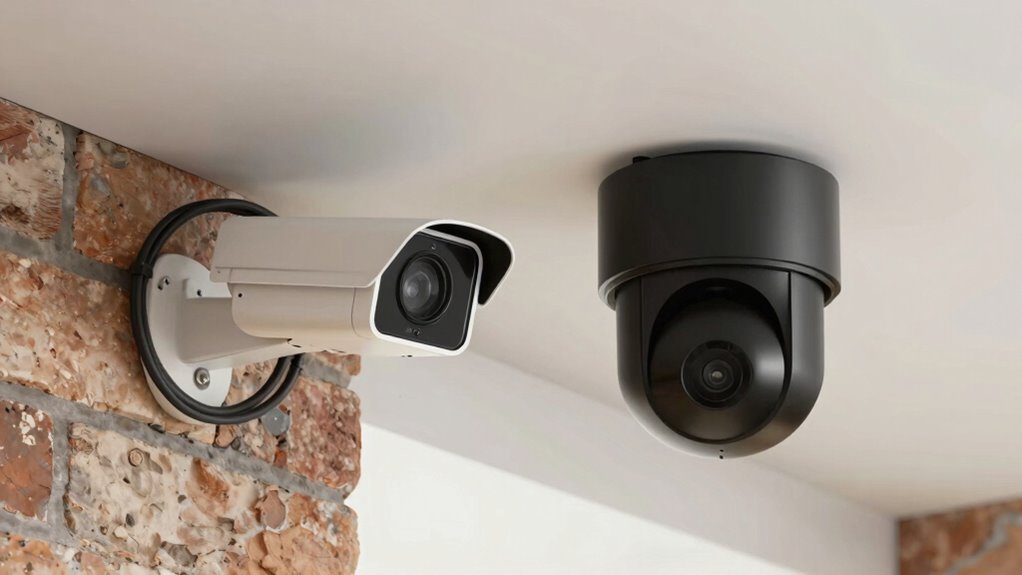
Are wired and wireless security cameras truly different, or just different in how they connect? When you’re choosing between the two, it’s essential to look beyond the connection type and focus on how you’ll set them up in your space. Camera placement becomes a key factor here. Wired cameras often require running cables from the camera to a power source or recording device, which can limit where you put them. If you want a discreet setup or plan to install cameras in hard-to-reach spots, wireless cameras might be more flexible since they don’t need cables snaking through your walls. On the other hand, wired cameras can be placed almost anywhere with proper cable access, making them ideal for locations where a stable, constant connection is necessary.
Wired cameras need cables, limiting placement; wireless offers flexible, discreet options without wiring constraints.
Power sources play a major role in your decision. Wired cameras usually connect to a continuous power supply via power cords, which means you need to consider proximity to outlets or the feasibility of installing power lines. Some wired options use Power over Ethernet (PoE), combining data and power in one cable, simplifying installation but still requiring a wired connection. Wireless cameras, however, rely on batteries or a connection to a power outlet, giving you the freedom to place them anywhere with an accessible socket or replaceable batteries. This mobility can be a big advantage if you want to factor in running cables through your home or yard. However, you should also think about battery life and the convenience of regular recharging or replacing batteries.
When you think about installation, the differences become clearer. Wired cameras demand more effort upfront, especially if you’re running cables through walls or ceilings. They tend to be more permanent, which can be a plus if you want a stable, tamper-proof setup. Wireless cameras are easier to install and move around, but their reliance on batteries or Wi-Fi signals can sometimes introduce reliability issues. If your Wi-Fi isn’t strong enough, your wireless camera’s footage might lag or drop out. Conversely, wired cameras often provide a more consistent feed because they’re directly connected to power and data sources, minimizing disruptions. Additionally, connectivity stability is typically more reliable with wired systems, ensuring consistent security coverage. It’s also worth noting that advancements in wireless technology continue to improve reliability and range, making wireless systems more viable in various environments. As technology progresses, some wireless options now incorporate backup power sources**** to enhance reliability when Wi-Fi signals are weak or disrupted.
Furthermore, considering environmental factors such as exposure to weather or potential tampering can influence whether wired or wireless is better suited for your property. Ultimately, the choice depends on your specific needs and environment. If flexibility and ease of installation matter most, wireless might be your best bet. But if you prioritize a stable, long-term setup with minimal maintenance, wired cameras could serve you better. Focus on how you’ll place your cameras and what power sources are available; these factors often outweigh the technical specs when it comes to choosing the right security system for your home.
Popular right now

Sony WH-1000XM6 Wireless Noise-Canceling Over-Ear Headphones, Blue, Bundle

Bose QuietComfort Wireless Noise-Cancelling Over-Ear Headphones, Black

Vitamix 5200 Professional-Grade Blender, 64 oz. Container, Black
As an affiliate, we earn on qualifying purchases.
Frequently Asked Questions
How Do Wired and Wireless Cameras Compare in Power Consumption?
Wired cameras generally consume more power because they’re constantly connected to a power source, but they often have better power efficiency for continuous operation. Wireless cameras use less power, especially if battery-powered, which affects their battery life. You need to take into account how often you’ll recharge or replace batteries with wireless options. Overall, wired systems tend to be more reliable in power consumption, while wireless cameras prioritize battery life and convenience.
What Is the Typical Lifespan of Wired Versus Wireless Security Cameras?
Wired security cameras typically last 10 to 15 years, thanks to their durable components, while wireless cameras usually last about 3 to 7 years due to battery life and technology updates. When considering camera placement, wired options are more reliable for areas with potential signal interference, which can disrupt wireless performance. Regular maintenance and choosing high-quality models help extend your camera’s lifespan, regardless of type.
Are Wireless Cameras More Vulnerable to Hacking Than Wired Ones?
Think of wireless cameras as open houses—more accessible, but vulnerable. They are more susceptible to cybersecurity risks because hackers can target the wireless signals, especially if security isn’t tight. Signal interference from other devices can also disrupt their performance. Wired cameras, on the other hand, are generally less vulnerable since they rely on physical connections, making them a more secure choice if cybersecurity is your priority.
How Do Installation Times Differ Between Wired and Wireless Systems?
Wireless systems typically install faster because you don’t need to run cables for camera placement, which saves time. You can place cameras almost anywhere with a good Wi-Fi signal, avoiding lengthy wiring. However, signal interference can affect setup, requiring you to find *ideal* locations for reliable connections. Wired systems take longer since you must run cables through walls or ceilings, but they offer consistent performance once installed.
Can Wireless Cameras Operate Without Wi-Fi or Internet?
Absolutely, wireless cameras can operate without Wi-Fi or internet if they use local storage like SD cards. Think of it as a modern-day Bat-Signal—if the signal gets blocked by interference or weak placement, your camera’s performance drops. To guarantee smooth operation, you need ideal camera placement and minimal signal interference. Without connectivity, they rely on onboard storage, making them handy during internet outages or in remote areas.
Conclusion
No matter which you choose, remember—your security camera is like having a fortress guard, watching over your home 24/7. Wired cameras are the unstoppable, never-failing titans, while wireless models are the nimble, high-flying acrobats, ready to adapt at a moment’s notice. Pick the one that suits your needs, because in the end, your security is the ultimate superhero cape that keeps your world safe from chaos and catastrophe. Stay vigilant, stay protected!