🔍 Read the full analysis: What Was At Stake For Workers Who Resisted New Machines? on ThorstenMeyerAI.com

Get smart everyday buys delivered free with Prime
- Fast, free delivery on millions of items
- Prime Video, Amazon Music and more included
- Member-only deals all year
TL;DR
The source recounts how framework knitters in 1811 and 1812 attacked selected knitting frames amid unemployment and disputes over below-rate pay. The government responded with troops and a 1812 law making frame-breaking a capital felony; 17 men were executed in 1813. The historical account links those stakes to current workplace debates about who sets the terms for new technology.
A historical report published November 5, 2026, revisits what British workers risked when they resisted new machinery: framework knitters who broke stocking frames faced troops, arrest and a capital charge, after Parliament criminalized frame-breaking in 1812. The report argues that the Nottinghamshire workers were not simply opposed to technology; they targeted machines associated with below-rate pay, unemployment and cheaper goods.
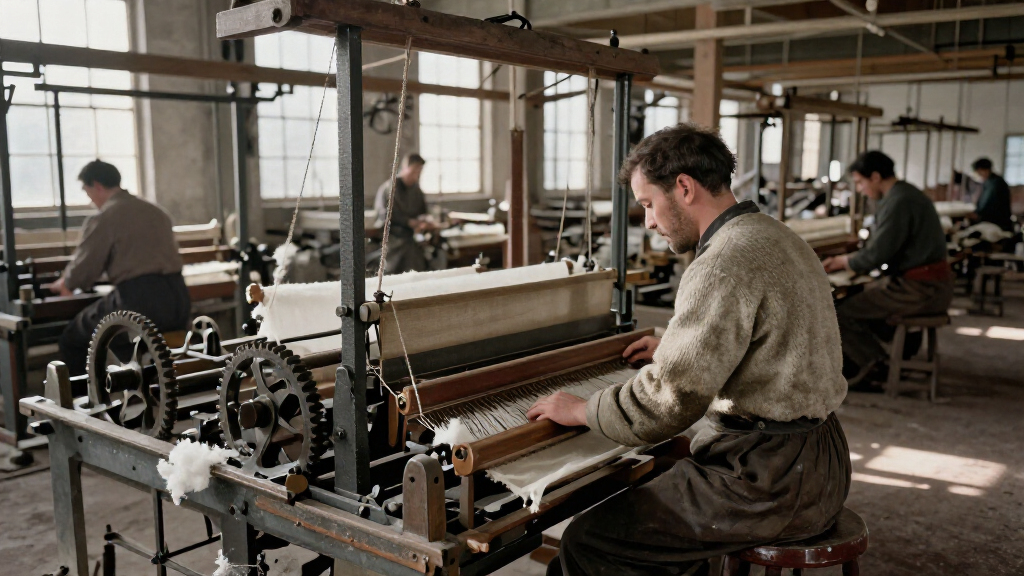
The protest began among framework knitters in Nottinghamshire, skilled workers who made stockings and other knitted goods on mechanical frames operated by hand and foot. Many worked at home or in small workshops and did not own the equipment. In a House of Commons speech on February 14, 1812, Home Secretary Richard Ryder said frames were often hired to workers by employers or by investors who owned the machines. Knitters paid to use frames and received piece-rate pay from hosiers, merchants who supplied work and sold the products.
A February 6, 1812, report by Nottingham magistrate Robert Baker to the Home Office described the conflict as more targeted than indiscriminate machine destruction. Baker wrote that in many places a fifth of frame workers were out of work and that some hosiers were giving work at reduced prices. He said the breakers initially focused on frames belonging to hosiers paying what workers called “the under-price,” as well as wider frames that enabled production of cheaper stockings. Baker reported that attacks had “seldom” extended to other property, though the account does not establish that every target was selected accurately.
The movement spread from Nottinghamshire to Yorkshire and Lancashire in 1812, and also reached Leicestershire and Derbyshire, according to the National Archives. The state response included a military deployment: by December 1811, the source says, 900 cavalry and 1,000 infantry had been sent to Nottingham. Parliament’s Frame-Breaking Act, passed on March 20, 1812, made breaking a frame a capital felony. Seventeen men were executed in 1813, according to the source account.
The Cost of Workplace Resistance
The episode shows that resistance to machinery could involve more than a dispute over whether a device was useful. For the knitters described in Baker’s report, the stakes included access to work, piece rates and product standards. Workers were confronting changes in how goods were made while, according to the source, legal channels for collective action were restricted: the Combination Acts of 1799 and 1800 prohibited trade unions, and Parliament had rejected a minimum wage for weavers in 1808.
The punishment made direct action exceptionally dangerous. Under the 1812 law, breaking a frame could carry a death sentence, and executions followed the next year. The historical account contrasts that coercive response with present-day workplace disputes over technology, where some efforts focus on contracts, consultation rights and rules rather than destroying equipment. It cites writers’ contracts in Hollywood, works-council rights in Germany and the European Union’s AI Act as examples of modern debates about pay, quality and worker input. The comparison is about shared questions, not identical circumstances or laws.
The report also puts the labor dispute alongside estimates of who gained from industrial growth. It attributes to economic historian Robert Allen an estimate that British real wages rose 12% from 1780 to 1840, while output per worker rose 46%. The source says later research narrows that gap but does not eliminate it; after 1840, wages grew faster than output. Those figures are historical estimates, not a direct measure of what any individual Luddite experienced.
Popular right now

Samsung 65-Inch The Frame Pro Neo QLED 4K TV (2026) Bundle with Modern Brown Bezel, HDMI Cables, and Home Theater Guide

Samsung 65 The Frame QLED 4K TV (2026) QN65LS03HEFXZA Bundle

Ninja Mega Kitchen System Blender and Food Processor, 1500W, 72-oz Pitcher, 8-Cup Bowl, Black (BL770)
As an affiliate, we earn on qualifying purchases.
How the Luddite Movement Began
The attacks associated with the movement began in Arnold, near Nottingham, in March 1811, when stocking knitters broke into a workshop and smashed frames. The source says close to 1,000 frames had been broken around Nottingham within a year. Historian Kevin Binfield, editor of a collection of Luddite writings, identifies an attack on wide knitting frames on March 11, 1811, as the start of the movement’s most intense period, which ran from 1811 to 1813.
Letters threatening further action were signed “General Ned Ludd” or “King Ludd.” The National Archives describes Ned Ludd as a mythical figure; the source says there is no reliable evidence that a real person by that name led the movement. The name gave separate acts of protest the appearance of a coordinated campaign, but it does not identify a confirmed leader.
The label “Luddite” is now often used for someone hostile to technology. The historical account offers a different emphasis: these workers used mechanical knitting frames in their trade and objected to the conditions under which the machines were used. That distinction helps explain why the targets described by Baker included frames linked to lower prices and underpayment, rather than machines as an abstract category.
““For some time before these troubles broke out, in many places a fifth of the frame workers were out of employ.””
— Nottingham magistrate Robert Baker, in a February 6, 1812, report to the Home Office
Limits of the Historical Record
The account relies in part on official reports and parliamentary statements, records produced by authorities seeking to contain the unrest. Baker’s description gives evidence about suspected motives and targeting, but the source does not provide a comparable set of direct testimonies from workers explaining their decisions. It also notes that not every attack was selective: a January 25, 1812, reward notice concerned five frames whose workers said they had been operating at the full agreed price.
The reported figure that a fifth of frame workers were out of work applies to “many places,” as Baker put it; the source does not give a complete geographic breakdown or a method for calculating it. It also does not detail the circumstances of each of the 17 executions. The wage and productivity figures are attributed to historical research, and the source notes later revisions without naming those studies or providing their updated estimates. The precise scale of the gap between productivity and wages therefore remains dependent on the estimates cited.
From Frame-Breaking to Workplace Rules
The source’s present-day comparison is a set of ongoing debates, not a single announced policy outcome. It points to Hollywood writers’ contracts, German works-council rights and the EU AI Act as examples of ways workers and institutions address the terms of new technology. The common issues identified are compensation, quality of work and whether workers have a say in how tools are used.
For the historical episode, the next step is continued interpretation of archival records alongside economic research. The source does not identify a new archival discovery or a fresh government decision. Its central question remains relevant as workplaces adopt new tools: who receives the gains, who bears the costs, and what avenues workers have to influence the change.
Key Questions
Who were the Luddites?
They were workers, including framework knitters in Nottinghamshire, who attacked machinery during unrest from 1811 to 1813. Many used the frames in their work but did not own them.
Why did workers target stocking frames?
Nottingham magistrate Robert Baker reported that some attacks focused on frames linked to hosiers paying below-rate prices and on wider frames used to make cheaper stockings. The source also reports unemployment among frame workers.
What could workers face for breaking a frame?
The Frame-Breaking Act of March 20, 1812, made frame-breaking a capital felony. The source says 17 men were executed in 1813.
Was Ned Ludd a real leader?
The National Archives describes Ned Ludd as mythical. The source says there is no reliable evidence that a real person by that name led the movement.
How does the history relate to workplace AI debates?
The source draws a comparison around pay, work quality and worker input. It cites modern contracts and workplace rules as ways those disputes can be handled, while recognizing that today’s settings differ from the criminalized protests of 1811–13.
Source: ThorstenMeyerAI.com