
TL;DR
In her statement to the IMF’s International Monetary and Financial Committee on October 17, ECB President Christine Lagarde said the global and euro area economies had remained resilient but faced downside growth risks and upside inflation risks. She cited higher energy prices linked to Middle East conflict and noted the ECB had raised rates by 25 basis points in both June and September.
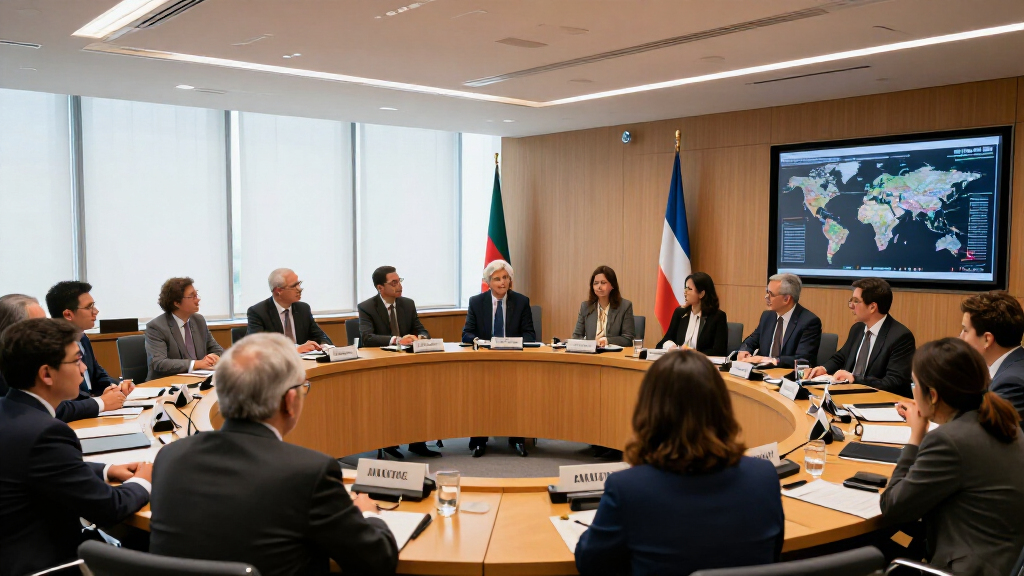
European Central Bank President Christine Lagarde told the International Monetary and Financial Committee on October 17 that energy-market shocks were raising inflation risks even as the global and euro area economies remained resilient. Her statement set out the ECB’s outlook and said its Governing Council had raised key interest rates by 25 basis points in September, following an increase of the same size in June.

Get smart everyday buys delivered free with Prime
- Fast, free delivery on millions of items
- Prime Video, Amazon Music and more included
- Member-only deals all year
Lagarde identified the Middle East conflict and sharp energy-price swings as major sources of uncertainty for the global economy. She also cited trade tensions and protectionist measures as weighing on confidence and reshaping trade flows. At the same time, technology investment, including artificial intelligence, had supported economic activity and trade, particularly in countries connected to technology supply chains, she said.
For the euro area, the ECB’s September staff projections forecast growth of 0.9% in 2026, 1.4% in 2027 and 1.5% in 2028. Lagarde said growth had been broad-based across most countries and sectors in the first half of 2026. The projections anticipate support from recovering real incomes as energy inflation eases, a resilient labour market, public infrastructure and defence spending, and investment in AI and digital technology.
Euro area headline inflation rose to 3.8% in September, mainly because of energy prices, with smaller contributions from food and services. Core inflation, which excludes volatile components, edged up to 2.5%. Lagarde said underlying inflation measures were broadly stable and wages had not yet shown a material response to the energy shock. The ECB expected inflation to remain well above its target into the first half of 2027 before declining toward around target near the end of that year.
Energy Prices Shape ECB Policy
The statement matters because it connects the energy shock directly to both the inflation outlook and interest-rate decisions. Higher energy costs can raise household and business bills immediately and, if they feed into wages and other prices, make inflation harder to bring down. Lagarde said the ECB had not yet seen significant additional pass-through to other prices and wages beyond what its projections already included.
The ECB’s two recent rate increases signal that policymakers are responding to the shock rather than treating it as temporary noise. Lagarde described a measured response as appropriate, while also noting that tighter financing conditions and higher long-term interest rates could slow growth. That balance affects borrowers, businesses and governments across the euro area: policy must contain persistent inflation without overlooking the cost of restrictive financing for economic activity.
Her warning that growth risks are tilted downward while inflation risks are tilted upward captures the challenge facing policymakers. A more severe or prolonged energy disruption could put pressure on prices while weakening output, leaving less room for straightforward policy choices.
Popular right now

Bose QuietComfort True Wireless Earbuds with Active Noise Cancellation, Bluetooth 5.3, USB-C Charging, IPX4, Black

Sony BRAVIA 6 65-Inch OLED 4K HDR Smart Google TV with Gemini (K-65A60)

Vitamix 5200 Blender with 64 oz Container, Black
As an affiliate, we earn on qualifying purchases.
The ECB’s Rate Decisions
Lagarde delivered the statement at the 54th meeting of the IMF’s International Monetary and Financial Committee, during the IMF Annual Meetings. The statement summarized the ECB’s assessment of international and euro area conditions, rather than announcing a new rate decision at the meeting.
The Governing Council raised its key rates by 25 basis points in June and again in September, according to the statement. Lagarde said decisions are guided by three considerations: the inflation outlook and its risks, underlying inflation dynamics, and how strongly monetary policy is transmitted through the economy. She said the energy shock was too large to ignore, but that future choices would depend on incoming data and a comprehensive assessment under that framework.
The statement also addressed longer-term economic resilience. Lagarde called for sound public finances and said any government response to the energy shock should be temporary and targeted. She pointed to workforce skills, labour-market participation, access to risk capital and the ability of innovative firms to expand across the EU’s Single Market as areas for structural policy action.
“The energy shock is too large to “look through” but a measured response remains appropriate to keep inflation in check.”
— Christine Lagarde, ECB president
How Long the Energy Shock Lasts
The statement does not establish how intense or long-lasting the Middle East conflict or resulting energy shock will be. Lagarde said the euro area outlook depends partly on how those shocks spread through the economy. The timing and size of any further pass-through into food prices, other consumer prices and wages are also uncertain.
The ECB’s inflation and growth figures are staff projections, not confirmed outcomes. Lagarde described risks to inflation as tilted upward, including from the Middle East conflict and Russia’s war against Ukraine, but also said some developments could lower inflation. These include a sustainable resolution of geopolitical conflicts, weaker energy-price pass-through or more risk-averse financial markets. The statement did not announce a specific future rate path.
Incoming Data Will Guide Rates
Lagarde said the Governing Council would make future interest-rate decisions after assessing incoming economic and financial data against its three-part reaction function. The next policy steps will depend on the inflation outlook, underlying price pressures and the strength of monetary-policy transmission, including how energy costs affect prices and wages.
Developments in energy markets, long-term interest rates and economic activity will help test the ECB’s September projections. The statement gives no timetable for a further rate change, so the size and timing of any next move remain undetermined.
Key Questions
What did Christine Lagarde tell the IMFC?
She said the global and euro area economies had shown resilience but faced downside risks to growth and upside risks to inflation, particularly from energy-market disruption. She also described the ECB’s recent rate increases and its framework for future decisions.
What were the ECB’s euro area growth projections?
The ECB’s September staff projections forecast growth of 0.9% in 2026, 1.4% in 2027 and 1.5% in 2028. These are projections, not final growth figures.
Why did euro area inflation rise in September?
Headline inflation increased to 3.8% in September, mainly reflecting higher energy inflation, with smaller increases in food and services inflation. Core inflation rose slightly to 2.5%.
Did Lagarde announce another ECB rate increase?
No. The statement reported rate increases of 25 basis points in June and September, but did not announce a new rate decision or specify when another change might occur.
Source: primary