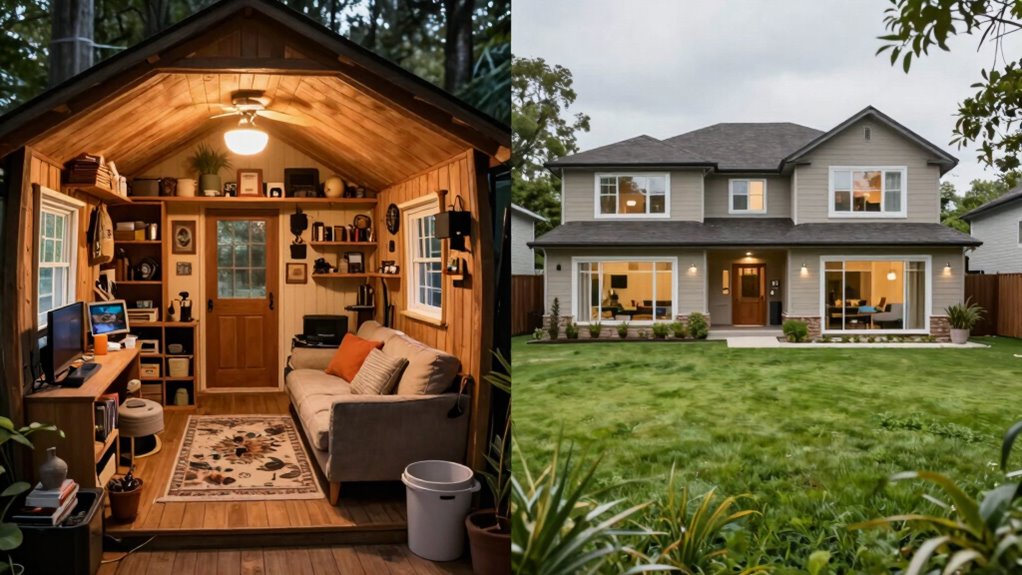

Deciding whether to downsize or stay involves balancing emotional ties and financial benefits. Staying offers comfort, familiarity, and maintains community connections, but can lead to ongoing expenses and limited flexibility. Downsizing may bring financial relief, reduce costs, and free up resources for other priorities, but it can also evoke feelings of loss and require emotional adjustment. Exploring both sides further reveals hidden trade-offs that can help you make a confident, informed choice.

Get smart everyday buys delivered free with Prime
- Fast, free delivery on millions of items
- Prime Video, Amazon Music and more included
- Member-only deals all year
Key Takeaways
- Downsizing can reduce ongoing costs but involves emotional adjustment and potential loss of familiarity.
- Staying preserves emotional security and neighborhood ties but may entail higher long-term expenses.
- Moving closer to family or healthcare improves quality of life but can disrupt routines and social networks.
- The financial benefits of downsizing include increased cash flow and reduced maintenance costs over time.
- Personal priorities, such as emotional attachment versus financial freedom, are crucial in making the decision.

Are you torn between downsizing your home or staying put? Deciding whether to keep your current space or move into a smaller one involves weighing more than just square footage. You’ll need to consider financial considerations, emotional attachments, and the impact each choice has on your lifestyle. On one hand, staying in your current home might feel familiar and comforting, especially if you’ve built a lifetime of memories there. But it also comes with ongoing expenses—property taxes, maintenance costs, and utility bills—that can add up over time. Downsizing offers the potential for considerable financial relief, freeing up cash that could be redirected toward other priorities like travel, healthcare, or investments. However, it’s essential to understand that a smaller space might mean sacrificing some comforts or conveniences you’ve grown accustomed to, which could impact your day-to-day happiness. Recognizing the long-term financial benefits of smaller living spaces can help make this choice clearer.
Deciding to downsize or stay involves balancing financial relief, emotional ties, and lifestyle impacts.
Emotional attachments can make the decision even more complex. Your home isn’t just a structure; it’s a repository of your history, achievements, and relationships. Letting go of a house where you raised children, celebrated holidays, or simply found peace can stir feelings of loss or nostalgia. You might worry about losing a sense of community or the familiarity of your neighborhood. Conversely, downsizing could symbolize a fresh start, a chance to declutter both physically and emotionally. It might also mean moving closer to family, friends, or healthcare resources, which could greatly improve your quality of life. But the process of selling and shifting to a new living space can be emotionally draining, requiring you to confront change and uncertainty. Understanding cost-saving benefits associated with smaller living spaces can help clarify the potential advantages of downsizing, especially when considering long-term affordability and security. Additionally, being aware of emotional well-being during this transition can help you better manage feelings of loss and embrace the positive aspects of change.
Financial considerations are central to this decision. Staying in your current home might seem easier but could become a financial burden as costs increase with age. Downsizing typically involves an initial investment—selling your larger home, finding a suitable smaller one, and possibly paying for renovations or moving expenses. Still, the long-term savings on maintenance, property taxes, and utilities can be substantial. Additionally, understanding identity theft prevention strategies can be useful when managing the financial aspects of your move to safeguard your assets during this transition. Considering how each option aligns with your future financial goals is also important. Will downsizing provide more security or flexibility? Or does staying put allow you to preserve your investments and avoid the upheaval of moving? Recognizing the potential for financial freedom through smaller living spaces can be a motivating factor in your decision-making process. Furthermore, exploring sustainable living practices in smaller homes can contribute to both financial savings and environmental benefits, reinforcing the value of this choice.
Ultimately, the choice hinges on balancing these financial considerations with emotional attachments. Recognizing what matters most to you—whether it’s comfort, security, freedom from debt, or sentimental value—will guide you toward the best decision. It’s a deeply personal process, one that requires honest reflection on what you need now and what you envision for your future.
As an affiliate, we earn on qualifying purchases.
Frequently Asked Questions
How Does Downsizing Impact Long-Term Financial Stability?
Downsizing can impact your long-term financial stability by potentially reducing your expenses and freeing up cash, but it also exposes you to real estate market fluctuations and investment risks. If property values decline, you might face losses or limited equity growth. While it offers immediate savings, you should carefully weigh these risks against your future financial goals to make certain of sustained stability over time.
What Are the Emotional Effects of Leaving a Longtime Home?
Leaving a longtime home stirs a storm of nostalgic feelings, like losing a familiar song. Your emotional attachment runs deep, making it hard to part with memories woven into every corner. You might feel sadness or grief, as if a chapter of your life quietly closes. Yet, with time, new beginnings bloom, and the memories stay alive, anchoring you even in unfamiliar surroundings.
How Does Staying Influence Future Inheritance Plans?
Staying in your current home can simplify estate planning since you avoid immediate changes, making inheritance arrangements more straightforward. It often helps maintain family stability and preserves existing family dynamics, reducing potential conflicts over property. However, you should consider long-term financial implications and future needs. Staying may influence how you structure your estate, so consulting an estate planner guarantees your inheritance plans align with your family’s future and your wishes.
What Community Resources Are Available for Downsizers?
You’ll find community resources for downsizers are like a treasure trove! Neighborhood engagement programs connect you with local support networks, making your shift smoother than ever. From senior centers offering assistance to local councils providing housing advice, these resources are designed to help you settle comfortably. Don’t overlook community workshops, transportation services, and social groups—they’re your secret weapons to a confident, supported downsizing journey, making your new chapter exciting and stress-free.
How Can Staying Home Affect Mental Health Over Time?
Staying home can impact your mental health over time by increasing social isolation, which may weaken your mental resilience. You might feel lonely or disconnected, leading to anxiety or depression. Without regular social interactions, your ability to cope with stress diminishes. To counteract this, prioritize virtual connections, community activities, or outdoor outings when possible. Maintaining social engagement helps preserve mental resilience and reduces the risk of long-term mental health issues.
As an affiliate, we earn on qualifying purchases.
Conclusion
So, whether you opt to downsize or stay put, remember it’s a choice woven with trade-offs. Think of it like choosing between a trusty steed and a shiny new carriage—each has its charm and drawbacks. Whatever your decision, weigh your priorities carefully, and don’t be afraid to channel your inner wise old owl. After all, life’s too short to live in a castle of regrets—better to embrace your journey, whether it’s a leap or a stay.
home organization and decluttering tools
As an affiliate, we earn on qualifying purchases.
As an affiliate, we earn on qualifying purchases.
As an affiliate, we earn on qualifying purchases.
Halloween Picks
halloween
As an affiliate, we earn on qualifying purchases.