
TL;DR
A mobile app called Pocket Voice Lab is being developed to provide real-time acoustic feedback for gender-affirming voice work. It aims to address the lack of accessible, objective tools for individuals practicing voice feminization or masculinization outside clinical settings. The project is currently in prototype testing with plans for a freemium model.
A new mobile application, Pocket Voice Lab, is in development to provide real-time acoustic biofeedback for individuals seeking to improve their gender-affirming voice and resonance. The app aims to fill a critical gap by offering accessible, objective tools for transgender and gender-nonconforming people practicing voice feminization or masculinization outside of clinical settings, potentially transforming how users track and enhance their voice training progress.
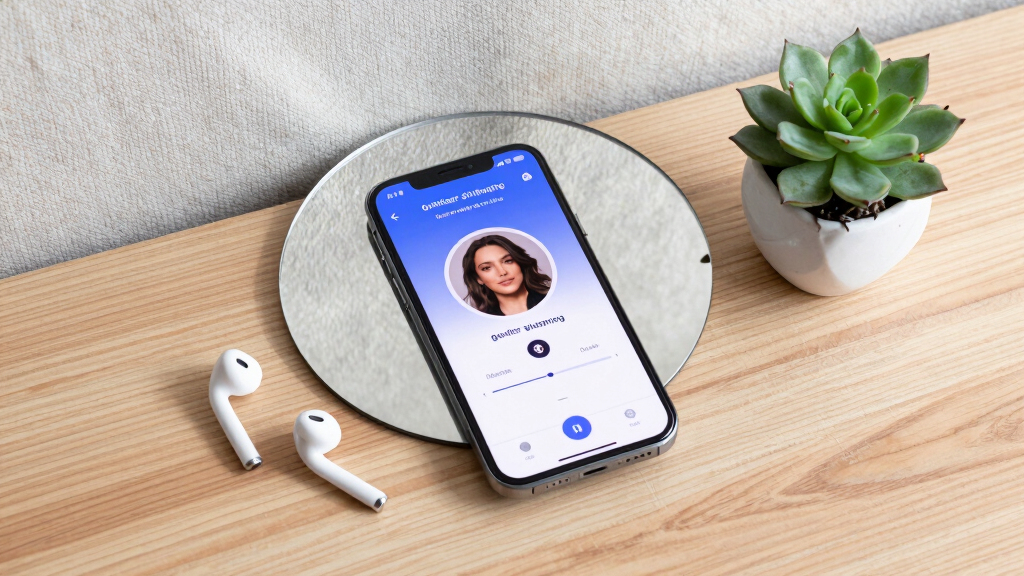
The Pocket Voice Lab project is designed as a lightweight, user-friendly mobile app that records short voice samples and provides immediate visual feedback on fundamental pitch and resonance, comparing results against user-defined targets. It also includes a basic strain indicator based on harmonic-to-noise ratio, helping users avoid vocal strain. The initial release will feature 8-12 guided exercises tailored for gender-affirming voice work, along with a session log to monitor progress over time and shareable summaries for clinicians.
This development responds to the widespread need for affordable, accessible voice training tools, especially given the high costs, limited availability, and intermittent nature of traditional speech-language pathology and vocal coaching. The app’s technology leverages advances in smartphone microphones and on-device analysis, making real-time feedback practical without lab hardware. Peer-reviewed research and existing prototypes like TruVox support the scientific validity of this approach, and consumer demand is evidenced by the success of existing voice training apps with over 4 million downloads.
Impact on Transgender Voice Training Accessibility
This app could significantly improve access to objective, real-time feedback for people practicing gender-affirming voice changes, reducing reliance on costly in-person sessions. It offers a scalable solution that can empower users to practice more confidently and consistently, potentially accelerating voice transformation and improving mental health outcomes associated with voice congruence. Additionally, the app’s shareable progress reports could facilitate better communication between users and clinicians, enhancing ongoing care and support.
gender-affirming voice training app
As an affiliate, we earn on qualifying purchases.
As an affiliate, we earn on qualifying purchases.
Growing Demand for Accessible Voice-Training Tools
The need for accessible gender-affirming voice training tools has been well documented, with many individuals unable to access regular speech therapy due to geographic, financial, or scheduling barriers. Existing solutions often lack objective feedback or are limited to in-person sessions. Recent technological advances, including smartphone-based acoustic analysis, have opened new opportunities for remote, self-guided voice training. Peer-reviewed studies treat voice as a clinical biomarker, validating the scientific basis for biofeedback applications. Several prototypes and apps have demonstrated consumer willingness to pay for such tools, indicating a promising market opportunity.
“Advances in smartphone microphone technology and acoustic analysis now make real-time biofeedback feasible outside laboratory settings.”
— an anonymous researcher
voice resonance biofeedback device
As an affiliate, we earn on qualifying purchases.
As an affiliate, we earn on qualifying purchases.
Uncertainties About User Adoption and Clinical Integration
It is not yet clear how well the app will perform in real-world settings or whether users will adopt it at scale. The effectiveness of the biofeedback features for diverse voice types and individual needs remains to be validated through pilot testing. Additionally, integration with clinical workflows and acceptance by speech-language pathologists have yet to be established, and regulatory considerations for health-related apps are still evolving.
voice therapy tools for transgender individuals
As an affiliate, we earn on qualifying purchases.
As an affiliate, we earn on qualifying purchases.
Next Steps in Development and Validation
The project team plans to run a 4-week pilot involving trans voice-training and public-speaking communities, measuring user engagement and willingness to pay. They aim to validate whether at least 40% of users complete multiple guided sessions in the first week and if over 25% are willing to commit financially. Feedback from these pilots will inform further app refinement, with potential expansion to multi-persona and accent work in future versions. Broader clinical partnerships and licensing strategies are also under consideration.
As an affiliate, we earn on qualifying purchases.
Key Questions
How does the app provide feedback on my voice?
The app records a short voice sample and visually displays pitch and resonance metrics, comparing them to your targets in real time, and indicates vocal strain based on harmonic-to-noise ratios.
Is this app suitable for all voice types?
The initial version is focused on gender-affirming voice work, with plans to expand to other voice training areas as the technology matures.
Will I need to share my voice data with clinicians?
The app will allow users to generate shareable progress reports, facilitating communication with speech-language pathologists if desired, but data privacy will be maintained according to best practices.
When will the app be available for download?
The prototype is currently in testing; a full release is expected after successful pilot validation, likely within the next 6-12 months.
How much will the app cost?
The freemium model will offer free daily exercises, with a paid subscription (~$8-15/month) unlocking full features and history. B2B licensing options are also under consideration.
Source: IdeaNavigator AI