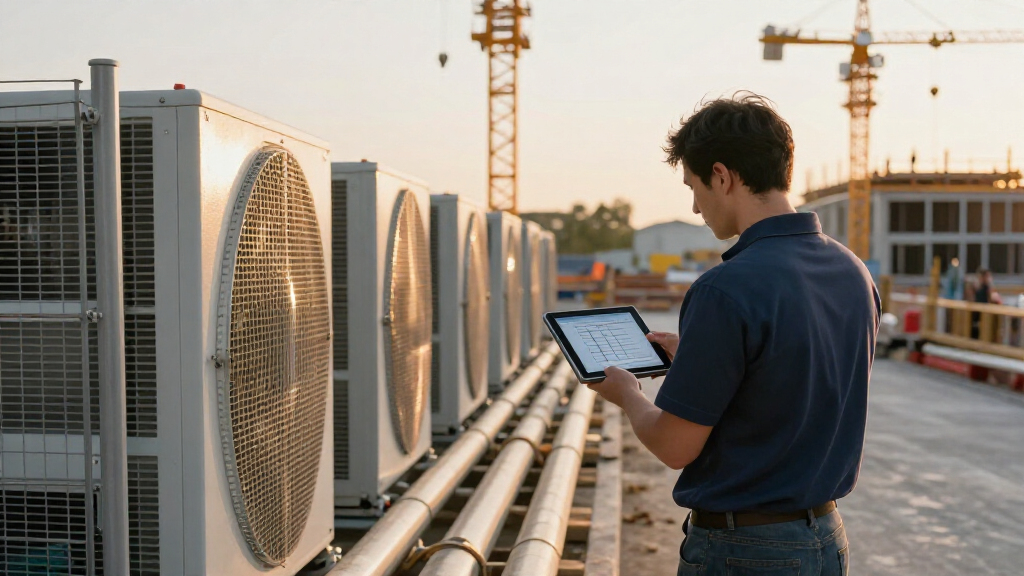
🔍 Read the full analysis: How OpenAI’s Compute Campus Framing Changes The Data Center Conversation on ThorstenMeyerAI.com

Get smart everyday buys delivered free with Prime
- Fast, free delivery on millions of items
- Prime Video, Amazon Music and more included
- Member-only deals all year
TL;DR
OpenAI confirmed the phrase “compute campuses” as a description for its AI infrastructure, after reporting that the company was considering a broader public relations push. The new label does not resolve questions about who pays for electricity and grid upgrades, how water use will be measured, or how voluntary industry pledges will be enforced.
OpenAI has confirmed the phrase “compute campuses” as a name for the large-scale infrastructure it is building for artificial intelligence, after Axios reporting, summarized by TechCrunch, said the company was preparing a public relations push following the U.S. midterm elections. The terminology shift matters because it comes amid growing public concern over data centers’ effects on electricity costs, power grids and local resources; it does not, by itself, change those facilities’ costs or resource needs.
OpenAI told Business Insider that “compute campuses” better describes “the scale and role of the infrastructure we’re building for AI.” The company also described the projects as “long-term investments in computing, energy infrastructure and skilled work,” according to a quote reproduced by Gizmodo from Business Insider’s report. OpenAI said it wants communities hosting the infrastructure to help shape it and share in the opportunities it creates.
The naming idea was reported as part of a possible broader effort, not as a formally launched campaign. TechCrunch reported on Nov. 1, citing Axios, that OpenAI was preparing a post-election “PR blitz” and that Chief Global Affairs Officer Chris Lehane had discussed renaming data centers. The account available in the source material is TechCrunch’s summary of Axios; the underlying Axios article was not reviewed for this report. OpenAI confirmed the term to Business Insider, but no official OpenAI announcement launching the term was identified in the source material.
The practical debate concerns who pays for the electricity supply and grid upgrades needed by large facilities, and what protections local communities receive. OpenAI has previously pledged to “pay our own way on energy,” while a White House pledge signed by OpenAI and six other companies outlines commitments on power generation and delivery infrastructure. The pledge’s fact sheet does not specify penalties, an enforcement body, monitoring or reporting requirements.
The Costs Behind the New Label
The terminology arrives as public attitudes toward data centers have become more skeptical. A Pew Research Center survey of 10,548 U.S. adults, conducted from July 20 to Aug. 9, 2026, found that 50% said data centers were mostly bad for home energy costs, up from 38% in January. The share saying they were mostly bad for the environment rose from 39% to 54%; 60% said they would be not too or not at all comfortable with a new data center in their area.
Those figures indicate a public-perception challenge, but they do not establish that data centers caused any particular household’s bill increase. The distinction matters: electricity prices reflect multiple factors, and the available analysis does not support a simple, uniform link between data center growth and residential prices across states. The economic question is more specific: whether new facilities pay the full costs they create, or whether some costs are passed to other customers through utility rates and grid planning.
For residents and local governments weighing proposed projects, a name is less informative than enforceable terms: expected demand, who funds new transmission and generation, what happens if promised resources are delayed, and how water use will be disclosed. The source material says OpenAI expects water use at its planned Pike County, Ohio, site to be similar to an office building, but that it plans to publish projections only when the design is final. That leaves a key local impact question unresolved.
Popular right now

Ninja Flip Toaster Oven & Air Fryer, Large Capacity, Stainless, SP151

Shark HydroVac MessMaster Corded Wet Dry Vacuum and Mop (WD161)

Dyson Ball Animal 3 Upright Vacuum
As an affiliate, we earn on qualifying purchases.
Pledges, Grid Pressure and Public Opinion
In January 2026, OpenAI published its Stargate Community plan, committing to “paying our own way on energy,” as quoted by Bisnow. On March 4, the White House announced a Ratepayer Protection Pledge signed by Amazon, Google, Meta, Microsoft, OpenAI, Oracle and xAI. Its fact sheet says signatories will build, bring or buy new generation, cover required power-delivery infrastructure upgrades and pay negotiated rates even if they do not use the electricity. The document calls the pledge a “first step.”
The International Energy Agency’s April 2026 report, “Key Questions on Energy and AI,” said measures to shift some financial risk away from utilities had emerged, but that the extent of consumer protection remained unclear. It noted few U.S. examples of states legislating full cost recovery from data-center operators and warned that costs can be shifted in either direction between operators and other ratepayers.
Grid data provides a concrete but limited example of the pressure. PJM, which serves more than 67 million people in 13 states and the District of Columbia, reported that its auction for capacity in the 2028–29 delivery year cleared at the regulator-approved cap of $325 per megawatt-day. The source material says the auction was 6,831 megawatts short and that PJM’s independent market monitor attributed $6.3 billion of a $16.4 billion cost figure to data centers. Those figures describe a particular auction and attribution; they do not, on their own, establish the cause of every customer’s bill.
Residential prices and wholesale market changes also require care in interpretation. The supplied material reports annual residential price increases of 11.3% in Virginia and 10.4% in Ohio, while noting that the IEA found no simple state-level relationship between data centers and household prices. It also says the U.S. Energy Information Administration attributed a 41% PJM wholesale price jump to weather. These observations are not interchangeable measures, and the source material does not establish that data center demand caused the residential increases.
Enforcement and Local Impacts Remain Open
The reported public relations campaign has not been confirmed as launched in the source material, and the available description of it comes through TechCrunch’s summary of Axios. It is also unclear whether OpenAI intends to use “compute campuses” consistently in public materials or whether the term will become a wider industry convention.
The cost pledge leaves questions about implementation. The White House fact sheet does not name penalties, an oversight body, a monitoring process or reporting obligations. The IEA says consumer protection remains uncertain, and the source material does not establish how individual utilities or state regulators will apply the pledge to specific projects.
At OpenAI’s planned Pike County site, the company says it expects water use comparable to an office building but will release projections when the design is final. The source material does not provide the project’s final water-use estimate, a publication date for it, or a full accounting of how the site’s power and grid costs will be allocated.
Project Designs and Cost Rules Ahead
The next concrete information to watch for is OpenAI’s final design and water-use projections for the Pike County project, along with project-specific disclosures on electricity demand and grid infrastructure. Such details would let local officials and residents compare company commitments with expected resource use.
Regulators and utilities will determine how power supply and delivery costs are handled in practice. The source material does not identify a specific upcoming enforcement action or reporting deadline for the White House pledge, so whether its commitments become measurable requirements remains open. Any further public messaging from OpenAI may clarify how it plans to use “compute campuses,” but the name itself does not answer the underlying questions about costs, water or accountability.
Key Questions
What does OpenAI mean by “compute campuses”?
OpenAI told Business Insider the term better describes the scale and role of its AI infrastructure. The source material does not provide a technical definition that distinguishes a compute campus from a data center.
Has OpenAI launched a public relations campaign around the term?
Not according to the source material. Axios reporting, summarized by TechCrunch, said a post-election campaign was being prepared. OpenAI confirmed the terminology to Business Insider, but no official launch announcement was identified.
Does the White House pledge guarantee that data centers will not raise electricity bills?
No such guarantee is established by the available material. The pledge describes company commitments on new generation, delivery upgrades and electricity payments, but its fact sheet names no penalties or monitoring and reporting system. The IEA also says the extent of consumer protection remains unclear.
What is known about water use at OpenAI’s planned Ohio site?
OpenAI expects water use at its planned Pike County site to be similar to an office building, according to the source material. The company plans to publish projections once the design is final; a final estimate is not yet provided.
Source: ThorstenMeyerAI.com