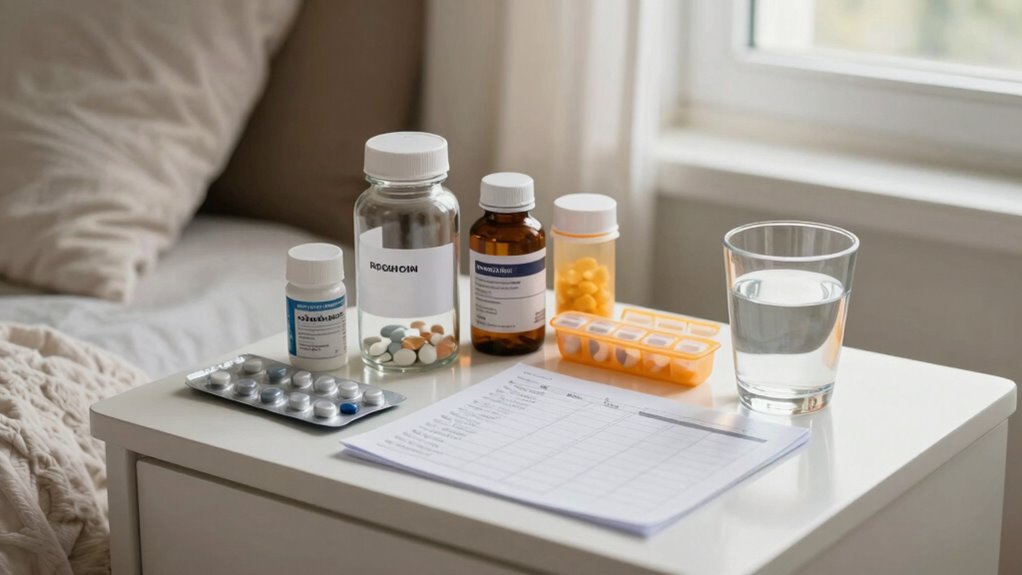

To manage medications at home, you need to store them properly in a cool, dry place away from children, avoiding humid areas like bathrooms. Use clear labels and organized containers to prevent mistakes and keep an updated list of your medications. Developing a routine with reminders ensures you don’t miss doses. Safety also means disposing of meds responsibly and understanding potential side effects. Keep learning about best practices, because there’s always more to discover for safe medication management.

Get smart everyday buys delivered free with Prime
- Fast, free delivery on millions of items
- Prime Video, Amazon Music and more included
- Member-only deals all year
Key Takeaways
- Proper storage in a cool, dry place prevents medication degradation and ensures effectiveness.
- Establish a consistent routine using alarms or pill organizers to improve adherence.
- Keep medications in original packaging and label clearly to avoid mix-ups and ensure safety.
- Educate yourself on medication purposes, side effects, and proper disposal methods.
- Maintain an updated medication list and share it with caregivers for emergencies.
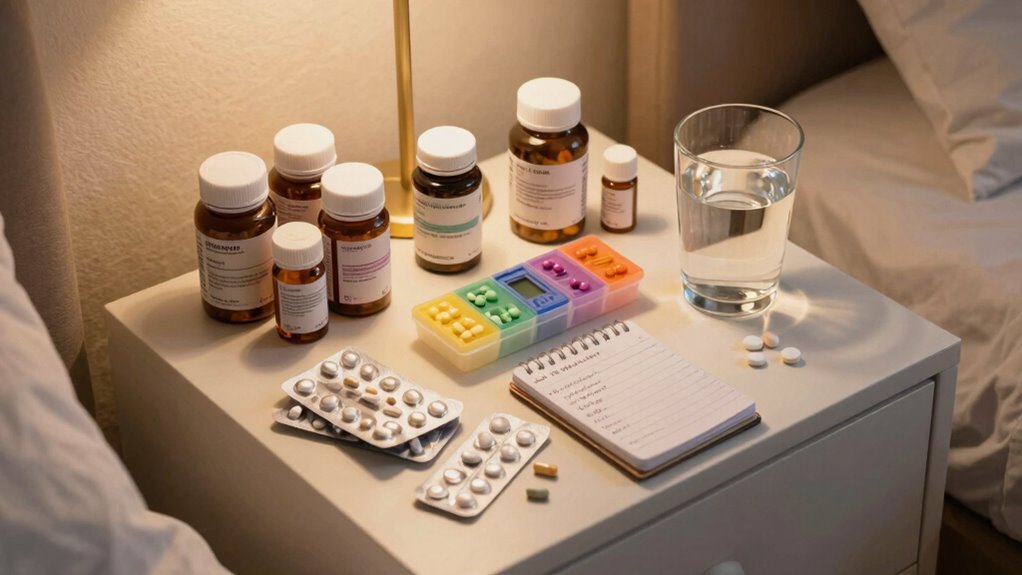
Have you ever wondered how to guarantee your medications are taken safely and correctly at home? Keeping your medicines organized isn’t just about keeping them in a drawer or on a shelf; it’s about creating a system that minimizes mistakes and maximizes effectiveness. Proper medication storage is essential. You need a designated spot that’s cool, dry, and out of reach of children or pets. Avoid storing medicines in the bathroom or kitchen where humidity and heat can degrade their potency. Instead, choose a cabinet or a container in a climate-controlled part of your home. Labeling bottles clearly and keeping them in their original packaging can also help prevent mix-ups. This way, you always know what you’re taking and when.
Store medications in a cool, dry place away from children to keep them safe and effective.
Beyond storage, adherence strategies play a critical role in managing your medications effectively. Skipping doses or taking the wrong amount can lead to health setbacks or adverse effects. To stay on track, develop a routine that fits seamlessly into your daily life. Use visual cues like alarms, calendar reminders, or pill organizers with compartments for each dose. These tools serve as prompts, helping you remember whether you’ve taken your medication and preventing accidental double doses. It’s also helpful to review your medication schedule with your healthcare provider regularly, especially if you’re prescribed multiple medicines. They can help streamline your routine and address any concerns about side effects or interactions. Additionally, understanding the importance of medication adherence and its impact on your health can motivate you to stay consistent. Recognizing the role of proper medication storage in maintaining drug potency can further improve your safety. Educating yourself about proper medication disposal methods is also vital to prevent accidental ingestion or misuse.
It’s easy to underestimate how essential these adherence strategies are until you experience the consequences of missed doses. But proactive planning keeps your treatment effective and reduces the risk of complications. Additionally, keeping an updated list of your medications—detailing dosages and timing—can be invaluable in emergencies or when visiting different healthcare providers. Sharing this list with family members or caregivers ensures they can assist you if needed, especially if you’re ever unable to manage your medications yourself. Incorporating medication management techniques such as regular review and education can further improve your safety and confidence.
Finally, take the time to educate yourself about each medication’s purpose and possible side effects. Knowing why you’re taking each drug and what to expect can motivate you to stick with your routine. Remember, medication management isn’t just about storing pills; it’s about creating a safe, reliable system that supports your health. With thoughtful storage and strategic adherence techniques, you can confidently manage your medicines at home, knowing you’re doing everything possible to stay healthy and safe.
Frequently Asked Questions
How Do I Handle Medication Allergies Safely at Home?
To handle medication allergies safely at home, always keep an allergy alert on your medication labels, so you know which drugs to avoid. When you pick up prescriptions, double-check labels for potential allergens. Store allergy-causing medicines separately, and inform everyone involved in your care. If you experience symptoms, seek medical attention immediately. Staying vigilant with labels and allergy alerts helps prevent accidental reactions and keeps you safe.
What Should I Do if I Miss a Dose?
Did you know nearly 50% of medication errors involve missed doses? If you miss a dose, don’t double up unless your doctor advises it. Instead, check your medication schedule and consider timing adjustments to prevent future misses. Use refill reminders or alarms to stay on track. If you’re unsure or it’s close to your next dose, contact your healthcare provider for guidance. Consistency is key to effective treatment.
How Can I Organize Medications for Multiple Caregivers?
To organize medications for multiple caregivers, use clearly labeled medication storage containers for each person, ensuring they’re easily identifiable. You should also establish open caregiver communication, sharing schedules and any medication changes promptly. Consider creating a centralized medication list or chart that everyone can access, whether digitally or physically. This way, each caregiver knows what to give, when, and how, reducing errors and ensuring consistent medication management.
Are There Any Hidden Costs in Medication Management?
Like peeling back layers of an onion, hidden costs in medication management can surprise you. While cost transparency helps, insurance coverage isn’t always a safety net, leaving you to navigate out-of-pocket expenses, copays, or non-covered medications. These unforeseen fees can quietly accumulate, turning an initially manageable task into a financial maze. Stay vigilant, ask questions early, and keep a detailed record to avoid being caught off guard by hidden costs.
How Do I Dispose of Expired or Unused Medicines Properly?
To dispose of expired or unused medicines properly, you should follow medication safety guidelines. Check if local disposal programs or take-back events are available in your area. If not, mix medicines with unappealing substances like dirt or coffee grounds, then place them in a sealed bag before discarding. Proper storage is essential to prevent accidental ingestion, so keep medications in a secure, clearly labeled container away from children and pets.
Conclusion
Managing your medication at home is like tending a delicate garden—you need to stay organized, attentive, and gentle with each task. When you keep track of your pills, store them properly, and follow your doctor’s instructions, you’re nurturing your health and preventing chaos. Think of it as tending to a tiny, fragile ecosystem—your well-being depends on the care you give each day. With a little effort, you’ll keep your health thriving, like a lush, vibrant landscape.
Halloween Picks
halloween
As an affiliate, we earn on qualifying purchases.