
TL;DR

Get smart everyday buys delivered free — and shop member deals
- Fast, free delivery on millions of items
- Access to Prime Big Deal Days deals on October 6–7
- Prime Video, Amazon Music and more included
ECB President Christine Lagarde told the European Parliament’s economic committee that the ECB raised its three key interest rates by 25 basis points earlier in September, citing energy-driven inflation risks. She said the euro area economy remained resilient, while warning that artificial intelligence could affect productivity, employment and inflation; its overall economic impact remains uncertain.
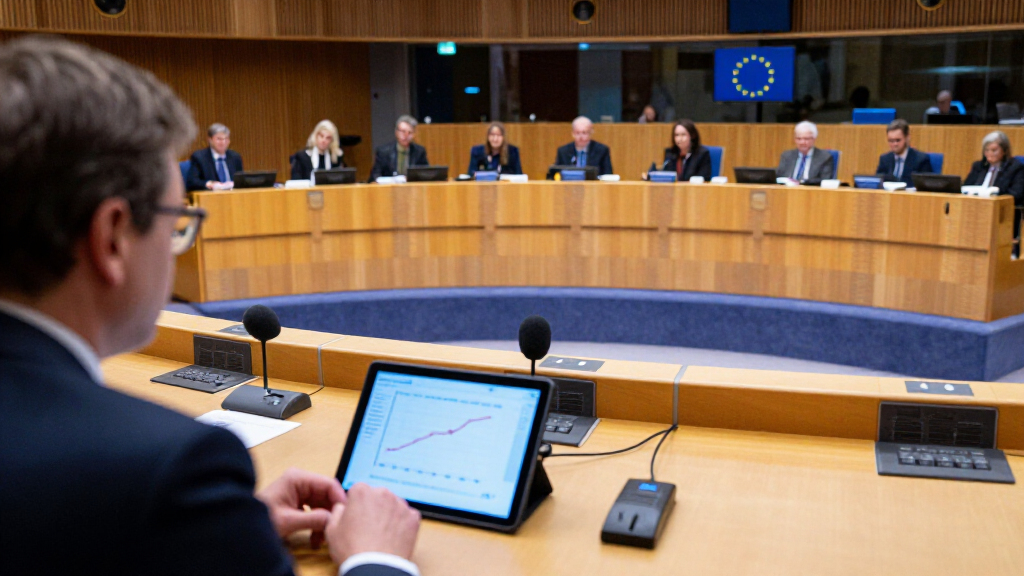
European Central Bank President Christine Lagarde told the European Parliament’s Committee on Economic and Monetary Affairs on September 28 that the ECB had raised its three key interest rates by 25 basis points earlier in the month, as energy costs lifted inflation. She said the bank saw higher inflation ahead but no evidence yet that the energy shock was becoming embedded in wages, and addressed how artificial intelligence could reshape Europe’s economy.
Lagarde described the euro area economy as resilient despite the energy shock. Real GDP grew solidly in the second quarter of 2026, according to her remarks, with growth spread across most countries and sectors. She said that pattern was expected to continue in the third quarter. Manufacturing was supported by increased government spending on defence and infrastructure, while consumer confidence had recovered from its spring lows. She also pointed to AI-related activity in digital services, business investment and exports.
The labour market remained robust, though employment and labour-force growth were slowing. The euro area unemployment rate was 6.4% in July. Inflation rose: headline inflation reached 3.2% in August, up from 2.9% in July, while energy inflation rose to 14.3% from 10.3%. Inflation excluding energy and food edged down to 2.4%. Compensation per employee, a measure of nominal wage growth, slowed to 3.3% in the second quarter from 3.6% in the first.
Lagarde said the ECB’s September staff projections put euro area growth at 0.9% in 2026, 1.4% in 2027 and 1.5% in 2028. The same baseline forecast headline inflation averaging 3.0% in 2026, 2.5% in 2027 and 2.1% in 2028. These are projections, not confirmed outcomes. She said shorter-term inflation expectations remained elevated, while most longer-term measures were around 2%.
Energy Costs Put Policy in Focus
The hearing set out why the ECB acted even as Lagarde said energy-price increases had not yet produced clear wage effects. The bank’s concern is whether a temporary shock spreads into broader inflation through wages and other prices. That distinction matters to households and firms because rate decisions affect borrowing costs, spending and investment.
Lagarde said long-term interest rates had risen notably since the ECB’s previous meeting, a development she said would slow growth and reduce the pass-through of higher energy prices more than projected in September’s staff exercise. The ECB’s policy judgment therefore weighs inflation risks against growth risks, with the outlook uncertain in both directions.
AI adds another uncertainty. Lagarde said firms were expected to devote around 10% of total investment to AI in 2026, and AI-related borrowing accounted for roughly a quarter of credit growth to firms. Those figures point to meaningful investment activity, but they do not establish how much productivity will rise or how quickly benefits will reach workers and consumers.
Top picks for "hear committee economic"
As an affiliate, we earn on qualifying purchases.
ECB’s Three-Part Policy Test
Lagarde described the ECB’s approach to energy shocks as a response to the risk that higher energy prices become embedded in inflation, rather than an automatic reaction to energy prices themselves. She said policymakers assess that risk through three criteria: the inflation outlook and its risks; underlying inflation dynamics, including energy’s effects on other prices and wages; and how monetary policy is transmitted through borrowing costs and economic growth.
On those measures, she said the ECB saw higher inflation ahead, largely because of energy, but no evidence at the time of the hearing that energy costs were feeding into higher wages. The bank nevertheless judged the shock too large to ignore and considered a measured response appropriate. Lagarde called this the ECB’s “middle path” for monetary policy.
Her remarks also placed AI within the policy outlook because the technology could affect investment, labour markets, productivity and inflation. The speech identifies possible channels but the available source text does not give a final estimate of AI’s overall macroeconomic effect.
“We do not react to energy prices, we react if we see risks of higher energy prices becoming embedded in inflation.”
— Christine Lagarde, ECB president
Inflation and AI Effects Remain Unsettled
Lagarde said the euro area outlook remained surrounded by high uncertainty, with upside risks to inflation and downside risks to growth. The source does not establish how long the energy shock will last, how much it will affect prices beyond energy, or whether wage growth will respond later.
The AI discussion also remains open-ended. Lagarde said AI could significantly enhance productivity, competitiveness and living standards, while affecting investment and labour markets. The speech excerpt provides no quantified estimate of those effects, their timing, or how gains and costs might be distributed across sectors and workers.
ECB Will Track Prices and Wages
The ECB’s next policy decisions will depend on incoming data and its assessment of the three criteria Lagarde outlined: the inflation outlook, underlying inflation dynamics and monetary-policy transmission. In particular, policymakers will be watching whether energy costs spread into other prices and wages, alongside changes in growth and borrowing conditions.
The September staff projections provide the bank’s stated baseline through 2028, but they may change as new information arrives. Lagarde’s hearing remarks do not specify a date or outcome for a future rate decision, nor do they set a timetable for measuring AI’s economy-wide effects.
Key Questions
When did Lagarde address the European Parliament committee?
She spoke to the Committee on Economic and Monetary Affairs in Brussels on September 28, 2026.
What rate increase did Lagarde discuss?
She said the ECB had raised its three key interest rates by 25 basis points at a monetary policy meeting earlier in September.
Why did the ECB raise rates?
Lagarde cited higher energy-driven inflation and the risk that price increases could become embedded in broader inflation. She said the ECB did not yet see evidence of the energy shock feeding into higher wages.
What did Lagarde say about AI investment?
She said firms were set to devote around 10% of total investment to AI in 2026, and that AI-related borrowing accounted for roughly a quarter of credit growth to firms. The figures were presented in her remarks; the overall macroeconomic impact of AI remains uncertain.
Source: primary
Fall Picks
fall essentials
As an affiliate, we earn on qualifying purchases.