
📊 Full opportunity report: AI Training Techniques That Make Responses Possible on ThorstenMeyerAI.com — validation score, market gap, and execution plan.
TL;DR
AI responses are made possible by a multi-stage training process involving pre-training, instruction tuning, reward modeling, and reinforcement learning. These techniques shape the AI’s behavior without ongoing learning after deployment.
Recent disclosures about AI training processes clarify how models like ChatGPT produce coherent responses without ongoing learning. These techniques, including pre-training, instruction tuning, reward modeling, and reinforcement learning, are key to shaping AI behavior and capabilities. This understanding is crucial for grasping how AI systems operate and why they do not learn from individual interactions after deployment.
The core of AI response generation relies on a three-stage process. First, pre-training involves feeding the model trillions of tokens of text, enabling it to learn language patterns, facts, and coding at scale. This stage takes months and results in a raw, fluent model that can generate text but lacks specific behaviors like helpfulness or politeness.
Next, post-training transforms this base model into a practical assistant. It involves four key steps: defining a model constitution that sets principles, instruction tuning with curated examples, training a reward model to evaluate responses, and applying reinforcement learning to align the model’s behavior with desired outcomes. These steps take weeks and are responsible for guiding the model to be helpful, honest, and safe.
Once deployed, the model’s weights are frozen. It does not learn or remember individual conversations; each response is generated solely based on the fixed weights, with no ongoing updates, contrary to common misconceptions.
One map, three timescales. Capability is built once over months; behaviour is set over weeks; and every answer is assembled in seconds from parts that learned nothing new. Three points along the way are where alignment actually lives.
Implications of Training Stages for AI Behavior
This layered training process explains why AI models like ChatGPT can produce coherent, contextually appropriate responses without learning from each interaction. Understanding these stages clarifies that AI behavior is shaped by extensive prior training and fine-tuning, not ongoing learning. This has implications for user trust, system safety, and future development, emphasizing that current models do not adapt or improve through user conversations.

AI with Intention: Principles and Action Steps for Teachers and School Leaders
- Guiding principles and action steps: Addresses AI issues and opportunities
- Schoolwide AI understanding: Learn to cultivate AI awareness
- Student-centered practices: Supports academic integrity
As an affiliate, we earn on qualifying purchases.
As an affiliate, we earn on qualifying purchases.
Evolution of AI Training Methodologies
The development of large language models has progressed from simple pattern recognition to complex multi-stage training processes. Initially, models were trained solely on massive text datasets, resulting in fluent but unpredictable output. The recent focus has shifted toward aligning AI behavior with human values through instruction tuning and reward modeling, which significantly enhances usefulness and safety. These advancements are part of ongoing efforts to make AI more reliable and aligned with user expectations.
"The core of AI response generation relies on a three-stage process: pre-training, instruction tuning, and reinforcement learning, with no ongoing learning after deployment."
— Thorsten Meyer

AI Systems Performance Engineering: Optimizing Model Training and Inference Workloads with GPUs, CUDA, and PyTorch
As an affiliate, we earn on qualifying purchases.
As an affiliate, we earn on qualifying purchases.
Remaining Questions About Fine-Tuning and Future Models
While the current training pipeline is well-understood, it is still unclear how future models might incorporate ongoing learning or adaptation post-deployment, or how these techniques could evolve to improve responsiveness and safety without sacrificing stability. Additionally, the precise impact of different reward models and tuning strategies on AI behavior remains an active area of research.

Training Data for Machine Learning: Human Supervision from Annotation to Data Science
As an affiliate, we earn on qualifying purchases.
As an affiliate, we earn on qualifying purchases.
Next Steps in AI Training and Deployment
Researchers and developers are likely to explore methods for safely enabling models to adapt after deployment, potentially through controlled online learning. Continued refinement of training techniques, including better reward models and alignment strategies, will aim to produce AI systems that are more helpful, safe, and aligned with human values, while maintaining transparency about their fixed or adaptive nature.
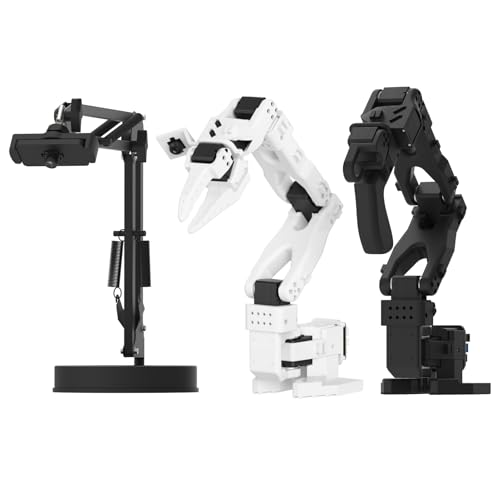
HIWONDER AI Robotic Arm Kit for LeRobot SO-ARM101 VLA Imitation Learning
- Compatibility with LeRobot: Integrated with LeRobot ecosystem and algorithms
- Teleoperation Support: Leader-follower synchronous teleoperation capability
- VLA Development: Supports vision-language-action model training
As an affiliate, we earn on qualifying purchases.
As an affiliate, we earn on qualifying purchases.
Key Questions
Do AI models learn from user interactions?
No, once deployed, AI models like ChatGPT do not learn from individual conversations. Their responses are generated based on fixed weights established during training.
What stages are involved in training an AI language model?
Training involves three main stages: pre-training on large text datasets, instruction tuning with curated examples, and reinforcement learning with reward models to align behavior with desired principles.
Can AI models change their behavior after deployment?
Currently, models do not change their behavior after deployment because their weights are frozen. Any updates require retraining or fine-tuning, not real-time learning.
Why is understanding the training process important?
Understanding how AI models are trained clarifies their capabilities and limitations, helping users and developers set appropriate expectations and improve safety measures.
Source: ThorstenMeyerAI.com