
📊 Full opportunity report: Meta’s Muse Spark 1.2: The Next Step In AI Programming Evolution on ThorstenMeyerAI.com — validation score, market gap, and execution plan.
TL;DR
Meta has released Muse Spark 1.2 alongside its first dedicated coding agent, Muse Code. The update emphasizes co-training for better tool use and long-term task handling, positioning Meta competitively in AI development.
Meta has officially released Muse Spark 1.2 and Muse Code, its latest AI tools designed for advanced coding tasks. This pairing represents a strategic move to enhance AI-driven software development and compete with leading models like OpenAI’s Codex and Claude. The release was announced publicly by Meta CEO Mark Zuckerberg, emphasizing improvements in tool use, long-term task management, and safety features.
Meta’s Muse Spark 1.2 introduces a new approach to training, where the model and its coding agent, Muse Code, are co-trained together rather than separately. This method aims to improve tool integration, reduce retries, and produce higher-quality outputs, especially for complex, long-horizon coding projects. The models were trained on extensive repository data, focusing on planning and goal conditioning to handle entire projects within a single session.
One of the key innovations is Muse Code’s runtime architecture, which maintains a local event log of all interactions, enabling it to resume precisely after interruptions. This ‘replay-exact’ feature makes the tool more reliable for long autonomous tasks. The system ships with three default skills—/plan, /grill, and /goal—and supports persistent background agents, allowing for parallel work and review processes.
Independent testing by Artificial Analysis shows Muse Spark 1.2 scores 54 on their Intelligence Index, an improvement of 3 points over Muse Spark 1.1 and 11 over version 1.0. It performs strongly in agentic tasks, with a 260 Elo point increase to 1631 on the GDPval-AA v2 benchmark, placing it fifth overall and ahead of some competitors. The model’s cost per task remains competitive at approximately $0.40, undercutting many peers, as Meta aims to capture developer market share.
However, the model’s hallucination rate decreased mainly because it answers fewer questions, not because its knowledge accuracy improved. Its attempt rate dropped from 82% to 67%, and accuracy slightly declined from 41% to 38%. This indicates a safer but potentially less capable model, as it abstains more often to avoid hallucinations.
Meta shipped a coding model and its first coding agent on the same day, co-trained together. The pairing is the story — and it puts Meta straight into competition with Claude Code and Codex. Parts are genuinely strong; one part cuts against how I build.
▲ Capability claims are Meta’s own · benchmarks independentMuse Code and Muse Spark 1.2 were co-trained — harness and model together — for better tool use and fewer retries than a generic wrapper. Three default skills ship with it.
Vendor benchmarks are worth nothing until someone independent runs the model. Artificial Analysis already has, on a coding- and agent-heavy index.
One finding a launch post will never tell you — and it matters more than the headline score.
The pricing has a tell. Below the standard tier sits a contributor tier at a tenth of the price — in exchange for one thing. (The two-panel pattern below mirrors §03 by design.)
The choice here isn’t “sovereign or not” — it’s which frontier vendor’s pipeline your code flows into.
- Frontier-adjacent coding model, co-trained with a crash-safe agent
- Priced below the competition; one-command install on macOS + Linux
- The event-log runtime is a genuinely good idea
- Closed, API-only, from a company whose model is data harvesting
- Same hosted tradeoff as Claude Code / Codex — pick your pipeline
- Thin track record: replaced Llama months ago; 1.2 is a fast follow on a weeks-old 1.1
The cheapest number on the pricing page is the one that costs the most.
Implications for AI-Driven Software Development
The release of Muse Spark 1.2 and Muse Code marks a significant step in AI programming tools, emphasizing integrated training and long-horizon task management. Meta's approach aims to improve reliability and safety in autonomous coding, which could influence how developers adopt AI assistants for complex projects. The competitive pricing and improved benchmarks position Meta as a serious contender in enterprise AI solutions, potentially accelerating adoption of AI in software engineering workflows.
Furthermore, the focus on co-training and persistent runtime architectures signals a shift towards more autonomous, trustworthy AI agents capable of handling extended tasks with minimal supervision. This could reshape industry standards for AI safety and efficiency, although the trade-offs in hallucination rates and attempt behaviors warrant careful consideration for deployment.

Coding with AI For Dummies (For Dummies: Learning Made Easy)
As an affiliate, we earn on qualifying purchases.
As an affiliate, we earn on qualifying purchases.
Recent Advances in AI Coding Tools and Meta’s Strategy
Meta has been rapidly advancing its AI models, releasing multiple versions within months, each showing notable improvements in benchmarks related to agentic reasoning and tool use. Prior to this, Meta's models lagged behind competitors like OpenAI and Anthropic in core benchmarks but have recently gained ground through focused engineering efforts. The co-training approach and long-horizon capabilities reflect Meta’s strategic emphasis on developing autonomous AI agents that can handle complex, multi-step tasks—crucial for enterprise adoption and developer integration.
Industry-wide, AI coding tools such as OpenAI’s Codex and Claude Code have become standard in professional environments, setting high expectations for performance, safety, and cost-efficiency. Meta’s latest release aims to challenge these incumbents by offering comparable or superior performance at a lower cost, with added safety features like abstention to reduce hallucinations.
"Muse Spark 1.2 and Muse Code set a new standard for integrated, long-horizon AI coding capabilities, with safety and efficiency at the forefront."
— Meta spokesperson

Beyond Vibe Coding: From Coder to AI-Era Developer
As an affiliate, we earn on qualifying purchases.
As an affiliate, we earn on qualifying purchases.
Unresolved Questions About Long-Term Performance
It remains unclear how well Muse Spark 1.2’s long-session performance and context compaction will hold up across diverse real-world coding tasks. Independent testing is ongoing, and results on reliability, hallucination rates, and actual developer productivity are still pending. Additionally, the impact of increased abstention on overall capability and usability in complex projects is yet to be fully understood.
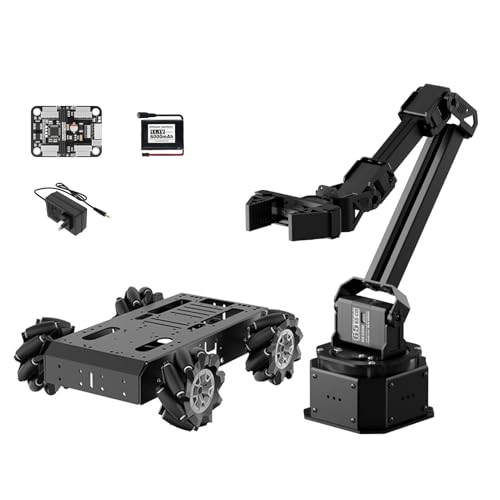
HIWONDER AI Robotic Arm Kit Imitation Learning VLA Model Development Embodied AI 6DOF Full Metal Robot Arm with Large AI Models K230 AI Vision Voice Interaction, NexArm Advanced Kit & Big Chassis
- Embodied AI Robotic Arm: Industrial-grade metal, high-precision servos
- Dual-Chip Architecture: ESP32 + AT32 for robust performance
- High Precision & Reach: 500mm reach, ±2mm repeatability
As an affiliate, we earn on qualifying purchases.
As an affiliate, we earn on qualifying purchases.
Next Steps in Evaluating and Adopting Muse Spark 1.2
Independent researchers and early adopters will begin testing Muse Spark 1.2’s long-term stability, safety, and productivity in real-world scenarios. Meta is expected to release further updates based on feedback, and industry analysts will monitor its market positioning against competitors. Widespread adoption will depend on how well the model’s safety features balance with its ability to perform complex coding tasks over extended periods.

Observability in the AI-Native Era: Leveraging AIOps to build, observe, and operate resilient systems
As an affiliate, we earn on qualifying purchases.
As an affiliate, we earn on qualifying purchases.
Key Questions
How does Muse Spark 1.2 differ from previous Meta models?
Muse Spark 1.2 introduces co-training with its coding agent, Muse Code, and emphasizes long-horizon task handling with persistent runtime features, aiming for better tool use and safety.
What are the main advantages of Muse Code’s architecture?
Its runtime maintains a local event log, enabling precise resumption after interruptions, making it more reliable for autonomous, long-duration coding tasks.
How does the model’s safety feature impact its performance?
It reduces hallucinations by increasing abstention, which may lower overall accuracy but improves safety for autonomous use.
What benchmarks show Muse Spark 1.2’s improvements?
It scores 54 on the Artificial Analysis Intelligence Index and 1631 Elo points on GDPval-AA v2, both showing notable gains, especially in agentic tasks.
Will Muse Spark 1.2 be available for general use soon?
Meta has announced the release, but widespread deployment and integration into developer workflows will depend on further testing and feedback.
Source: ThorstenMeyerAI.com