
📊 Full opportunity report: The Bubble Question, Disentangled: 1999 vs 2026 Category by Category on ThorstenMeyerAI.com — validation score, market gap, and execution plan.
Listen free for 30 days with Audible
Thousands of audiobooks and originals — cancel anytime.
Start your free trialAs an affiliate, we earn on qualifying purchases.
TL;DR
This analysis compares the 1999 dotcom bubble with the 2026 AI cycle across multiple categories. While some indicators suggest bubble dynamics, others reflect genuine value, highlighting a complex, category-specific landscape.
Recent assessments indicate that the 2026 AI market exhibits mixed signals: some sectors display classic bubble characteristics, while others show signs of sustainable growth. This nuanced view is crucial for investors, policymakers, and industry leaders aiming to navigate the AI cycle effectively.
Analysis by Thorsten Meyer highlights that, unlike the 1999 dotcom bubble, the current AI cycle features more grounded fundamentals such as real revenue, visible productivity gains, and earnings growth. However, certain indicators—extreme private valuations, high concentration of VC funding, and large-scale infrastructure investments—mirror bubble-like behaviors.
Key comparisons reveal that AI-focused venture capital investments in 2026 have reached $258.7 billion, with a high concentration in a few dominant players like OpenAI and Anthropic, similar to the tech bubble’s VC patterns. Capital deployment in AI infrastructure is projected at $725 billion in 2026 alone, comparable in scale but faster in pace than the late 1990s.
Despite these similarities, the current cycle shows a shift towards revenue and earnings-driven growth, with visible productivity improvements already impacting margins, unlike the speculative hype that characterized 1999. Nonetheless, the high private valuations and deal concentration raise concerns about potential correction risks.
Not binary.
Category by category.
Some bets show clear bubble dynamics. Some show durable value. The disentanglement matters more than the aggregate framing.
OpenAI $730B private valuation. Anthropic $380B. Mag 7 forward P/E 38× vs Dot-com peak 30×. BUT: earnings-driven returns (78%) vs Dot-com multiple-driven (314%). Real productivity gains. Mag 7 outsized free cash flow. Carlota Perez framing applies.
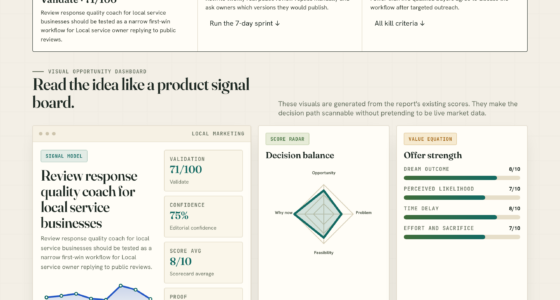
Two cycles. Twelve dimensions.
On price-and-fundamentals dimensions, 2024-2026 is more grounded than 1999. On capital-allocation dimensions, 2024-2026 has bubble-comparable or worse characteristics. The dual signal explains the analyst disagreement.
Five frothy. Five durable. Three contested.
The honest read: the cycle is structurally bifurcated. Some categories are not in bubble territory; others are. The contested middle is where the bubble question actually resolves through 2027-2028.
- Mega-deal concentrationOpenAI $730B, Anthropic $380B, Databricks $134B.
- Circular financingMSFT→OpenAI→CoreWeave→NVDA→MSFT loop.
- Capex velocity$725B exceeds revenue translation. $1.5T debt by 2028.
- Cahn / Sequoia argument$5T buildout requires AGI by 2030.
- Capital-flow speed$700B retail equity since Jan · 5× faster than 2000.
- Hyperscaler capex justificationCahn (only AGI) vs Goldman (justified by trajectory).
- NVIDIA addressable shareCUDA moat vs in-house silicon migration to 30-45% by 2028.
- Frontier-lab valuationsPlatform companies vs commodity API providers.
- Earnings-driven returns78% earnings · 9% multiples vs Dot-com 314% multiples.
- Mag 7 FCF + buybacksMicrosoft $90B FCF · Alphabet $70B · structural cushion.
- Profit weight matchesTech ~30% market cap, ~20% profits vs 1999 35%/10% gap.
- Forward margins recordS&P Tech margin estimates at all-time highs.
- Real productivity30-50% call center · 20-40% software eng · measurable today.
Three paths. One question.
35/50/15 probability. Base scenario most likely because durable-value supports prevent worst-case but bubble signals are too strong to resolve without correction.
- Frothy correct 30-50%Frontier labs, circular financing.
- Mag 7 sustainsReal productivity continues.
- Hyperscaler capex defensibleMixed but justified.
- NVIDIA gradual decelNot sharp.
- Outcome: Uneven returns. Big winners + losers. No broad crash.
- Frontier labs -40-60%From 2026 peaks.
- Hyperscaler impair$50-150B capex aggregate.
- NVIDIA sharp decelFY28 30-50% growth vs FY26 75%.
- NASDAQ -30-50%12-24 month period.
- Outcome: Mag 7 cushion holds. Deployment continues delayed.
- NASDAQ -60-78%Matching 2001-2003 magnitude.
- Frontier labs collapseBelow VC entry pricing.
- Hyperscaler impair $300-500BMajor capex writedowns.
- NVIDIA negative quartersRevenue compression.
- Outcome: Multi-year recovery. Deployment 2032-2033.
The 2024-2026 cycle is structurally more grounded than 1999 on price-and-fundamentals dimensions and structurally similar or worse on capital-allocation dimensions. The bifurcation explains the analyst disagreement and predicts the correction pattern: specific categories correct sharply while others persist.
Four assignments. By role.
Stop pricing AI as single asset class.
Differentiate Mag 7 (durable-value-leaning) from pure-play AI infrastructure (bubble-leaning) from contested middle (NVIDIA, frontier labs). Position long durable-value categories; short or underweight bubble-categories with circular-financing exposure. Use Perez framing to size correction expectations.
Pace through 2026-2027.
Preserve dry powder for 2028-2029. Mega-rounds at $300B+ valuations carry asymmetric correction risk. Mid-stage product-market-fit names with real revenue carry durable value through any plausible correction. The 1999 lesson: winners eventually recover; losers don’t.
Build for survivable correction.
18-24 month cash runway assumptions that survive 30-50% valuation correction. Prioritize real revenue over narrative-driven funding. Structure cap tables to absorb down-round scenarios. Peak-fundraising window of 2025-2026 may not persist; raise opportunistically while it does.
Multi-vendor sourcing for price volatility.
Plan for AI service price volatility through 2027-2028. Prices may rise (power constraint) or fall (frontier-lab competitive pressure). Multi-vendor sourcing reduces single-vendor exposure. Contractual flexibility (escalators, exit provisions, renegotiation triggers) preserves optionality.
Implications for Investors and Policymakers
Understanding the category-specific dynamics of the AI market helps stakeholders distinguish between sustainable growth and speculative bubbles. This differentiation influences investment strategies, regulatory approaches, and innovation policies, shaping the future trajectory of AI development and deployment.As an affiliate, we earn on qualifying purchases.
Historical and Current Market Structures Compared
The 1999 dotcom bubble was characterized by excessive VC funding to unprofitable companies, soaring valuations based on network effects, and a surge in IPOs at unsustainable prices. When the bubble burst, many companies collapsed, but the internet’s infrastructure and usage continued to grow, eventually delivering significant productivity gains.
In contrast, the 2024-2026 AI cycle features more tangible revenue streams, real earnings growth, and visible productivity improvements, supported by substantial infrastructure investments and strategic corporate deployments. Yet, high private valuations and concentration risks echo some bubble traits from the late 1990s, making the overall picture more complex.
“The current AI market is more structurally grounded than 1999, but certain sectors exhibit bubble-like behaviors that require careful differentiation.”
— Thorsten Meyer
As an affiliate, we earn on qualifying purchases.
Unclear Aspects of Bubble Dynamics in AI
While some categories show bubble signals, the precise timing and magnitude of potential corrections remain uncertain. The extent to which infrastructure investments and revenue growth will sustain current valuations is still being evaluated. Additionally, the long-term impact of AI productivity gains on market stability is not yet fully understood.
AI infrastructure development kits
As an affiliate, we earn on qualifying purchases.
As an affiliate, we earn on qualifying purchases.
Monitoring Key Indicators and Market Developments
Stakeholders should closely watch private valuation trends, infrastructure investment scales, and sector-specific revenue growth. Regulatory responses and corporate strategies in the coming months will also influence whether the current cycle leans more towards sustainable expansion or correction. Continued analysis will clarify the evolving bubble risks through 2027-2030.
As an affiliate, we earn on qualifying purchases.
Key Questions
How does the 2026 AI cycle differ from the 1999 dotcom bubble?
Unlike the dotcom bubble, which was driven by speculative valuations and unprofitable companies, the current AI cycle shows more tangible revenue, earnings, and productivity gains, though some sectors exhibit bubble-like traits such as high private valuations and concentration risks.
What are the main bubble indicators in the current AI market?
Key indicators include extreme private valuations (e.g., OpenAI at $730 billion), high VC deal concentration (73%), and large-scale infrastructure investments ($725 billion in 2026), which resemble bubble characteristics from the late 1990s.
Are there sectors within AI that are definitely in bubble territory?
Some sectors, particularly those with speculative private valuations and concentrated VC funding, show bubble traits. However, core infrastructure and revenue-generating AI applications are more aligned with sustainable growth.
What could trigger a correction in the AI market?
Potential triggers include valuation corrections in private markets, regulatory clampdowns, or a slowdown in revenue growth that undermines overly optimistic expectations, especially in high-concentration sectors.
Source: ThorstenMeyerAI.com
Fall Picks
fall essentials
As an affiliate, we earn on qualifying purchases.