
To conduct a home accessibility audit, start by checking entryways for ramps, level surfaces, and wide doorways to guarantee easy wheelchair access. Look inside for clear, well-lit pathways, grab bars, and accessible controls at appropriate heights. Fix any hazards like loose rugs or uneven floors, and consider technology like motion sensors or smart switches. Simple adjustments can make your home safer and more inclusive. Keep exploring ways to enhance your space for everyone’s comfort and safety.

Get smart everyday buys delivered free — and shop member deals
- Fast, free delivery on millions of items
- Access to Prime Big Deal Days deals on October 6–7
- Prime Video, Amazon Music and more included
Key Takeaways
- Check entryways for ramps, low thresholds, and door widths of at least 32 inches for easy access.
- Ensure hallways and doorways are widened, and furniture is arranged for clear, open pathways.
- Use bright lighting, contrasting colors, and simple signage to improve visibility and safety.
- Install adaptive features such as lever handles, grab bars, and touchless controls for easier use.
- Regularly inspect and update safety features, controls, and technology to accommodate evolving needs.
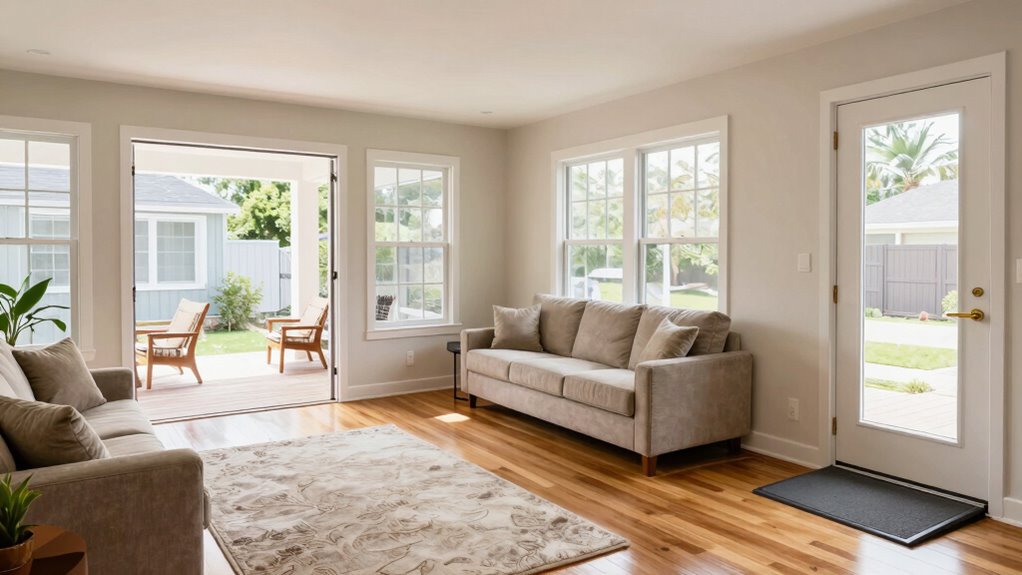
Are you confident that your home is safe and accessible for everyone who lives or visits? If you’re unsure, conducting a home accessibility audit can help you identify potential barriers and make improvements. The good news is, you don’t need to be an expert or use complicated jargon to get started. It’s about understanding the basics of adaptive technology and universal design to create a more inclusive space.
First, look at the entryways. Are they easy to access? Steps can be challenging for those with mobility issues, so consider installing a ramp or leveling the surface. Keep thresholds low or beveled so they don’t trip people up. Door widths also matter; make sure they’re wide enough—at least 32 inches—to accommodate wheelchairs or walkers comfortably. These adjustments are simple but impactful, making your home more welcoming and functional. Additionally, universal design principles encourage creating spaces that serve everyone, regardless of ability or age. Incorporating compassionate design can help address the diverse needs of all users.
Ensure entryways are accessible with ramps, low thresholds, and doorways at least 32 inches wide for everyone’s safety.
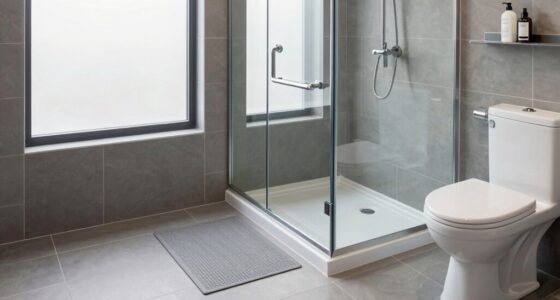
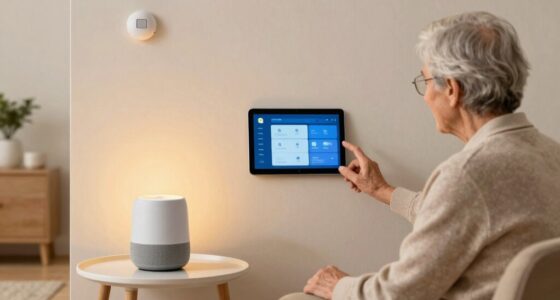
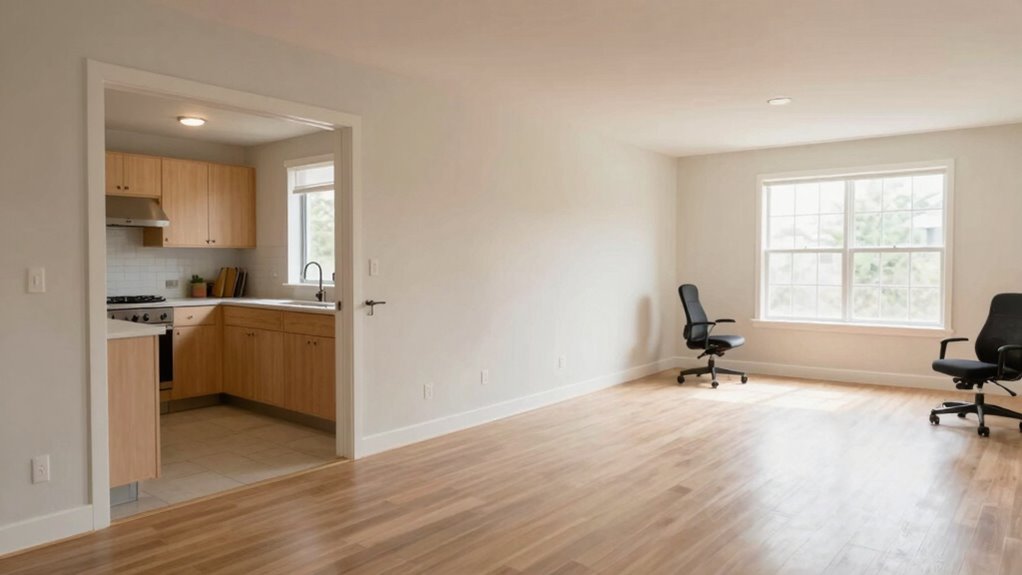
Next, move inside and examine hallways and doorways. Are they wide enough to allow easy navigation? If not, consider widening them or rearranging furniture to create more open pathways. Think about lighting too—bright, well-placed lights reduce hazards and assist those with visual impairments. When it comes to the kitchen and bathroom, check for adaptive technology options like lever-style handles instead of knobs, which are easier to operate. Installing grab bars in the bathroom is another smart move that adds safety without sacrificing style. Incorporating smart home technology can also enhance accessibility by allowing easier control over your home’s systems. Regularly updating and integrating these technologies can help future-proof your home’s accessibility features.
Universal design principles come into play here. These are design strategies that serve everyone, regardless of age or ability. For example, installing a single-level living space eliminates the need for stairs, making the entire home accessible. Switching to touchless faucets or motion-activated lighting can improve convenience and hygiene. Keep things simple: clear signage, contrasting colors for better visibility, and uncluttered spaces all contribute to a more inclusive environment. Regularly assessing and updating these features helps ensure your home remains safe and functional as needs evolve. Incorporating adaptive technology into daily routines can significantly improve ease of use for everyone. Remember, ongoing feedback from those who use the space can help guide necessary adjustments. Staying informed about advancements in assistive devices can provide additional options to enhance home accessibility.
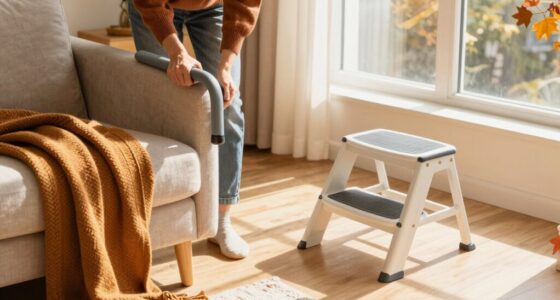
Don’t forget to assess your floors. Are they slip-resistant? Are there loose rugs or uneven surfaces that could cause falls? Fixing these hazards is straightforward and can prevent accidents. Also, consider your home’s controls—light switches, thermostats, and door locks should be reachable without stretching or bending. Positioning them at an accessible height makes daily tasks easier for everyone. Regularly checking and maintaining these features ensures they remain functional and safe over time.
Finally, think about ongoing maintenance. Regularly check your modifications and adapt as needed. An accessible home isn’t a one-time project but a continuous process. By keeping these considerations in mind and applying simple adjustments rooted in universal design and adaptive technology, you can create a safer, more inclusive home that welcomes all visitors and residents alike.
As an affiliate, we earn on qualifying purchases.
Frequently Asked Questions
How Often Should I Conduct a Home Accessibility Audit?
You should conduct a home accessibility audit at least once a year, or more often if you notice changes in mobility or safety concerns. Regular safety checks help identify potential hazards early, guaranteeing your home remains safe and accessible. These audits also guide necessary mobility improvements, making daily activities easier. Staying proactive ensures your environment adapts to your needs, maintaining safety and independence over time.
Can I Do a Home Accessibility Audit Myself?
Yes, you can do a home accessibility audit yourself. Start with a DIY assessment by using an accessibility checklist to identify potential barriers. Walk through each area of your home, noting things like door widths, light switches, and bathroom accessibility. This proactive approach helps you spot issues early and prioritize improvements. Remember, a thorough DIY assessment can make your home safer and more comfortable for everyone.
What Is the Average Cost of a Home Accessibility Audit?
The average cost of a home accessibility audit typically ranges from $300 to $800, depending on the size of your home and the scope of the assessment. For accurate cost estimation, you should reach out to different service providers, as prices can vary. Keep in mind, investing in a thorough audit can save you money long-term by identifying necessary modifications early and ensuring your home is safe and accessible.
Are There Any Government Programs for Home Modifications?
Government programs are like hidden treasures, offering grants and funding opportunities for home modifications. You might qualify for programs like the ADA Home Modification Grant or state-specific assistance, which help cover costs for ramps, grab bars, or widened doorways. These initiatives aim to make your home safer and more accessible. Check with local agencies or visit government websites to discover programs tailored to your needs.
How Long Does a Typical Home Accessibility Audit Take?
A typical home accessibility audit takes about 2 to 4 hours, depending on the home’s size and complexity. During the audit, you’ll assess accessibility features and safety improvements, making sure everything is up to code and functional. You’ll check for hazards, review entryways, and evaluate bathroom and kitchen safety. This process helps identify areas needing modifications, ensuring your home is safer and more accessible for everyone.
As an affiliate, we earn on qualifying purchases.
Conclusion
Now that you’ve learned how to conduct your home accessibility audit, you’re just a step away from transforming your space. But what surprises might you uncover? Could small changes make a big difference? The journey to a safer, more welcoming home is closer than you think—are you ready to take that final step? Stay tuned, because your next move could change everything, and the best part is, you’re already on your way.
As an affiliate, we earn on qualifying purchases.
As an affiliate, we earn on qualifying purchases.
Fall Picks
fall essentials
As an affiliate, we earn on qualifying purchases.